
A Blessing for Volleyball Enthusiasts: This Court Flooring Put an End to My Knee Complaints
A Blessing for Volleyball Enthusiasts: This Court Flooring Put an End to My Knee Complaints
After eight years of playing volleyball—from my college varsity days to my current amateur club—I’d say my love for the sport runs deep. But honestly, for a stretch last year, I nearly walked away.
It wasn’t because of losses or teammates. It was because my knees started to "rebel."

Every time I jumped to spike and landed, a sharp pain shot through the inner side of my right knee. An X-ray at the hospital revealed patellar tendinitis and mild meniscus wear. The doctor asked, "Do you often play on hard surfaces?" I nodded. He sighed. "Volleyball involves a lot of jumping—each landing puts five to six times your body weight on your knees. Without enough floor cushioning, your knees will eventually give out."
The Hidden Ache of Hard Courts
Looking back, the problem lay in the old gym our club rented. It had a thin layer of cheap flooring over concrete—looked like rubber but felt as hard as stone. Every two-hour practice involved dozens of jumps, and the impact from each landing traveled straight from my feet to my knees. At first, it was just soreness. Then it turned into sharp pain, and eventually, even climbing stairs became a struggle.
I tried knee braces, bought cushioned insoles, and even went for rehab therapy, but nothing lasted. Then, one time, our team traveled to a neighboring city for a friendly match. The opposing team’s home court had just been renovated with a type of flooring I’d never seen before.
The First Time I Felt Air-Cushion-Like Shock Absorption
That game left a lasting impression. On my first jump-spike landing, I instinctively tensed my legs, bracing for the familiar jolt—but instead, it felt like stepping onto a springy "air cushion." The impact was gently absorbed. There was no harsh jarring in my knees, just a steady, supportive feel.
I looked down at the floor: deep blue, with fine texture, and it bounced back noticeably when pressed. I asked the facility manager what it was. He said it was Starplus PVC sports flooring, designed specifically for volleyball courts, with a special air-cushion structure and foam layer inside.
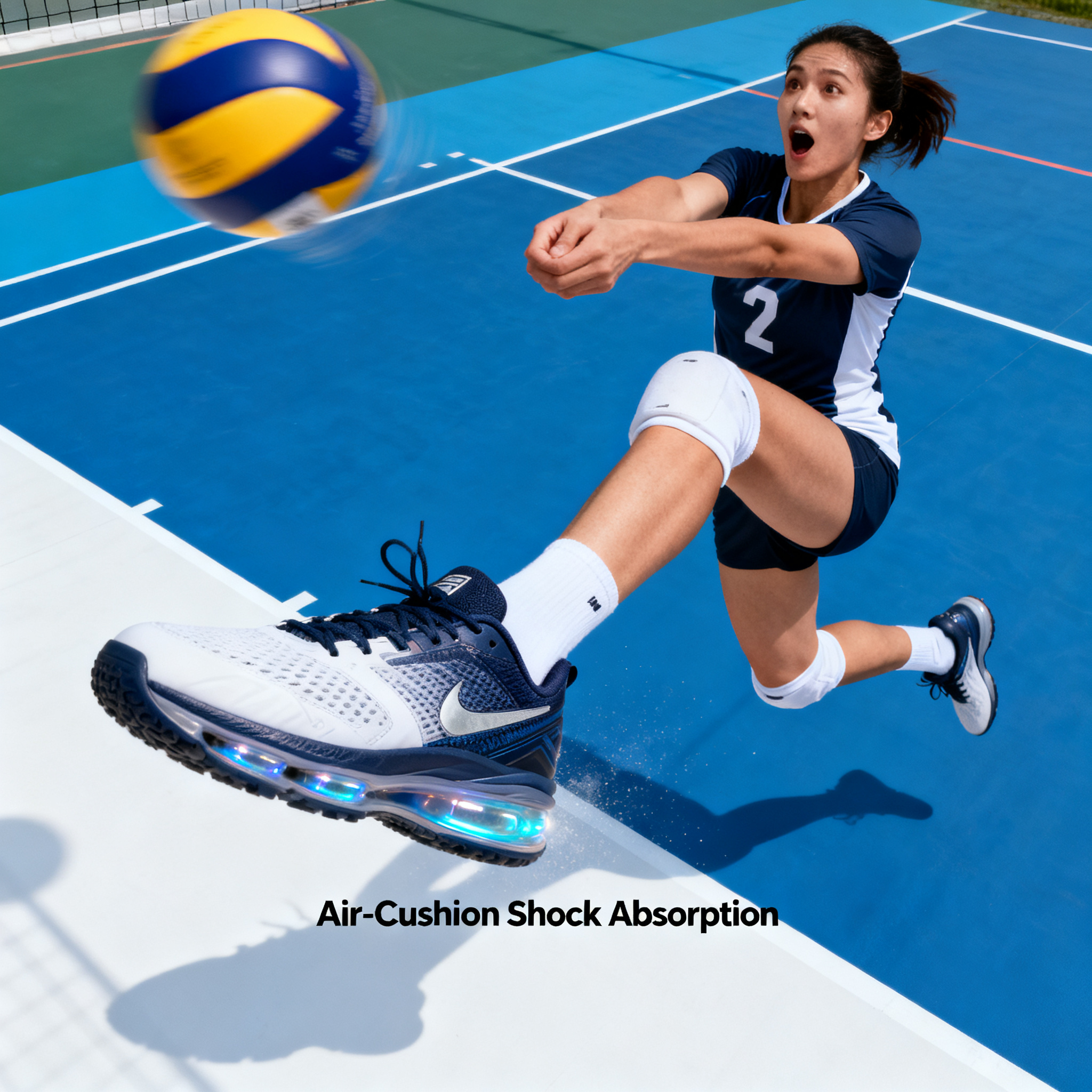
I played five sets that match, and my knees didn’t hurt at all. The next morning, I only felt normal muscle soreness—no added knee strain. That’s when I realized the issue wasn’t my knees; it was the floor beneath my feet.
After Switching Flooring, My Athletic Life Got a Fresh Start
Back at my own club, the first thing I did was talk to the gym owner about replacing the floor. I sent him my medical report, the doctor’s advice, and my experience from that match. Eventually, he agreed to install Starplus volleyball-specific flooring.
I went to watch the installation. The workers stripped the old surface, leveled the base, and laid the new flooring piece by piece. I felt the material—it was nearly twice as thick as our old layer. Pressing it, I could feel clear rebound. The workers said Starplus has been making sports flooring for over a decade, from table tennis to badminton to volleyball courts, with deep expertise in athletic protection. Their air-cushion structure converts vertical impact into horizontal dispersion, reducing stress on joints.
At the first practice after installation, I did several full-power jump spikes. On landing, the familiar knee pain was gone, replaced by a solid, cushioned feel. My teammates also noticed, saying things like "the floor feels softer" and "no more jarring when running." Even better, after two weeks of continuous training, my knees never flared up with that sharp pain again. I was back to playing matches.
Flooring Tips for Volleyball Enthusiasts
If you’re like me—passionate about volleyball but your knees are starting to "rebel"—take my advice: don’t just stock up on knee braces and insoles. What really needs changing is the floor under your feet. When choosing volleyball court flooring, focus on these key points:
First, check thickness and structure. Volleyball-specific flooring should be at least 8mm thick, ideally with an air-cushion or foam layer. Starplus’s air-cushion design offers far better shock absorption than standard PVC flooring—you can feel it just by pressing down.
Second, check the friction coefficient. Volleyball requires frequent stops and direction changes. If the surface is too slippery, you risk ankle sprains; if too grippy, it strains your knees. Quality sports flooring has fine surface texture that ensures slip resistance without catching your shoes.
Third, check environmental standards. Indoor gyms have limited ventilation, and the pungent smell of low-grade flooring can harm your health. Reputable brands like Starplus have environmental certifications, and their flooring has almost no odor after installation.
Fourth, check brand credibility. Flooring isn’t a disposable product—it’s meant to last years. I looked into Starplus: they started with sports socks, then moved to table tennis tables selected for the "Brand Powerhouse" preferred project, and now cover flooring systems for various sports venues. They’ve always followed a path of "changing things through details." Though they call themselves a "small" brand, their product quality truly lives up to the "master-level, world-class" positioning.
Now, my knees are in much better shape. I play twice a week without any mid-game pain. If you’re struggling with knee issues, take a moment to look down at the floor beneath you. Sometimes, the right choice is all it takes to keep your passion alive.