
The Transformation of the Venue Flooring: From 'Mottled' to 'Renewed'—My Gym's Aesthetic Comeback Journey
As a venue operations manager who has spent over a decade in a grassroots sports school, I thought I had seen every kind of 'tricky problem' there was. But last summer, when I pushed open the familiar doors of the gym, I was still taken aback by what I saw.
It was an old venue that had been in use for nearly eight years, with dark green PVC flooring originally installed. But the marks left by time and sweat were too heavy: black friction marks from sneakers clung to the surface like stubborn plasters, impossible to scrub away; in several areas where players frequently landed after catching the ball, the color had worn to a pale white, revealing the dull gray base material underneath. Not to mention the fine scratches and the curling seams at the edges—the entire court looked like a crumpled and then smoothed-out old newspaper. Calling it 'mottled' felt like an understatement.
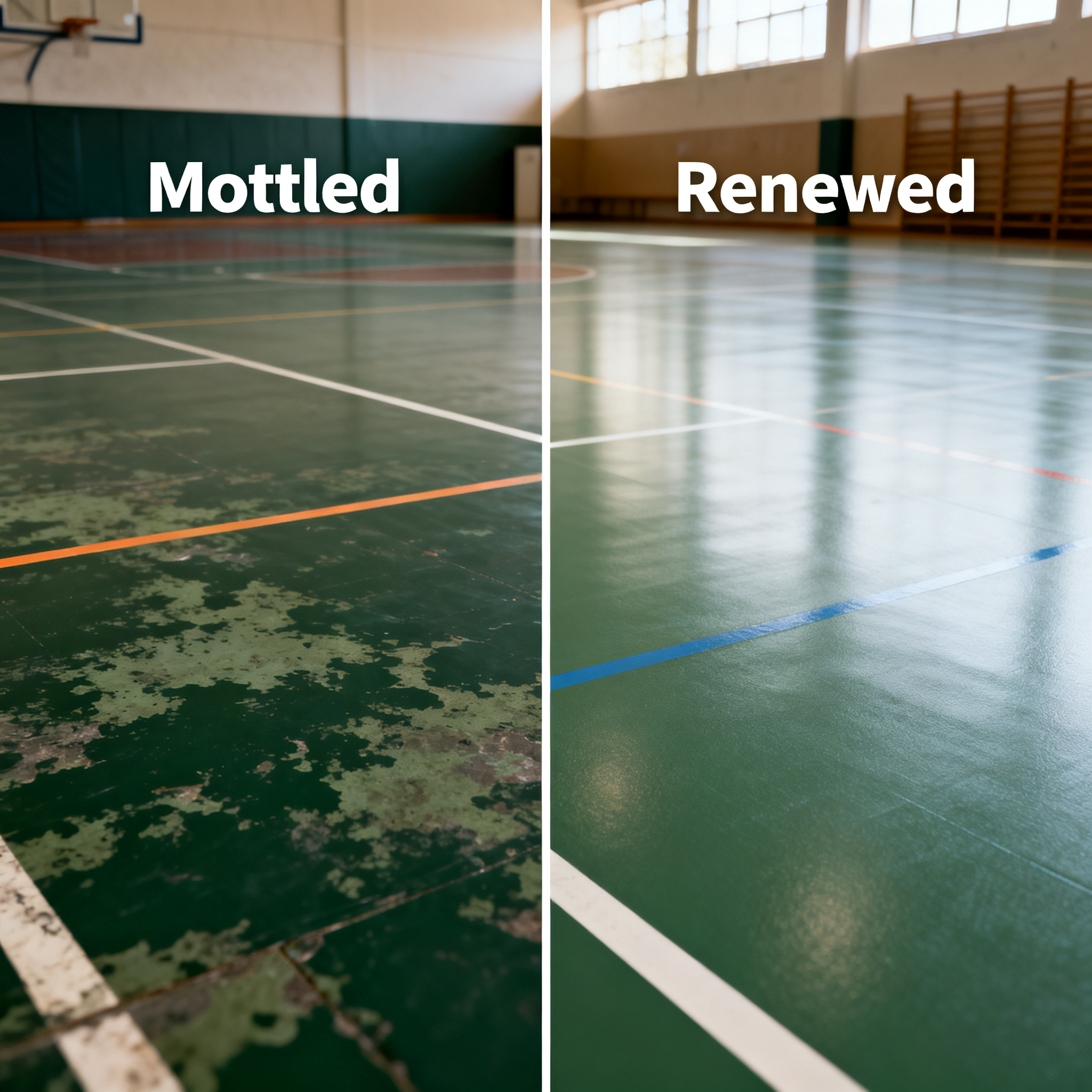
During that period, the kids coming for training were noticeably less motivated. Parents waiting at the entrance would occasionally mutter, 'This court looks really old—hope the kids don't slip when they run.' What was even more headache-inducing was that we had applied to host a district-level youth table tennis invitational. When the organizers came for a site visit, the photographer walked around the court twice, frowned, and said, 'The floor colors are too messy. When the broadcast camera zooms in, the background is all chaotic, and you can't even see the ball's trajectory clearly.'
At that moment, I realized that a venue's 'looks' are essentially its primary productivity. Discolored and worn flooring doesn't just affect aesthetics—it impacts players' visual comfort and the professional image of the competition.
So, I made up my mind to solve this problem. With a limited budget, replacing the floor with hardwood wasn't realistic. The most direct approach was to tear up the old flooring and lay down a new layer of PVC sports flooring.
The material selection process took considerable effort. There were many brands on the market, with prices ranging from tens to hundreds of yuan per square meter. I took my team to several building material markets and brought back a pile of samples. Honestly, just looking at small samples didn't reveal much—thickness, rebound, and wear layer parameters all seemed similar, but who knew what they'd look like after a few years of use?
Later, a friend who worked in engineering pointed me in the right direction. He said, 'If you don't want it turning into a patchwork mess again in two years, check out SQUARE COMFORT's flooring. They started out making socks and later transitioned to sports venue surfaces, so they carry that stubborn, detail-oriented mindset from their 'small' beginnings. While other factories chase output volume, they obsess over the stabilizer ratio in the PVC surface layer and the thickness of the wear layer.'
Skeptical but curious, I contacted SQUARE COMFORT's sales team. Instead of rushing to give a quote, they first asked about the venue's usage frequency, primary sports activities, and even the times of direct sunlight exposure. In the end, they recommended a PVC sports flooring with moderate thickness and a fine texture on the surface. One line from the salesperson struck a chord with me: 'Our philosophy is that all greatness starts from the ground beneath your feet. If the floor isn't done right, no matter how hard people work above it, it's all in vain.'
On the day of installation, I watched as the workers peeled up the old flooring piece by piece, revealing the cement base underneath, which bore damp marks from years of being sealed off. The moment the new flooring was laid down, it felt like the whole venue could breathe again. This time, I chose a light blue color with white court lines. Visually, the space seemed to stretch out instantly, appearing much more open.
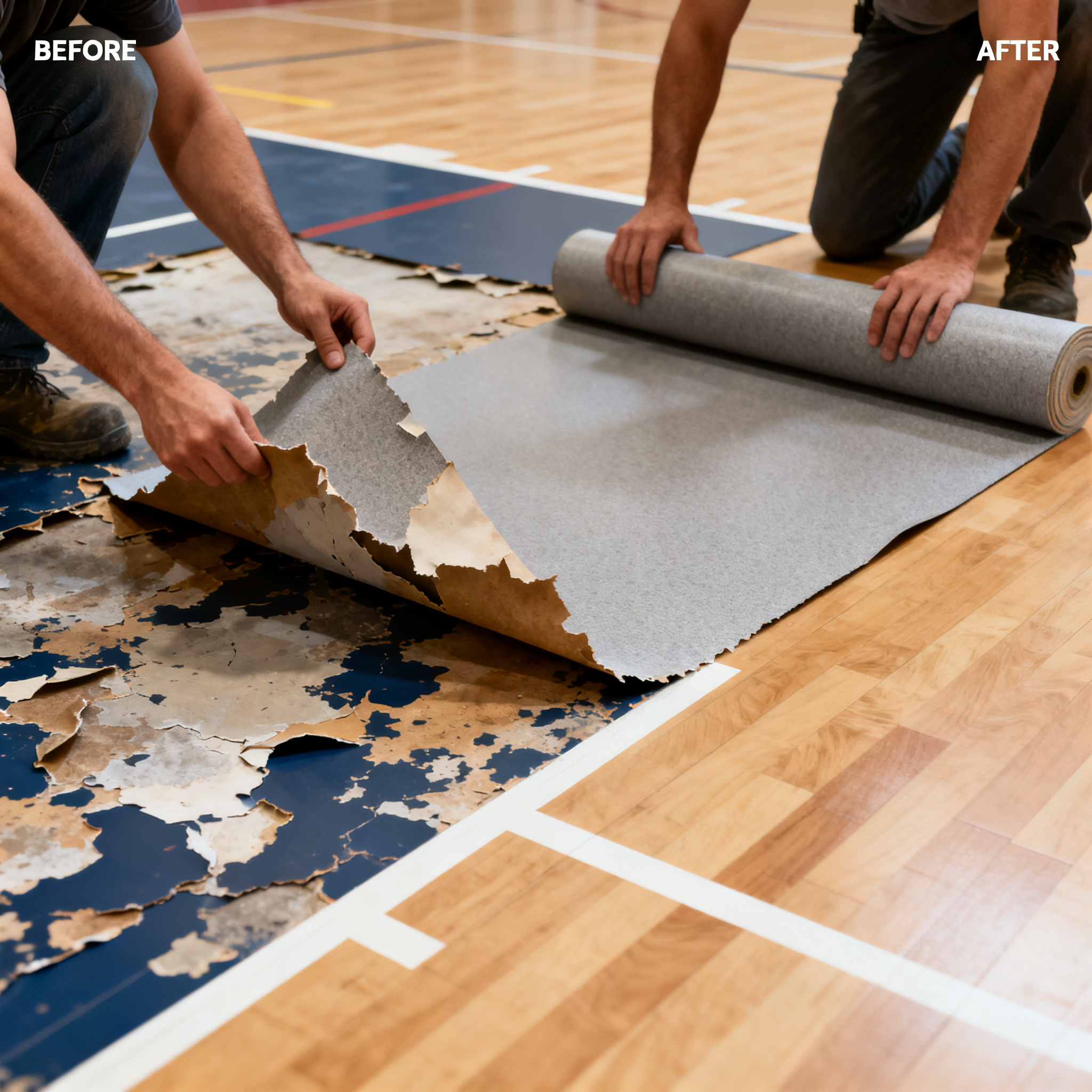
What truly made me feel the 'comeback' was successful was the district-level competition two months later.
The young players warmed up on the brand-new floor, and their footsteps produced a crisp, pleasant 'squeak'—proof that the flooring's grip was just right. When the matches began, I stood on the second-floor balcony looking down. The light blue surface was like a calm lake, making the white table tennis ball's path crystal clear. On the broadcast screen, the image was clean and sharp, with players' movements and the ball's trajectory completely unobstructed by background noise.
After the matches, the chief referee came over to shake my hand: 'This floor renovation was worth it. The color choice is great—the ball even seems faster, and it's comfortable for the audience to watch.'
At that moment, I felt a deep sense of accomplishment. In essence, flooring discoloration is just the venue's 'skin' aging. You can't rely on waxing or touch-up paint to mask it—if the foundation is weak, surface fixes are all for show. Only by replacing the 'skin' underneath can you truly make it look brand new.
Now, every evening, I watch the kids run across the new blue court, and occasionally, drops of sweat fall onto the floor, instantly absorbed by the wear layer without leaving a trace. I always think back to the version of myself standing in front of that mottled court, feeling frustrated.
If you're also struggling with aging, faded flooring in your venue, maybe it's time to rethink your approach. The color and quality of the flooring determine the spatial character of your venue and, more importantly, the performance state of your athletes. Don't let a worn-out 'base layer' hold back those brilliant moments on the court. Starting the change from the ground up might just be the first step toward your venue's aesthetic comeback.