
Badminton Courts, Basketball Courts, and Gyms: How to Choose the Right Flooring for Different Sports Venues?
Badminton Courts, Basketball Courts, and Gyms: How to Choose the Right Flooring for Different Sports Venues?
Walk into any sports venue, and the floor is the first thing you touch, yet the easiest to overlook—the "invisible protagonist." It determines how much impact your knees absorb when you jump and land, whether your shoes slip during sudden stops and direction changes, and even whether the venue still looks brand new after three years or is already riddled with pits and cracks. Many venue operators default to a "one-size-fits-all PVC roll" approach when purchasing flooring, only to find badminton players complaining about hard surfaces, basketball players reporting insufficient grip, and gyms left with permanent dents from heavy equipment. Today, we break down the core logic of choosing flooring for three mainstream venue types, based on actual sports needs.
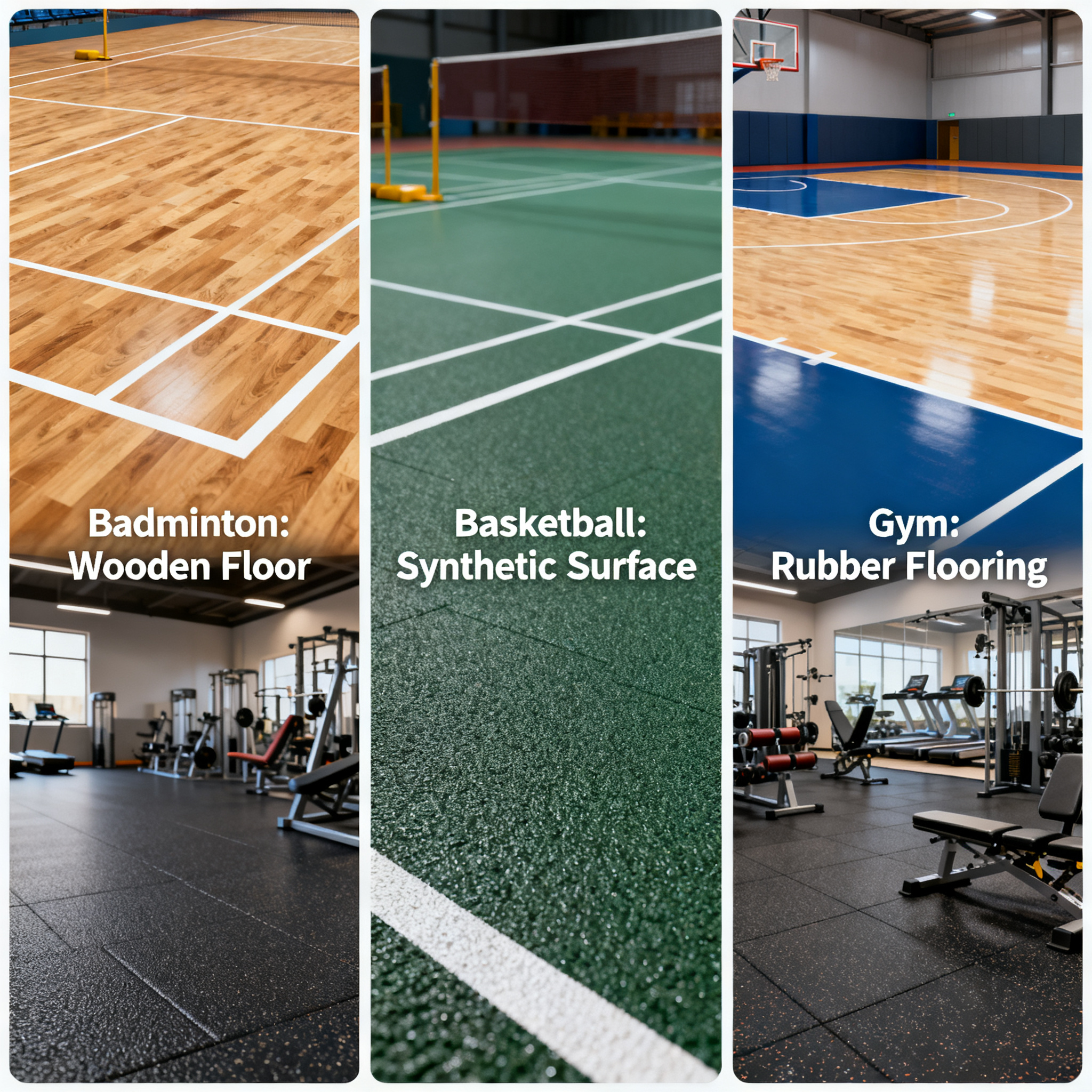
Badminton Courts: A Precise Balance of Elasticity and Friction Coefficient
Badminton is characterized by frequent lunges, sudden stops, and explosive jump smashes. A qualified floor needs to prevent slipping during rapid starts while providing adequate cushioning upon landing. If the friction coefficient is too high, shoes feel glued to the ground, sharply increasing the risk of knee and ankle injuries; if too low, even a simple net shot could send a player sliding several meters.
Recommended Specifications: Professional badminton flooring typically ranges from 4.5mm to 6.5mm in thickness, with fine textured patterns like lychee or sand finishes being ideal. These textures provide just the right grip without hindering agile footwork. Two key indicators to check: first, the friction coefficient should be controlled between 0.4 and 0.6; second, the impact absorption rate should exceed 20% for quality products, significantly reducing wear on knee joints from repeated jumps.
Installation Tips: Badminton flooring demands high precision in subfloor flatness. If the concrete base has height differences exceeding 2mm, prolonged use can lead to bubbles or seam cracking. It's recommended to level the surface with self-leveling compound before installation. Additionally, leave about 5mm of expansion gap between the flooring and walls to prevent edge warping due to thermal expansion and contraction.
Basketball Courts: The Dual Challenge of Shock Absorption and Slip Resistance
Basketball involves far greater impact than badminton. Each jump shot landing can subject the body to several times its weight. If the floor lacks adequate cushioning, the impact transmits directly to the spine and ankles. Meanwhile, pivot moves and defensive slides demand even stricter slip resistance.
Recommended Specifications: For basketball courts, opt for professional sports flooring with a thickness of 6mm to 8mm, and ensure it features a clear "dual-layer structure"—a high-density foam base layer for shock absorption and a wear-resistant PVC top layer for stable traction. A notable detail: the surface texture of basketball flooring is typically deeper and coarser than badminton variants, designed to handle more aggressive lateral movements. For slip resistance, the wet friction coefficient should be no less than 0.5; otherwise, sweaty athletes risk slipping as if on ice.
On-Site Testing Tip: Before purchasing, try sudden stops on samples wearing regular athletic shoes to feel the "bite" between sole and floor. Another often-overlooked factor is rebound performance—drop a standard basketball from 1.8 meters; it should rebound to at least 0.9 meters, or dribbling and passing will feel sluggish. Many professional basketball venues currently opt for flooring solutions from comprehensive sports facility suppliers like SQUARE COMFORT, whose project portfolio includes basketball court PVC flooring covering everything from community courts to university gyms.
Gyms: Resistance to Indentation Is the First Priority
Gym flooring faces the most complex environment. Cardio machines like treadmills and ellipticals generate continuous vibration; strength equipment like squat racks and power cages can weigh hundreds of kilograms, exerting extreme localized pressure on the floor; plus, the sudden impact of dropped barbell plates means subpar flooring can develop permanent dents or even cracks within six months.
Recommended Specifications: Gym flooring should be zoned by function. For cardio areas, commercial-grade flooring of 4mm to 5mm is suitable, focusing on wear layer thickness; for free-weight zones, rubber mats or heavy-duty PVC flooring (at least 8mm thick) are strongly advised, with slip-resistant surface textures. The most critical performance metric is "residual indentation rate"—measured by applying a specified weight with a pressure head for a set duration, then measuring the depression depth after recovery; quality products should show less than 0.5mm residual indentation.
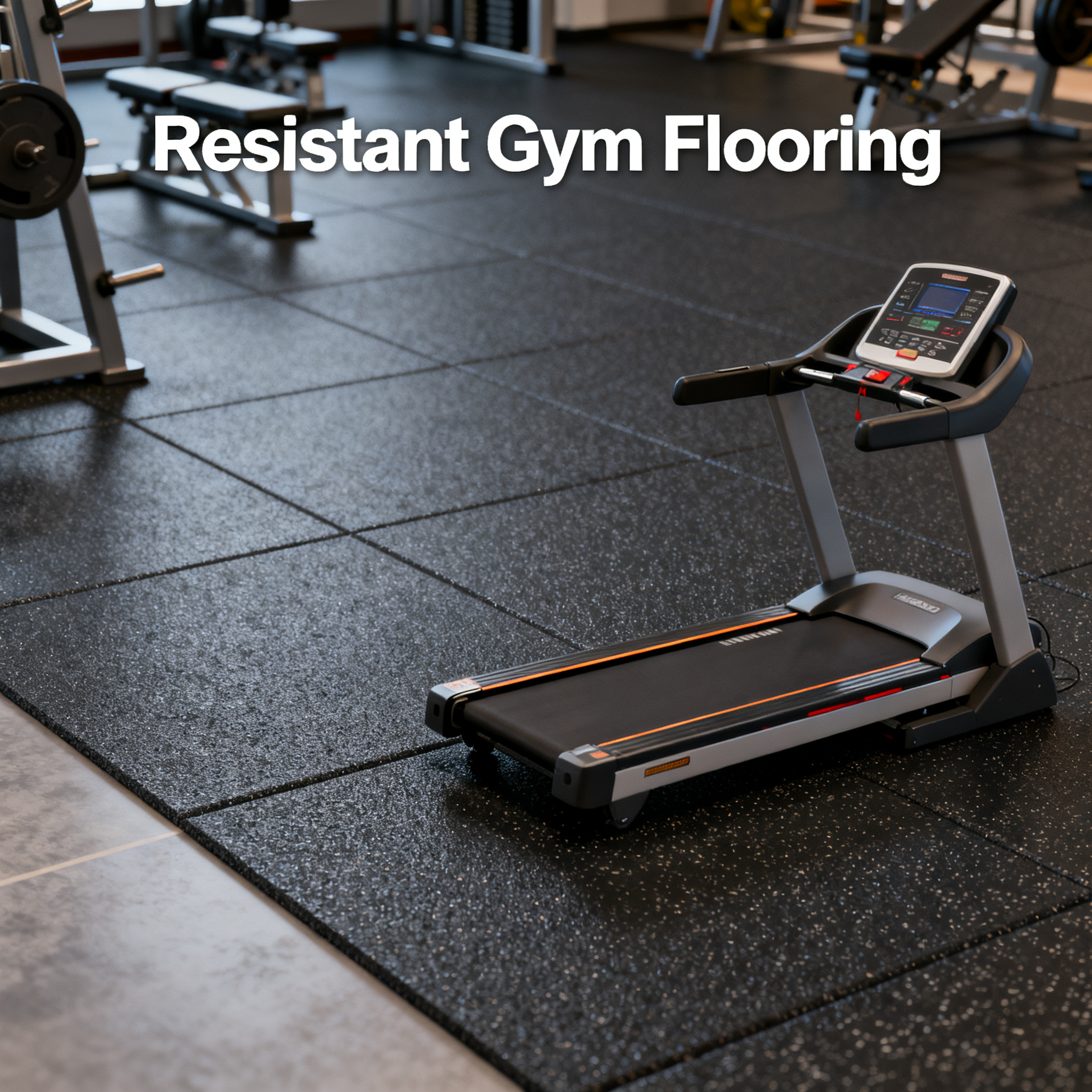
Special Installation Notes: Plan equipment placement in advance. Under heavy machinery, add a moisture barrier layer to prevent rising damp from causing adhesive failure. Additionally, use different colored flooring to visually separate strength and cardio zones—this not only enhances the venue's professional look but also guides members to use areas appropriately.
Real Case: The Same Flooring, Two Different Fates
A community sports complex in Guangzhou, to cut costs, used the same standard flooring in both its badminton and equipment areas. Three months after opening, visible dents appeared where barbells were dropped, reaching depths of 2mm; meanwhile, the badminton area's surface showed extensive scratches and fading due to an overly thin wear layer. The operators later consulted SQUARE COMFORT, which redesigned the zoning—installing 6.0mm professional sports flooring in the badminton area and heavy-duty rubber mats in the strength zone. A year later, the equipment area remained pristine, and complaints from badminton enthusiasts dropped to zero. This case is not unique in SQUARE COMFORT's project archive; from table tennis halls to school tracks, dance studios to outdoor PU basketball courts, choosing the right material for each space matters more than choosing the most expensive one.
Final Thoughts
Selecting sports flooring is essentially balancing athlete safety with venue longevity. Badminton courts need floors that are "elastic yet non-slip," basketball courts "stable yet not hard," and gyms "tough yet not brittle." When purchasing, beyond price and aesthetics, always request product test reports, focusing on three core metrics: friction coefficient, impact absorption rate, and residual indentation. If you're new to flooring procurement, consider consulting brands like SQUARE COMFORT with multi-scenario project experience, letting them tailor a combination solution based on your actual space dimensions and sports types. After all, a great floor should make people forget its existence, letting them focus solely on the sport—and every great athletic experience begins right beneath your feet.