
Stop Being Fooled by Specs! 8 Key Questions You Must Ask Before Buying Gym Flooring
Stop Being Fooled by Specs! 8 Key Questions You Must Ask Before Buying Gym Flooring
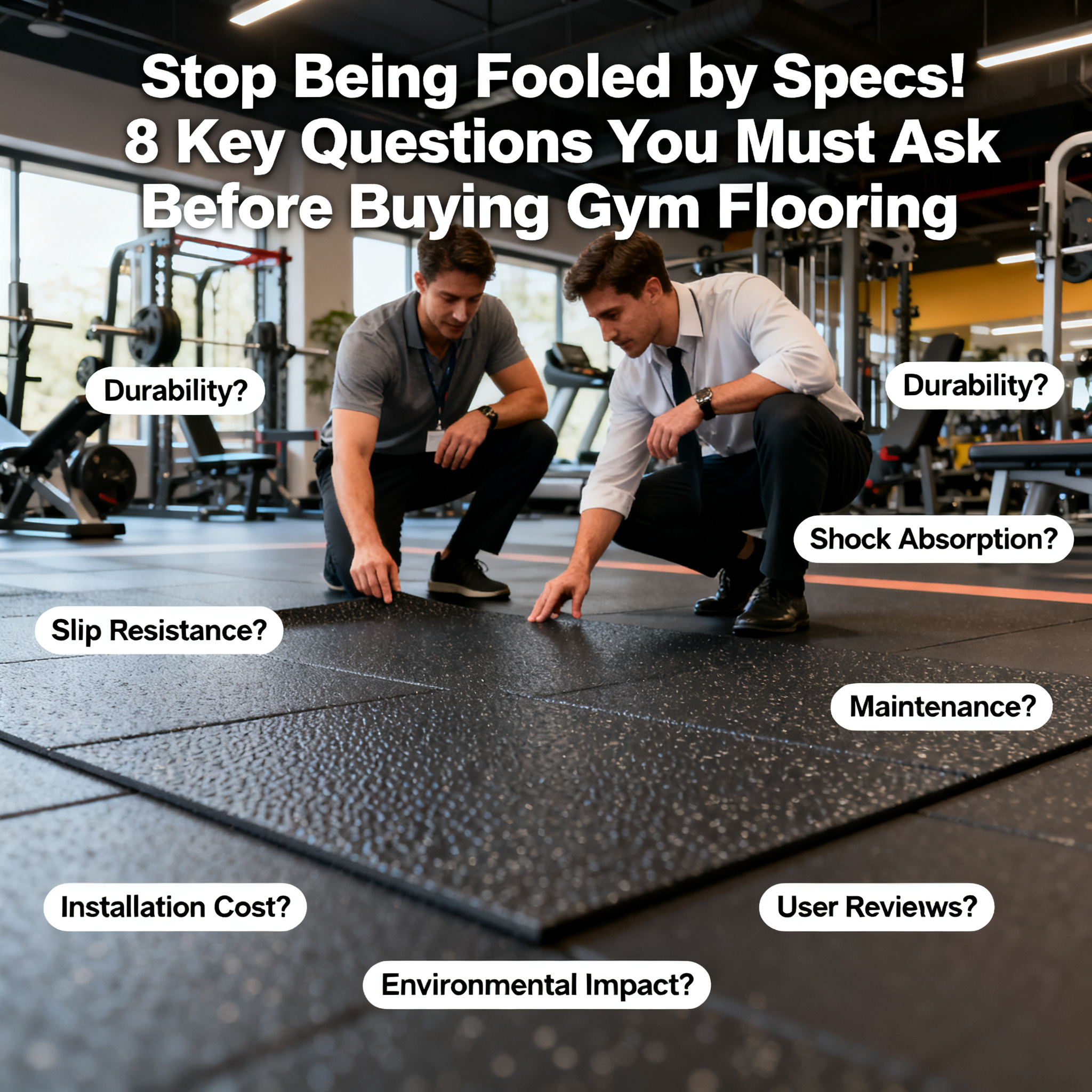
When you visit a venue and check the flooring, the salesperson will talk non-stop about specs: how thick the wear layer is, how high the density is, how it passed some test or another... It sounds impressive, but are you really convinced? In reality, many key details aren't volunteered by salespeople and may not even be clear on the spec sheet. If you spend a fortune on flooring that bubbles, becomes slippery, or fades within two years, it's likely because you didn't ask the right questions upfront. Today, let's dive into the 8 questions you must understand before choosing gym flooring, helping you steer clear of those flashy "spec traps."
1. Is the Environmental Rating "National Standard E1" or "European Standard E0"?
This is the easiest area to be misled. Sellers love to tout "E0 grade," but you need to clarify: Which standard's E0 is it? Is it China's GB 18580 E1, or the stricter EU EN 16516 standard? National Standard E1 is mandatory—products that don't meet it can't be sold at all. However, there's a significant difference between European E0 and National E1 in terms of testing methods and limit values. If the flooring is for youth training centers or kindergartens, it's advisable to request test reports for European E0 or the even stricter French VOC label (A+ grade). Don't just rely on verbal promises—ask the seller to provide the original report or a clear scan, check the testing institution and report number, and even verify authenticity online.
2. What's the Surface Texture Depth? Slip Resistance Isn't Just About Feeling Rough
Many people think the rougher the surface, the more slip-resistant it is, but that's not true. During sports, the shoe sole contacts the floor and needs to be "rough but not sticky, slippery but controlled." If the texture is too shallow, it becomes an ice rink when wet with sweat; if too deep, it traps dirt and is a headache to clean. Professional sports flooring, like that used in table tennis and badminton halls, typically has a surface texture depth between 0.3 mm and 0.8 mm, and the texture direction matters too. Don't just feel it with your hand—pour some water on it and test it, then see how your shoe sole responds. If the seller can't even provide the texture depth value, the product's professionalism is questionable.
3. Homogeneous or Multi-Layer Composite? This Determines the Flooring's Lifespan
This is the most critical structural question, directly affecting how long the flooring lasts and how it can be repaired. Homogeneous flooring means the material and pattern are consistent from the surface to the base—wear down one layer and there's another, making it extremely durable and ideal for high-traffic public areas like mall corridors and training halls. Multi-layer composite flooring, on the other hand, consists of a wear layer, a foam middle layer, and a backing layer pressed together, offering a softer, more elastic feel, but once the surface wears through, it's done. How to tell the difference? Look at the cross-section! Cut a sample and examine it—homogeneous flooring has a uniform color and pattern throughout, while multi-layer composite clearly shows distinct layers. Don't skip this step; it can help you weed out half of the low-end products.
4. What's the Foam Layer Density? What's the Rebound Rate?
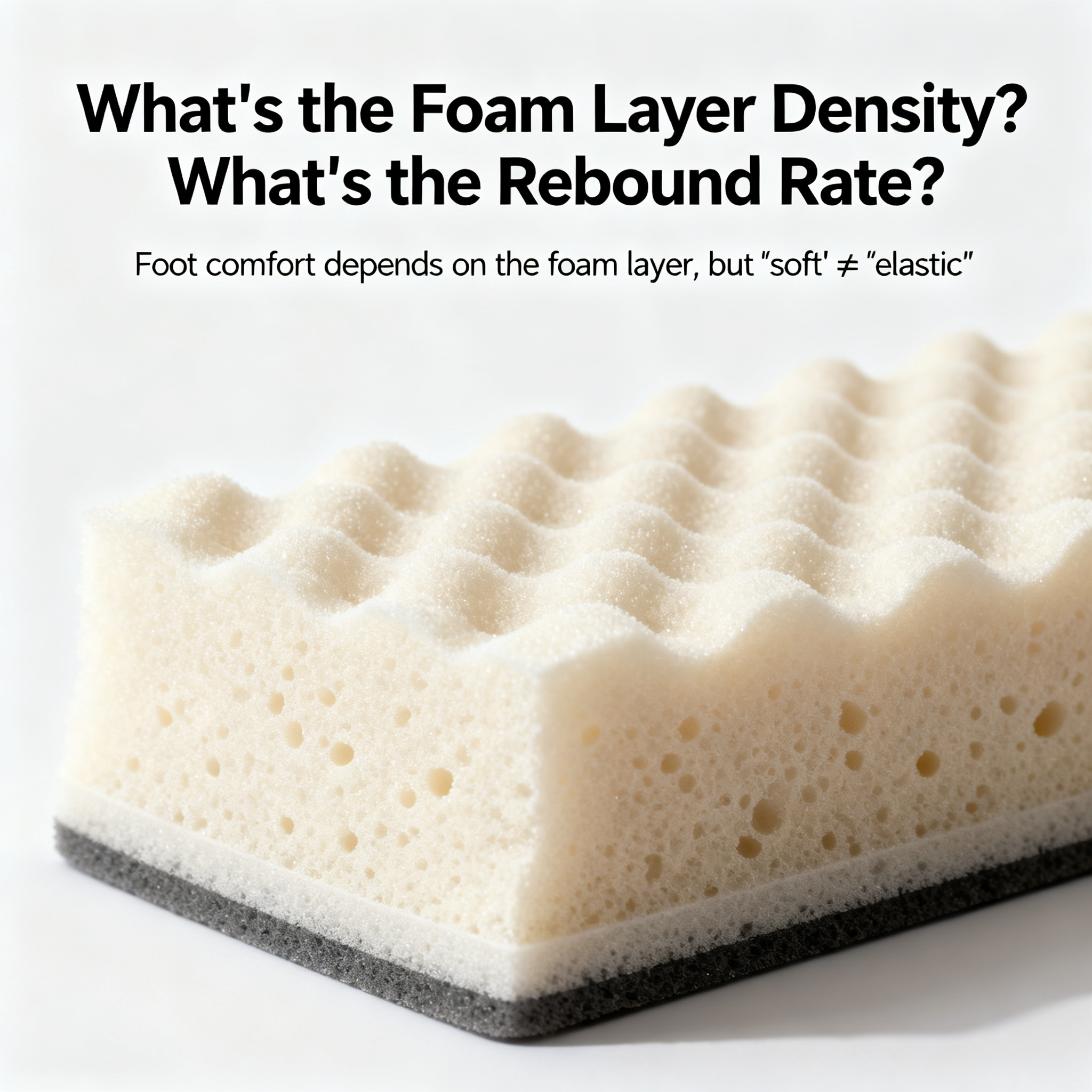
Foot comfort depends on the foam layer, but "soft" doesn't equal "elastic." Some flooring feels like stepping on cotton, but when you push off, it feels like it absorbs your energy, making exercise tiring. Professional sports flooring requires "energy return," meaning the force you exert when pushing off is partially fed back to you. Ask the seller for the foam layer density data—it should generally be above 150 kg per cubic meter to be considered acceptable. More importantly, check the rebound rate. The national standard requires a rebound rate of no less than 95% for sports flooring? No, that's for rubber tracks. For flooring, rebound is typically assessed by compression ratio and recovery time. A simple test: press hard with your thumb, release, and see how long the indentation takes to recover. If it takes more than 3 seconds, the foam layer is aging or lacks density. When SQUARE COMFORT provides flooring solutions for large multi-sport complexes, their engineers do on-site coin press tests—it's a low-tech method, but more practical than reading spec sheets.
5. How Thick Is the Wear Layer? Is It Pure PVC or Reinforced with Fiberglass?
Sellers love to emphasize wear layer thickness, often boasting "0.5 mm" or "0.7 mm." But there's a catch: some flooring has a pure PVC wear layer, while others include a fiberglass mesh layer. Adding fiberglass improves stability, reducing expansion and contraction with temperature changes, but the abrasion resistance is similar to pure PVC. So don't just focus on thickness—ask if it's a "fiberglass mesh stabilization layer" structure. Additionally, wear layer thickness is different from total flooring thickness. Some flooring has a total thickness of 5 mm but a wear layer of only 0.1 mm, which wears out within six months. Ask for the specific wear layer thickness; for sports flooring with a total thickness of 5 mm, the wear layer should be at least 0.3 mm to be reliable.
6. Has It Passed a "Stain Resistance Test"? Can Coffee and Soy Sauce Stains Be Wiped Off?
Venue floors inevitably get spills of drinks or ink. Some flooring looks great on the surface, but dark liquids seep in and leave stains that won't come out no matter how you wipe. Before purchasing, ask the seller for a sample and run a live test: pour some soy sauce, cola, or even draw with an oil-based marker, wait five minutes, and then wipe with a damp cloth. If it doesn't come off, the surface's stain resistance is subpar. This test isn't on any spec sheet, but it directly impacts daily maintenance costs. In SQUARE COMFORT's lab, such stain tests are mandatory for every batch of material, because they know that venue operators' biggest headache is flooring that looks "dirty."
7. Are Auxiliary Materials and Installation Included in the Quote?
This is the most common "low-price trap." The quote lists the flooring at a certain price per square meter, which looks cheap, but after signing the contract, you discover it doesn't include self-leveling compound, primer, adhesive, or even baseboards and edge strips. By the time you realize, the total cost has increased by 20%. More critically, the adhesive matters. Poor-quality adhesive not only exceeds formaldehyde limits but also lacks bonding strength, causing the flooring to lift at the edges within months. Before signing, make sure the seller specifies the brand, model, and quantity of auxiliary materials. Also, ask about installation details: What's the allowable floor flatness tolerance? How thick should the self-leveling layer be? How long is the drying time? A professional team will tell you that the substrate moisture content must be below 4% before installation; otherwise, mold and bubbling can occur underneath the flooring later.
8. How Long Is the Warranty? What Exclusions Are Hidden in the Warranty Terms?
The warranty period reflects the brand's confidence. Generally, sports flooring warranties range from 3 to 6 years, but watch out for exclusions. For example, "damage from abnormal use is not covered"—what counts as abnormal? Does walking in high heels count? Does dragging heavy objects count? These gray areas are prone to disputes. It's advisable to clarify: If bubbling, delamination, or fading occurs during the warranty period, is repair free, or is only material provided? Who bears the loss if the venue has to close during repairs? Additionally, ask if the brand has experience with large-scale venue projects, such as serving Fortune 500 companies or major sporting events. SQUARE COMFORT has provided flooring solutions for sports venues at companies like Huawei, BYD, and Chimelong. Such hands-on experience brings quality control capabilities that are far more reassuring than slogans on a brochure.
At the end of the day, don't let flashy "specs" lead you by the nose when choosing flooring. Specs are the foundation, but what matters more are the test reports behind those specs, material structure, installation details, and after-sales commitments. Next time you visit a store, throw these 8 questions at the salesperson. If they can answer clearly and provide solid evidence, they're worth your money. If they hem and haw, only saying "Our product is fine," then you should be extra cautious. After all, the floor is the "foundation" of your venue—if the foundation isn't solid, everything else is in vain. Start by checking what's underfoot, and your venue will go further.