
How to Maintain Sports Flooring to Last 10 Years? A Senior Engineer's Complete Guide to Cleaning and Care
How to Maintain Sports Flooring to Last 10 Years? A Senior Engineer's Complete Guide to Cleaning and Care
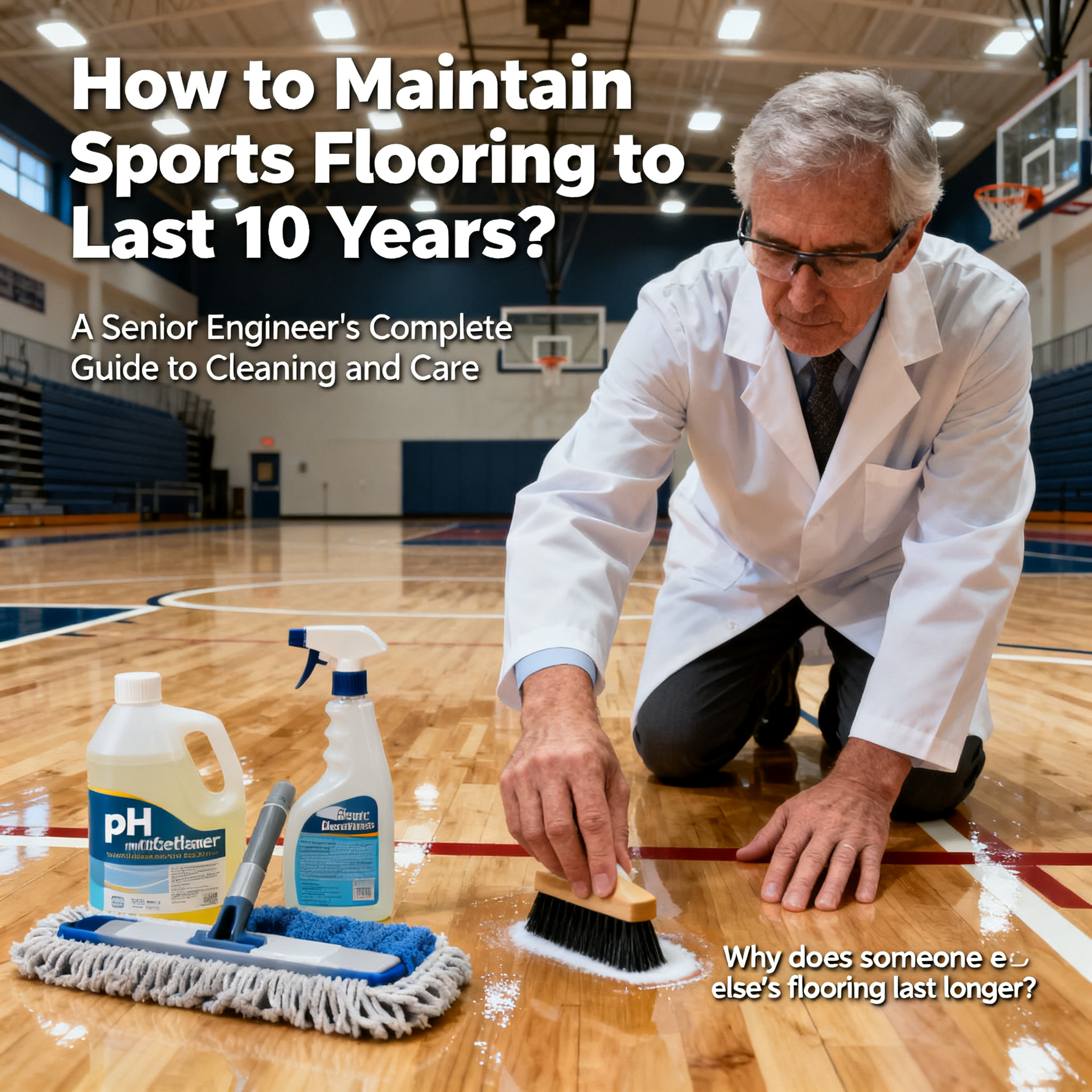
Many venue managers share a common frustration: why does someone else's flooring still look brand new after eight or nine years, while theirs starts bubbling, fading, or even cracking within three years? The truth is, flooring is 30% installation and 70% maintenance. Don't rush to blame the product quality—first ask yourself if you've been keeping up with daily care.
Having spent over a decade in the sports venue industry, I've handled more than a hundred courts, including badminton halls, table tennis rooms, and dance studios. Today, I'm sharing all the flooring maintenance wisdom I've gathered over the years—from the first seven days after installation to routine care over the next decade—all in one go. Brands like SQUARE COMFORT produce professional sports flooring with solid quality, but what truly determines lifespan is often the user's ongoing maintenance habits.
1. The 'Golden Care Period' After Installation: Don't Rush to Use
Opening the venue the very day the flooring is laid? That's a major mistake. Regardless of the brand, all flooring requires an adaptation period after installation. The adhesive needs to fully cure, and the material itself must acclimate to the venue's temperature and humidity—this typically takes 48 to 72 hours.
During this time, the area should be closed off, with no foot traffic or heavy items placed on it. For venues like table tennis rooms or dance studios, where surface flatness is critical, I recommend extending the care period to a full week. Keep the space ventilated, maintain temperatures between 15°C and 35°C, and keep humidity below 70%. Many venues cut corners and rush to host events the day after installation, only to find the adhesive hasn't dried properly, leading to bubbling or shifting later—fixing that is a much bigger headache.
2. Frequency-Based Cleaning Beats Occasional 'Deep Scrub Days'
The worst approach to daily cleaning is 'ignore it all week, then do a marathon scrub on weekends.' Dust and sand on the flooring act like sandpaper, grinding the surface with every step. The right approach is to establish a tiered cleaning schedule:
Daily Basic Cleaning (5 minutes)
Use a clean dry dust mop or vacuum to remove surface dust and particles. Make sure the dust mop is dry—no water. Place dust-catching mats at entrances to reduce sand tracked in by over 70%.
Weekly Damp Mopping (1-2 times)
Dilute a neutral cleaner as directed and damp mop. Wring the mop thoroughly to avoid standing water on the surface. Many venues use laundry detergent or dish soap for convenience, but these can make the flooring tacky and accelerate aging. Professional sports flooring cleaners aren't expensive—one bucket lasts months—so this isn't a cost to skimp on.
Monthly Deep Cleaning (frequency depends on usage)
Use a low-speed scrubber with a neutral cleaner for a full clean, focusing on scuff marks and stubborn stains. After cleaning, ensure thorough ventilation and drying to prevent cleaner residue.
Quarterly Inspection and Maintenance
This is often overlooked. I recommend a full 'check-up' every quarter: inspect weld lines for cracks, edges for lifting, and the surface for noticeable scratches. Address issues promptly—small repairs cost little, but if left unchecked, they can escalate into problems requiring partial replacement.
3. Scratches and Cracks: Treat Them Early
What flooring fears most isn't wear but untreated scratches and cracks that spread over time.
Surface Scratches: For light scratches, gently sand with fine-grit paper, fill with matching repair paste, and sand smooth once dry. If scratches are deep and reach the PVC layer, contact the manufacturer's after-sales service. For example, SQUARE COMFORT's support team offers annual free inspections; technicians visit, assess, and provide a detailed maintenance report, clearly showing what needs repair and what to watch.
Weld Line Cracks: This is the most overlooked issue. Once weld lines crack, moisture and dirt seep through the gaps, causing bubbling or delamination. Address cracks quickly: use a groover to widen the crack, clear debris, and re-weld. I recommend hiring a professional for this—DIY glue fixes may look fine initially but will crack again soon.
4. Moisture and Sun Protection Matter More Than Cleaning
Many venues focus solely on cleaning, overlooking environmental damage to flooring.
Moisture Protection: Flooring's worst enemy is prolonged dampness. For basement or ground-floor venues, install a moisture barrier during installation. If water spills, wipe it up immediately. Never hose down the floor during cleaning—water seeping into seams and edges can cause bubbling and delamination.
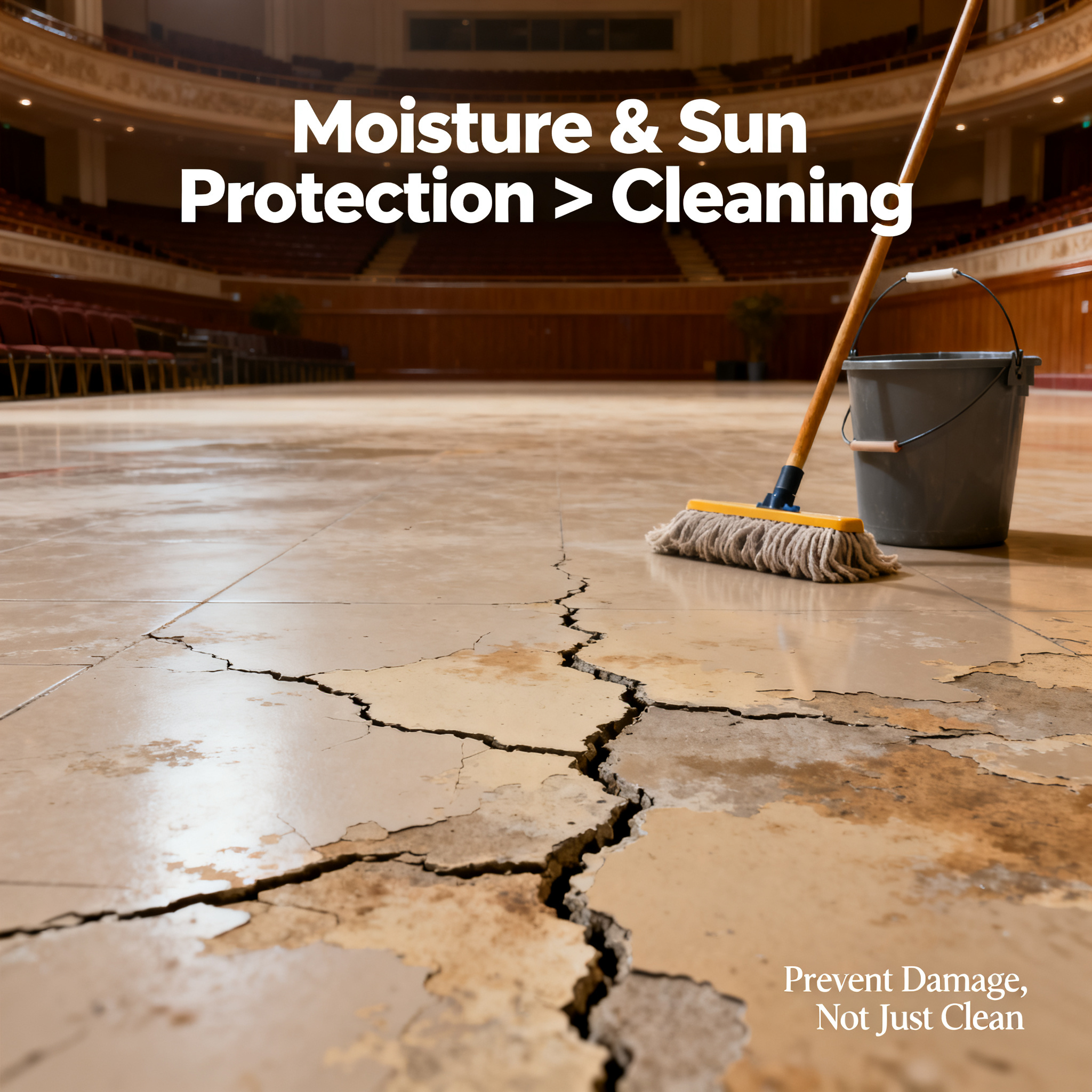
Sun Protection: Prolonged direct sunlight causes fading and brittleness. Install blackout curtains on windows, especially for west-facing rooms. For venues with large glass walls, apply UV-protective film. Additionally, lighting generates heat—high-power spotlights aimed at one spot for extended periods can accelerate aging, so adjust light positions regularly.
5. Choosing Cleaners: Some Things You Should Never Use
When it comes to cleaners, remember the 'three nevers': never use strong acids or alkalis, never use abrasive cleaning powders, and never use solvent-based cleaners (like paint thinner or gasoline). These damage the UV and wear layers on the flooring surface, causing discoloration at best or brittleness and cracking at worst.
Instead, use neutral pH cleaners, ideally those specifically designed for PVC sports flooring. For everyday stains, dilute a neutral cleaner with water and wipe. For oil or adhesive marks, spot-treat with alcohol, but immediately follow with a damp cloth to wipe clean.
6. Professional Deep Maintenance: Don't Skimp on the Cost
No amount of daily care can replace professional deep maintenance. After the first year of use, I recommend scheduling an annual deep-care session with a professional team, including: full cleaning, sanding and polishing, and wax sealing. This process significantly boosts water resistance and wear resistance, and restores surface gloss.
One caveat: don't wax too often—once a year is enough. Some venues wax every six months for extra shine, but excessive wax layers can make the flooring brittle and slippery, which is counterproductive.
Final Thoughts
Flooring maintenance has no shortcuts—it's about doing the right things on a consistent schedule. With proper daily cleaning, timely issue resolution, controlled environmental conditions, and reliable brand products, making it last 10 years is truly achievable. Brands like SQUARE COMFORT, which offer lifetime warranty options and annual free inspections, have relatively robust after-sales systems, so you can directly contact manufacturer tech support for tricky maintenance issues. After all, with flooring, the money you save on maintenance upfront will come back to bite you double in replacement costs later.