
Must-Read Before Buying Sports Flooring: These Environmental Testing Indicators Affect User Health—Don't Overlook Them
Must-Read Before Buying Sports Flooring: These Environmental Testing Indicators Affect User Health—Don't Overlook Them
Over the past two years, the construction standards for sports venues have visibly improved. From community gyms to professional training bases, from school activity rooms to commercial fitness centers, the upgrade of flooring materials has far exceeded expectations. Yet, one issue remains widely overlooked: Is the PVC flooring we invest heavily in truly eco-friendly?
You might have had this experience: walking into a newly renovated badminton hall, you're hit by a pungent "new material smell"; or taking your child to practice table tennis, you feel dizzy and your throat dry after a while. Many assume it's just a "normal new venue phenomenon" that will dissipate. In reality, behind that smell may lurk health hazards like excessive TVOC, formaldehyde emissions, and plasticizer migration.
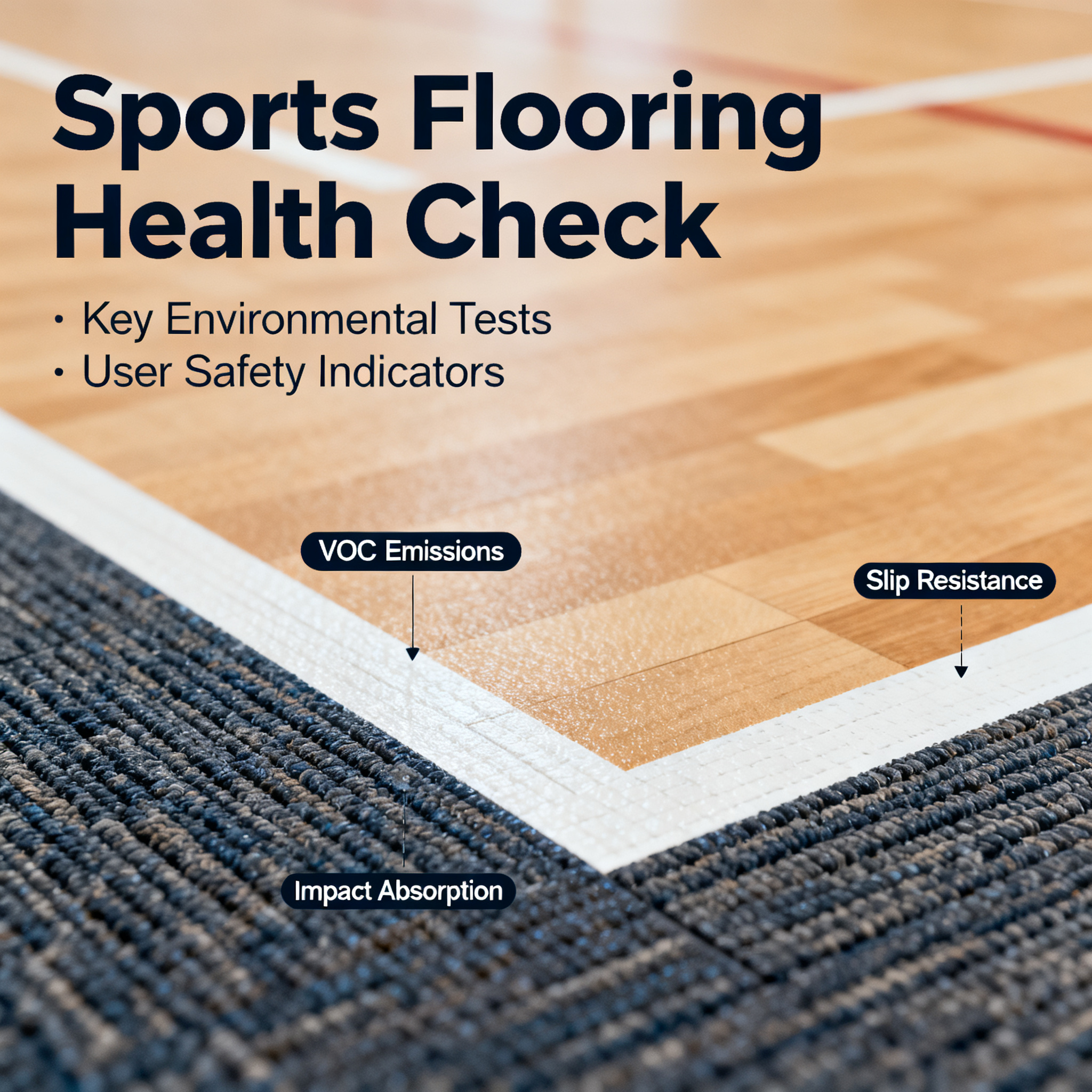
As someone who has worked with flooring materials for years, I want to have a serious conversation with you: when selecting sports flooring, which environmental testing indicators truly matter for user health, and how to tell if a testing report is reliable.
Watch TVOC Emissions: Don't Let the "New Venue Smell" Become a Health Hazard
TVOC (Total Volatile Organic Compounds) is the first checkpoint for assessing flooring eco-friendliness. It includes various harmful gases like benzene, toluene, and xylene. The national standard GB 18586-2001 sets clear limits for TVOC emissions from PVC flooring, but many low-quality products still find loopholes.
How to judge? Look at the TVOC value on the testing report, measured in mg/㎡·h (milligrams per square meter per hour). Qualified products typically stay below 0.5, while premium products can achieve 0.1 or even lower. If a report only states "not detected" without specifying the testing method and limit standard, it's safe to deem it unrigorous.
Here's a practical tip: after obtaining a sample, cut a piece of flooring the size of an A4 sheet and heat it at 60°C for half an hour. If the emitted odor makes you frown, that product will likely exceed limits in a hot summer venue. Good flooring, even when heated, emits only a faint raw material smell or none at all.
Formaldehyde Emissions: Not Just a Problem for Wood Panels
Many think, "I'm not buying wood flooring, so formaldehyde has nothing to do with me." In reality, some PVC flooring uses aldehyde-containing additives or low-quality adhesives during production, especially in multi-layer composite products. If substandard adhesives are used for layer bonding, formaldehyde emissions can also exceed limits.
National standards require indoor PVC flooring to have formaldehyde emissions ≤0.12mg/L (climate chamber method). But note, different testing methods yield non-comparable values. Some manufacturers use "desiccator method" data to confuse buyers—values look low, but real-world simulation results differ entirely.
When reviewing reports, insist on data from the "climate chamber method" or "environmental chamber method," as these simulate actual usage scenarios. If a report only vaguely states "meets national standards" without specific values and testing methods, its credibility is questionable.
Phthalate Content: The Most Overlooked Hidden Risk
This is the indicator I believe deserves the most attention but is often ignored by average buyers. Phthalates (commonly referred to as phthalates) are plasticizers widely used in PVC products. They make flooring soft and elastic, but some cheap plasticizers gradually migrate to the surface over time, entering the human body through skin contact or inhalation, posing potential risks to the endocrine system.
The EU REACH regulation strictly limits phthalate content, and China's GB 36246-2018 also sets relevant requirements. However, many low-priced products on the market still use non-eco-friendly plasticizers like DINP and DIDP, or even DEHP, which is banned in many countries.
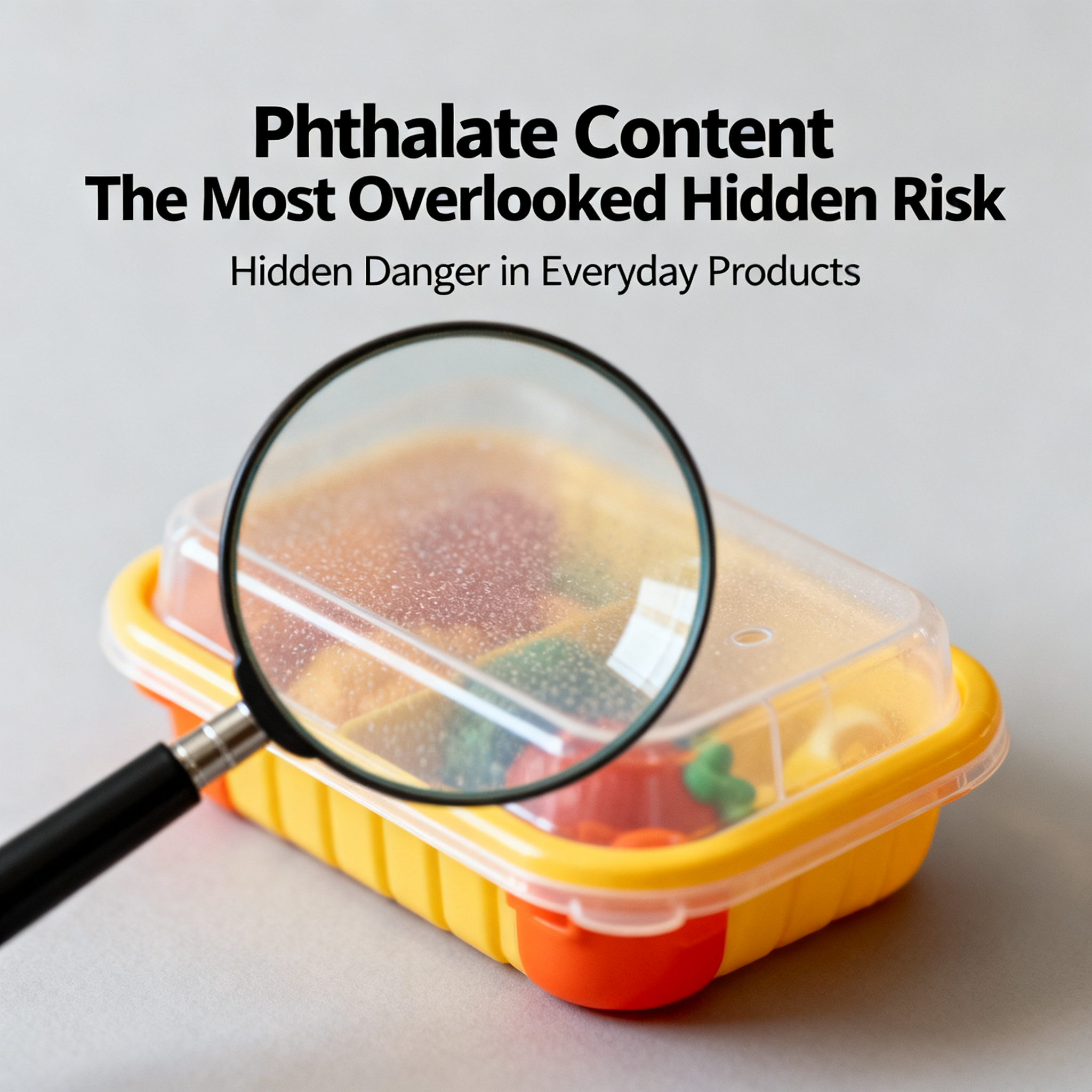
How to identify? Check if the testing report includes the "phthalate content" item and its specific value. If the report lacks this test, the product likely can't withstand scrutiny. Reputable flooring brands proactively disclose this data—for instance, SQUARE COMFORT's PVC sports flooring series explicitly labels phthalate content in factory tests and accepts third-party spot checks for verification.
How to Verify Testing Reports: Three Key Details
When you receive a testing report, don't just glance at the "qualified" stamp on the conclusion page. Focus on three areas:
1. Testing Institution Credentials. Legitimate reports carry CMA (China Metrology Accreditation) or CNAS (China National Accreditation Service) marks. Without these, the report holds minimal legal weight.
2. Sample Name and Batch. Some manufacturers submit "specially prepared samples" that differ from actual products sold. If the report says "sample as provided," the data may have no relation to what you purchase. Reputable companies undergo "spot checks" or "type testing," not "commissioned sample testing."
3. Report Date and Validity. Environmental testing isn't a one-time affair. Changes in raw material suppliers or production processes can affect the final product's eco-performance. Reports older than two years have significantly diminished reference value.
I've seen many buyers treat three-year-old reports as a "golden shield," only to end up with pungent odors after installation and test results exceeding limits severalfold. So, choose brands that can provide recent (within one year) testing reports and request quality inspection documents corresponding to your purchased batch.
Indoor vs. Outdoor Venues: Don't Mix Up Environmental Requirements
Many buyers don't distinguish between indoor and outdoor scenarios when selecting flooring. In reality, these two venue types have vastly different environmental requirements.
Indoor venues (table tennis halls, badminton courts, dance studios, gyms, etc.) have limited ventilation, making TVOC, formaldehyde, and phthalate limits the strictest. Especially for children's activity areas, school sports facilities, and medical rehabilitation spaces, where users have weaker resistance, environmental standards should follow the most stringent levels.
Outdoor or semi-open areas (outdoor basketball courts, school playgrounds, etc.) can tolerate slightly higher volatile organic compounds due to better air circulation. However, even so, products with obvious pungent odors aren't recommended. Outdoor venues should prioritize weather resistance, UV resistance, and slip resistance—these differ entirely from indoor product focuses.
If you're building a children's fitness center or medical rehabilitation facility, I suggest choosing products with FloorScore certification. FloorScore is an environmental certification by SCS (Scientific Certification Systems) in the U.S. for hard surface flooring, with far stricter standards than national ones, covering dozens of substances like phthalates, heavy metals, and VOCs. Currently, few domestic brands hold this certification—SQUARE COMFORT's premium sports flooring series is one, with products benchmarked against international environmental standards from R&D, undergoing 12 precision testing steps from raw material selection to finished product.
Conclusion: Eco-Friendliness Isn't a Marketing Gimmick—It's a Bottom Line
Honestly, the environmental performance of flooring varies widely. Prices range from tens to hundreds of yuan per square meter, and the gap often reflects differences in eco-costs. The money saved on inferior flooring may eventually be paid back in health costs.
Next time you buy sports flooring, treat the environmental testing report as a contract attachment. Check TVOC, formaldehyde, and phthalate levels item by item, and confirm testing methods and institution credentials. If the seller hesitates to provide a complete report or only offers a vague "meets national standards," consider switching suppliers.
Brands truly committed to environmental investment won't fear you scrutinizing the data. Just as SQUARE COMFORT insists in the sports flooring field, from raw materials to finished products, every batch dares to disclose testing details. After all, all greatness starts from the ground beneath your feet. And the safety of that ground deserves a few extra minutes of your diligence.