
Is Thicker Sports Flooring Always Better? Professional Test Data Reveals the Truth—Stop Paying the IQ Tax
Is Thicker Sports Flooring Always Better? Professional Test Data Reveals the Truth—Stop Paying the IQ Tax
When planning or renovating a sports venue, choosing the right flooring material often becomes a headache. Walk through any building materials market, and the most common sales pitch you'll hear is, "Our 8mm option is nearly twice as thick as the 4.5mm one—better feel underfoot and more durable." It sounds convincing, since common intuition suggests that thicker means sturdier, more durable, and better protection. But is that really the case? How much truth about the relationship between flooring thickness and performance is being deliberately obscured by merchants? To find out, we teamed up with a professional testing agency to conduct a comparative test on four common PVC sports flooring options—3mm, 4.5mm, 6mm, and 8mm—and the results might just overturn your assumptions.
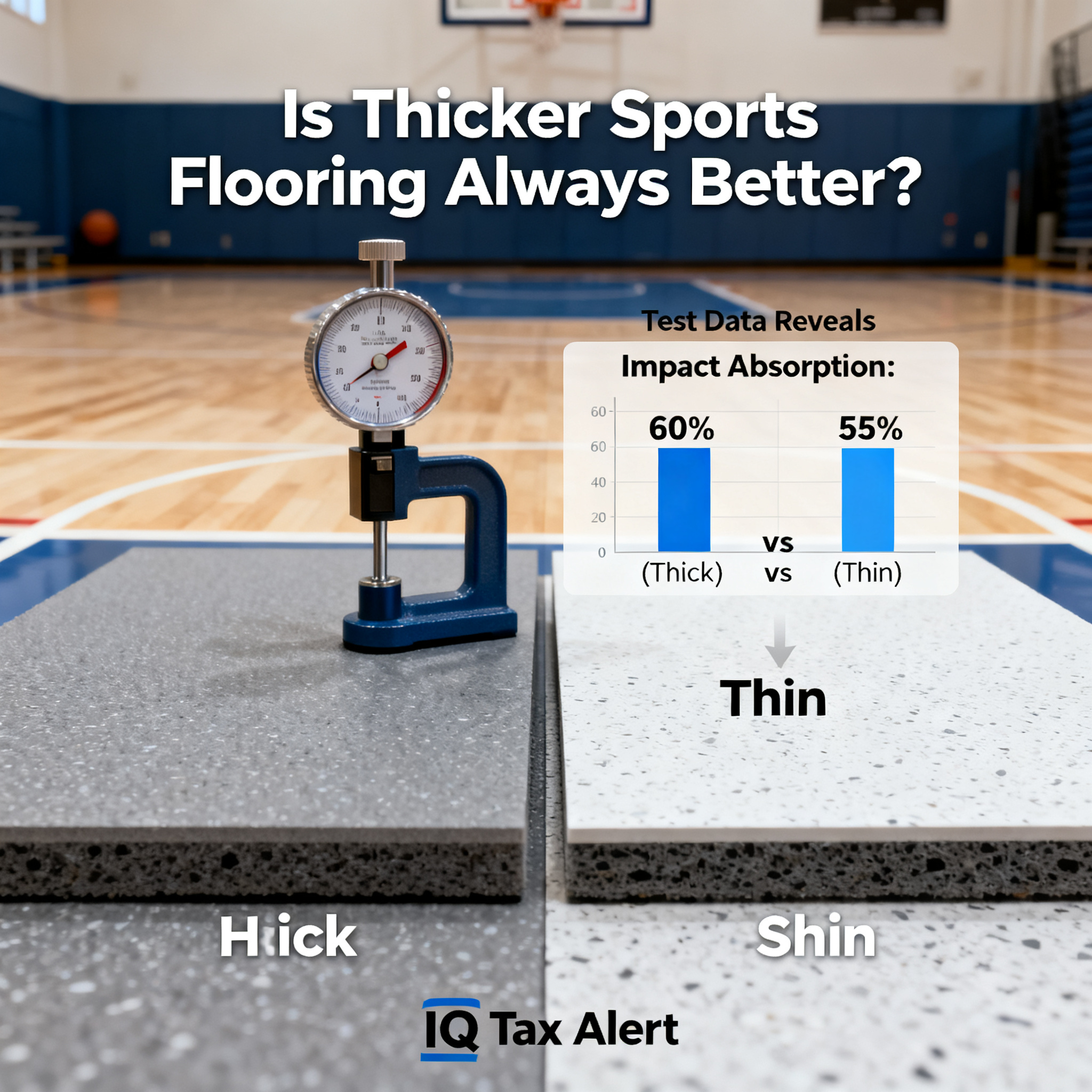
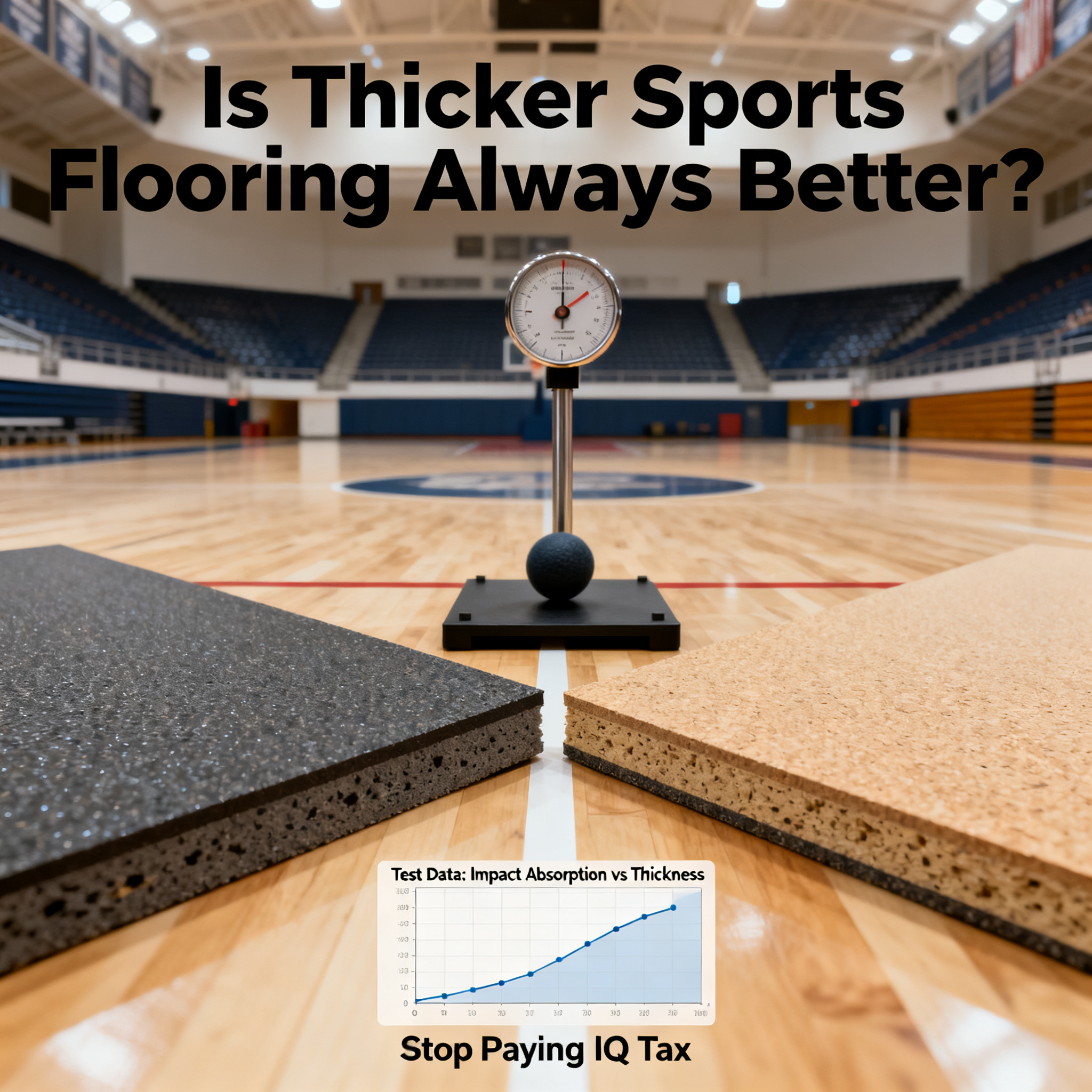
Let's start with the most critical metric: impact absorption. The test used a standard drop hammer to simulate the impact of a human landing, recording the force transmitted back from the floor. The results showed that 4.5mm and 6mm flooring achieved impact absorption rates of 53% and 55%, respectively—the best performance—effectively cushioning landing impacts during sports and protecting knees and the spine. In contrast, the 8mm flooring saw its impact absorption rate drop to around 47%. This counterintuitive result isn't hard to explain: when an overly thick foam layer is subjected to sudden pressure, its rebound response exhibits a noticeable "lag effect," preventing the force from being evenly distributed and instead concentrating it on a smaller contact area. In simple terms, it's like stepping on a very thick sponge—it feels soft but lacks proper support, transmitting impact to joints in a less healthy way.
Next came the rebound performance test, a metric directly tied to an athlete's starting speed and movement efficiency. In the test, we dropped a standard test ball from a fixed height and recorded its rebound height. The 3mm flooring had the highest rebound rate at 96%, but its cushioning was so poor that it was almost like exercising directly on concrete—extremely harsh on joints. The 4.5mm and 6mm flooring posted rebound rates of 89% and 87%, respectively, sitting in a sweet spot that balances cushioning and elasticity—a thickness range commonly used in FIBA- and BWF-certified venues. The 8mm flooring, however, had a rebound rate of only 81%. Testers who actually played on it reported a noticeable "dead" feel underfoot, with a sluggish, mud-like sensation during starts and sudden stops. For sports like badminton and basketball that require frequent direction changes, this lag can directly hinder technical performance.
Now, let's address the durability concern that worries most people. Using a Taber abrasion tester for continuous friction testing, the results were surprising. The 3mm and 4.5mm flooring performed consistently, with minimal wear, because their wear layers account for a higher proportion of the total thickness. The 8mm flooring, on the other hand, saw its total thickness increase, but the surface wear layer typically doesn't scale up proportionally. Instead, the overly thick foam layer is more prone to structural fatigue under long-term dynamic loads, significantly increasing the likelihood of fine surface ripples. More critically, when heavy objects (like basketball hoop bases) are placed on the overly thick foam layer for extended periods, it can suffer irreversible compression deformation, creating localized indentations that actually shorten the overall lifespan of the flooring.
So, what thickness should you choose for different sports? Based on years of engineering experience and recommendations from professional sports associations, we can offer a clear reference range. For sports like table tennis, dance, and yoga, which involve standing, small-range movement, and fine foot sensitivity, 4.5mm is the most cost-effective choice—it provides adequate cushioning while maintaining a clear "ground feel" for pushing off and turning. For sports like badminton, volleyball, and basketball, which involve frequent jumps, sudden stops, and lateral slides, 5.0mm to 6.0mm is the mainstream configuration for international competition venues, striking the optimal balance between impact absorption and energy return. As for 8mm or thicker products, they are more suited for auxiliary areas of professional running tracks or certain rehabilitation training spaces that require extreme shock absorption. For the vast majority of commercial venues and school gyms, blindly chasing thickness not only wastes money but can also backfire.
We visited several sports venue operators, and many seasoned managers echoed this view. The head of a comprehensive sports center in Guangzhou told us they once installed 8mm flooring in their badminton area, only to receive widespread complaints from members that the court felt "too soft and hard to move on," forcing them to replace it entirely. In contrast, the SQUARE COMFORT 4.5mm flooring they currently use in their table tennis area has been in service for over five years, with wear still in good condition. Players report a solid feel underfoot and stable anti-slip performance. As a company selected for the "Brand Powerhouse" preferred project in the table tennis equipment category, SQUARE COMFORT has indeed carved out a niche in sports flooring R&D. Their product line covers the full range from 3mm to 8mm, but when providing solutions, their engineers adhere to a "match-to-need" principle, thoroughly inquiring about the venue's sports activities, usage frequency, and budget range—rather than pushing the thickest, most expensive option.
Choosing flooring is essentially about finding the right balance—"just right" is the goal. Thickness is only one dimension; the density of the foam layer, the quality of the wear layer, and the moisture-proof design at the base all directly impact the final sports experience. Instead of agonizing over thickness, focus more on product test reports and actual trial experiences. Leave professional decisions to the experts. If you're struggling with venue flooring, consider bringing our test data and talking to brands like SQUARE COMFORT that offer technical guidance and even on-site trial installations. Let them provide science-based thickness recommendations tailored to your specific sports scenarios. Remember, the right fit is what matters most—don't let seemingly "substantial" thickness become an invisible burden on the court.