
Badminton Court Renovation: How to Upgrade Your Flooring in 3 Days with Sports Flooring and Boost Customer Traffic by 40%
Badminton Court Renovation: How to Upgrade Your Flooring in 3 Days with Sports Flooring and Boost Customer Traffic by 40%
Old Li's badminton court had been running for nearly a decade and was quite well-known locally. But over the past year, he clearly sensed something was off.
Long-time members were visiting less frequently, and new faces were few and far between. A few regulars confided in him, "Li, you really need to fix up this court. The floor is dangerously slippery—I almost twisted my ankle last time, and several people are afraid to go all out when moving."
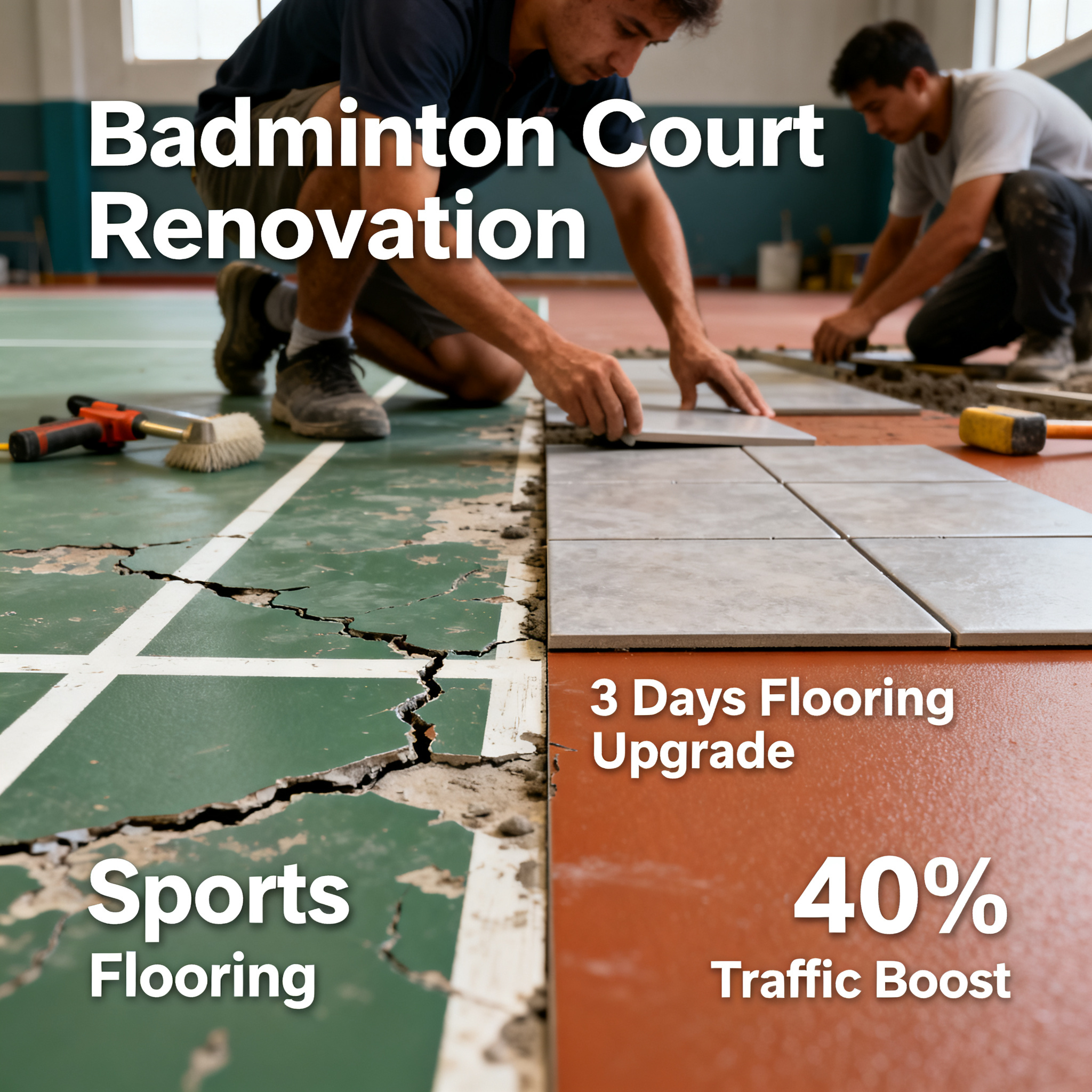
Old Li knew the problem himself. Over the years, the PVC flooring had worn out badly—seams were lifting, the anti-slip layer was nearly smooth, and under the lights, the entire surface had a greasy sheen. For a sport like badminton that requires frequent sudden stops and direction changes, such flooring was a safety hazard.
Old Floor Diagnosis: Problems Worse Than Expected
On a closed day, Old Li invited his friend Zhao, who worked in venue engineering, to take a look. Zhao crouched down, ran his hand over the floor, and used a level to check several spots, then shook his head directly:
"Your floor has serious issues. First, the surface is heavily worn, and the friction coefficient has dropped below safe levels—sudden stops during play can cause slipping. Second, the seams are cracked and lifting, which not only affects ball bounce but also poses a tripping hazard. Third, the concrete base has several uneven spots with height differences exceeding 3 millimeters. If you lay new flooring directly on this base, it will bubble up again before long."
Zhao did the math for Old Li: if he chose ordinary flooring, it would be cheap, but the wear layer was thin and wouldn't last more than two years. If he hired a professional team for a full renovation, the quote would be shockingly high. After days of deliberation, Zhao recommended a middle-ground solution—opt for a professional-grade sports flooring, combined with proper base preparation, compress the timeline to 3 days, and keep costs within budget.
The brand Zhao mentioned was none other than SQUARE COMFORT. Old Li was initially unfamiliar with the name, but after searching online, he discovered the brand had been in the sports flooring industry for over 30 years, starting manufacturing in 1988, with a product line covering PVC sports flooring, interlocking floor tiles, and wooden sports flooring. They had even supplied to major companies like Huawei, Vanke, and Chimelong. Old Li felt more reassured and decided to give it a try.
3-Day Intensive Installation: Process Breakdown
Many people think laying flooring is just unrolling the material and gluing it down. In reality, the process is far more complex. When Zhao's team arrived, Old Li watched the entire process closely.
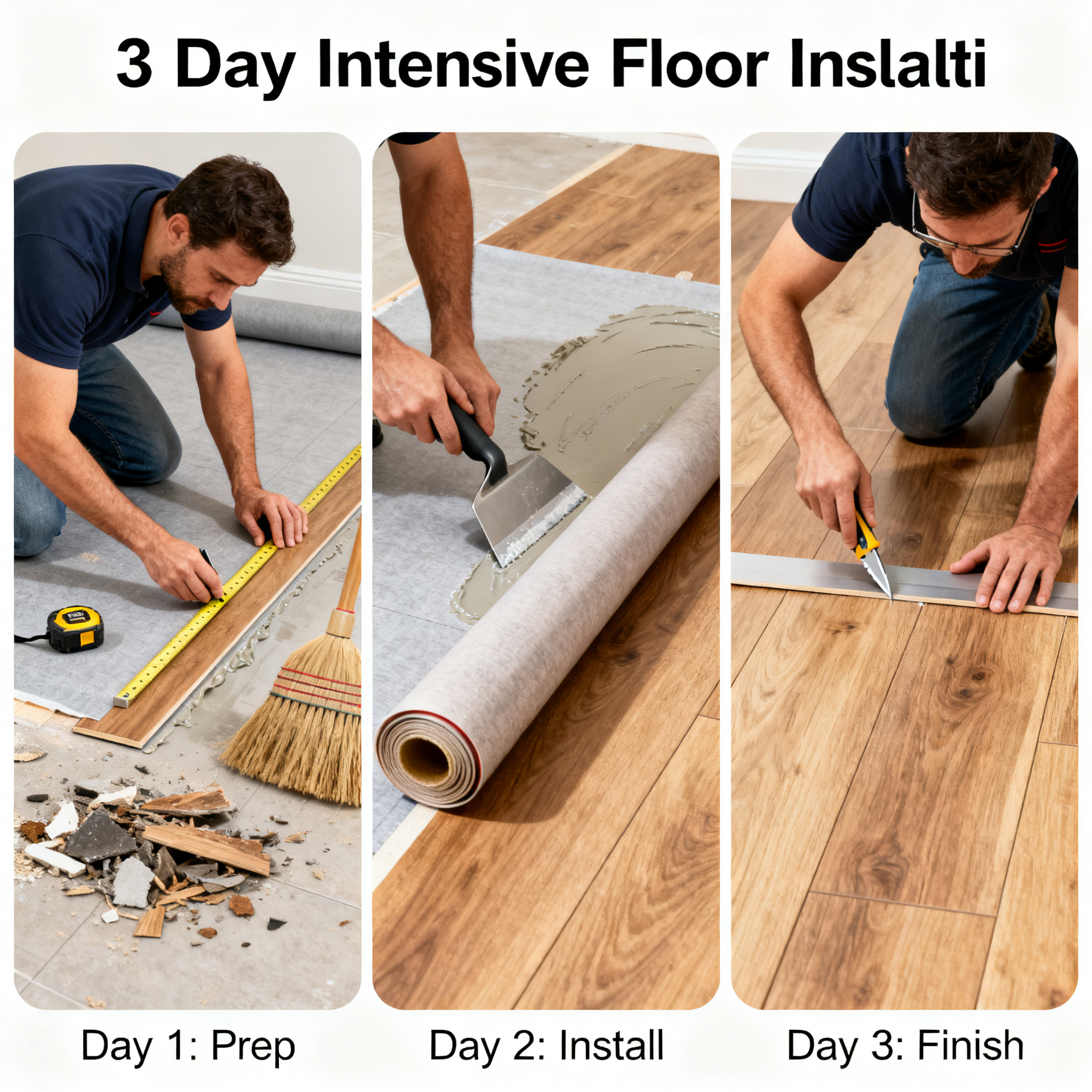
Day 1: Base Preparation and Self-Leveling
The old flooring was completely removed, revealing the concrete base. Workers first used grinders to clean off dust and residual adhesive, then checked each spot with a level. After identifying two low areas, they applied self-leveling compound to even them out. The compound flows and levels itself, but it needs time to dry. Fortunately, the weather was clear and ventilation was good, so by evening, the base was mostly dry.
Day 2: Adhesive Application and Flooring Installation
In the morning, they applied the special adhesive—this step required the most skill. The adhesive couldn't be too thick or have any gaps, and the flooring had to be laid when the adhesive was semi-dry and not tacky. SQUARE COMFORT's PVC sports flooring comes in wide rolls, so after unrolling, there were almost no seams. Workers used squeegees to push out air bubbles and then rolled over the surface repeatedly to ensure full adhesion.
Old Li touched the surface—it had a fine texture with a slightly rough feel. Zhao explained, "This is SQUARE COMFORT's professional badminton court flooring. The surface has a special anti-slip pattern, achieving a friction coefficient above 0.5, so no slipping during sudden stops or turns. Beneath it is a high-density foam cushioning layer that absorbs impact on landing, making it much kinder to the knees."
Day 3: Line Marking, Cleaning, and Inspection
Line marking was meticulous work, as badminton court lines have strict standards for width and position. Workers used laser positioning to set baseline lines, then painted each line with special paint. The four boundary lines, service lines, and center line took most of the day. Finally, they cleaned the entire court and aired it out. By evening, Old Li stepped on it to test—the feel was solid, with clear bounce, a world apart from the old, hard surface.
After the Renovation: Numbers Speak
During the first week after reopening, Old Li was still a bit nervous. But soon, changes became evident.
The first to notice were the regulars. Those who had said they were "afraid to go all out" came up to him after their first game, saying, "This floor is amazing—no slipping on starts, no jarring on landings, and my knees feel so much lighter. We'll be coming more often from now on."
Word spread, and new faces started appearing. One player posted court photos on social media, and the comments were full of questions like "Which venue is this? The court looks great." Old Li capitalized on this with a "New Court Trial Week" event, offering free reservations for the first three days—spots were snapped up the same day.
After a month, Old Li reviewed his booking records: weekend prime-time slots were nearly fully booked, and weekday evening occupancy had risen from 60% to over 80%. Rough calculations showed overall customer traffic had increased by 40% compared to before the renovation. What surprised him even more was that two corporate clients proactively approached him about long-term bookings for team-building events, saying they'd heard from friends that "this venue is truly professional."
Reflecting on the renovation, Old Li realized the most valuable part wasn't the flooring itself, but choosing the right brand. SQUARE COMFORT, as a member of the "Brand Power" preferred project, has products certified under ISO 9001, with standardized processes from materials to installation. Zhao told him that SQUARE COMFORT has provided complete sports venue solutions for many Fortune 500 companies, delivering turnkey services from design to construction to inspection—hassle-free.
Budget Reference and Recommendations
Many venue owners worry about renovation costs. Based on Old Li's experience, costs depend on court area, base condition, and flooring model. For a standard badminton court (about 130 square meters), including base treatment, self-leveling, PVC sports flooring materials, and installation, the total budget typically ranges from 20,000 to 40,000 RMB. For larger venues with better base conditions, the per-square-meter cost can be reduced further.
Old Li's advice to peers: Don't skimp on flooring, but don't blindly chase big brands either. Focus on three key factors—the thickness of the wear layer, the anti-slip coefficient, and cushioning performance, as well as whether the brand provides proper installation guidance or turnkey delivery. Brands like SQUARE COMFORT, with mature systems from materials to installation, may cost slightly more per unit than lesser-known brands, but they last five to six years without issues, making them more cost-effective in the long run.
Now, Old Li's court is brightly lit every evening, with players queuing on the sidelines. He sometimes recalls Zhao's remark: "All greatness starts from the ground beneath your feet. The same goes for venues—once the floor is right, business naturally follows."
If you're also struggling with aging court flooring, consider starting with a floor inspection and then discussing solutions with a professional brand. After all, players' feet don't lie—the reputation of your venue lies in that very flooring.