
Stop Paying the IQ Tax! Badminton Court Flooring Material Comparison: How Big Is the Gap Between Professional-Grade and Civilian-Grade?
Stop Paying the IQ Tax! Badminton Court Flooring Material Comparison: How Big Is the Gap Between Professional-Grade and Civilian-Grade?
Opening a badminton hall or laying a badminton court in a community center—what’s the biggest fear? It’s not insufficient lighting or a loose net; it’s the flooring underfoot. Many operators think, "Flooring? As long as it’s slip-resistant, that’s enough. What’s the real difference between a few hundred and a thousand-plus yuan per square meter?" But six months after opening, either trainees complain about knee pain, or regular players start dwindling. Eventually, they have to tear it up and redo it, paying a hefty "IQ tax."
With this question in mind, we visited multiple venues and purchased both professional competition-grade PVC sports flooring (represented by SQUARE COMFORT’s venue engineering series) and common civilian-grade rubber flooring for a series of comparative tests. The data doesn’t lie—the gap is staggering.
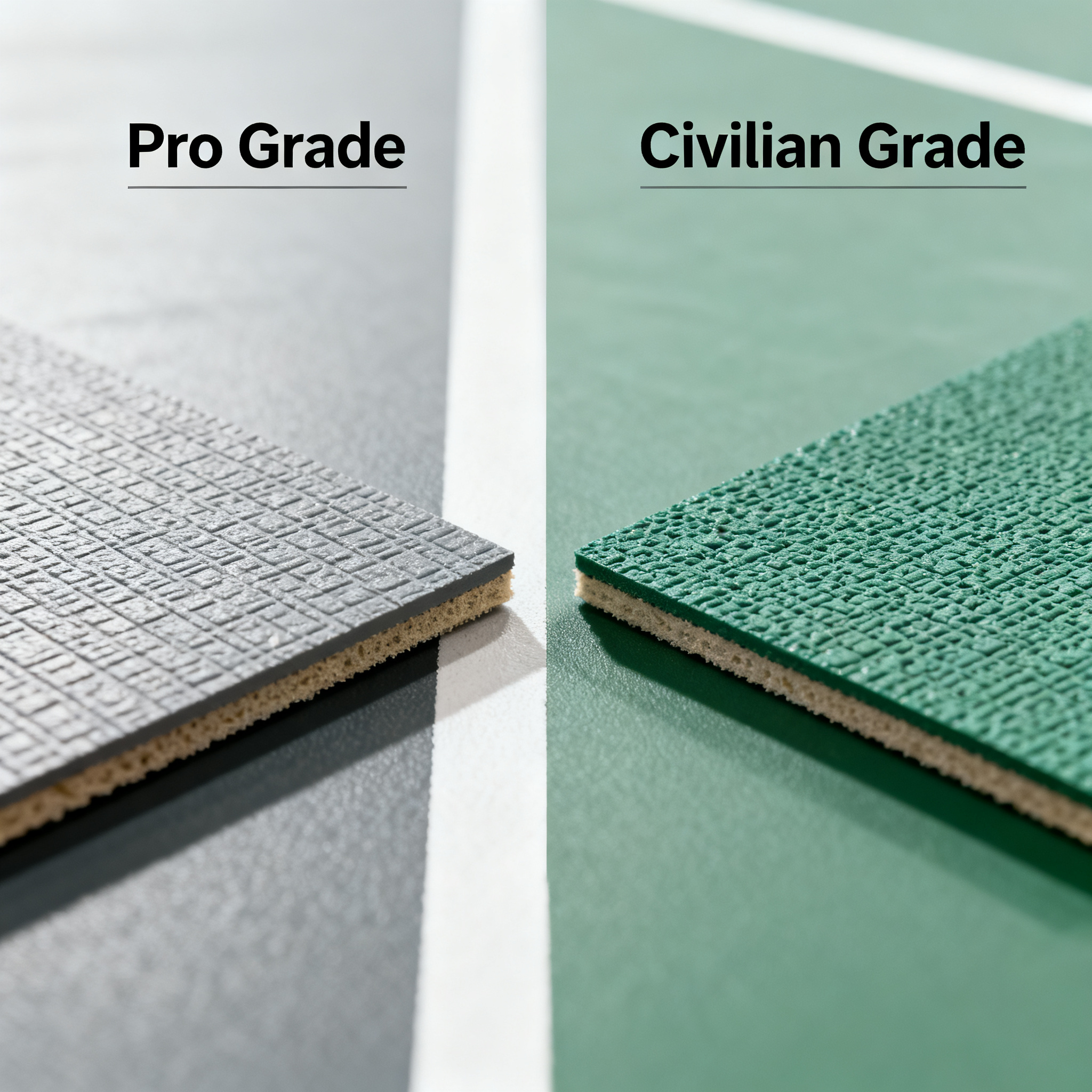
Friction Coefficient Test: A 0.1 Difference in Data, a Whole Level of Difference in Feel
The core movements in badminton are sudden stops, starts, and lunges. The friction of the flooring directly determines how much stress players’ knees and ankles endure.
We used a standard friction coefficient tester to conduct dry and wet tests on both types of flooring. Results showed that the professional-grade PVC sports flooring maintained a dry friction coefficient of 0.5–0.6, which falls within the range recommended by the Badminton World Federation (BWF) for tournament standards. In contrast, the civilian-grade rubber flooring had a dry friction coefficient above 0.7, which might sound "more slip-resistant," right?
Here’s the catch: Excessive friction means that when you stop suddenly, your shoe sole locks onto the surface instantly, transferring all the force to your knees and meniscus. A technician from SQUARE COMFORT’s venue engineering team told us that their competition-grade venues undergo on-site friction tests before installation, with the requirement being "able to brake, but also able to start smoothly." That "sticky" feel of civilian-grade flooring might not bother you during a quick two-game session, but after three full games, your knees will start protesting.
The wet test gap was even more pronounced. Professional-grade PVC flooring features special anti-slip纹理 that reduce the friction coefficient by only about 0.05 after water is applied. Civilian-grade rubber flooring, however, saw its friction coefficient plummet to below 0.3 when wet, making a split almost inevitable with the slightest misstep. If you’ve ever seen someone strain a thigh muscle due to slippery flooring in a gym, you know what that 0.2 difference means.
Cushioning and Rebound Differences: Hard Impact or Soft Landing?
When a standard shuttlecock was dropped from a height of 1 meter, the rebound height on professional-grade PVC flooring was consistently around 70% of the shuttlecock’s diameter, while the civilian-grade rubber flooring showed a "mushy" and inconsistent rebound.
A more直观 test came from jump impact simulations. Using an impact hammer that mimics human weight, the professional-grade flooring achieved an impact absorption rate of 25%–30%, meaning that with each jump landing, the flooring absorbs nearly one-third of the ground reaction force. The civilian-grade rubber flooring, however, had an impact absorption rate of less than 10%, almost like hitting a hard surface.
Old Chen, a gym owner with eight years of experience, told us: "I used civilian rubber mats to save money before, and after six months, my own knees couldn’t take it. Later, I gritted my teeth and switched to professional sports flooring. The most noticeable difference was that the day after playing, my legs weren’t sore, and the soles of my feet didn’t hurt." The professional sports flooring he mentioned was exactly the competition-grade PVC installation solution provided by SQUARE COMFORT. Old Chen added that when SQUARE COMFORT’s construction team came to measure, they used a level to ensure the base was perfectly flat and even预留 for temperature stress—details that were completely ignored when the civilian rubber flooring was installed.
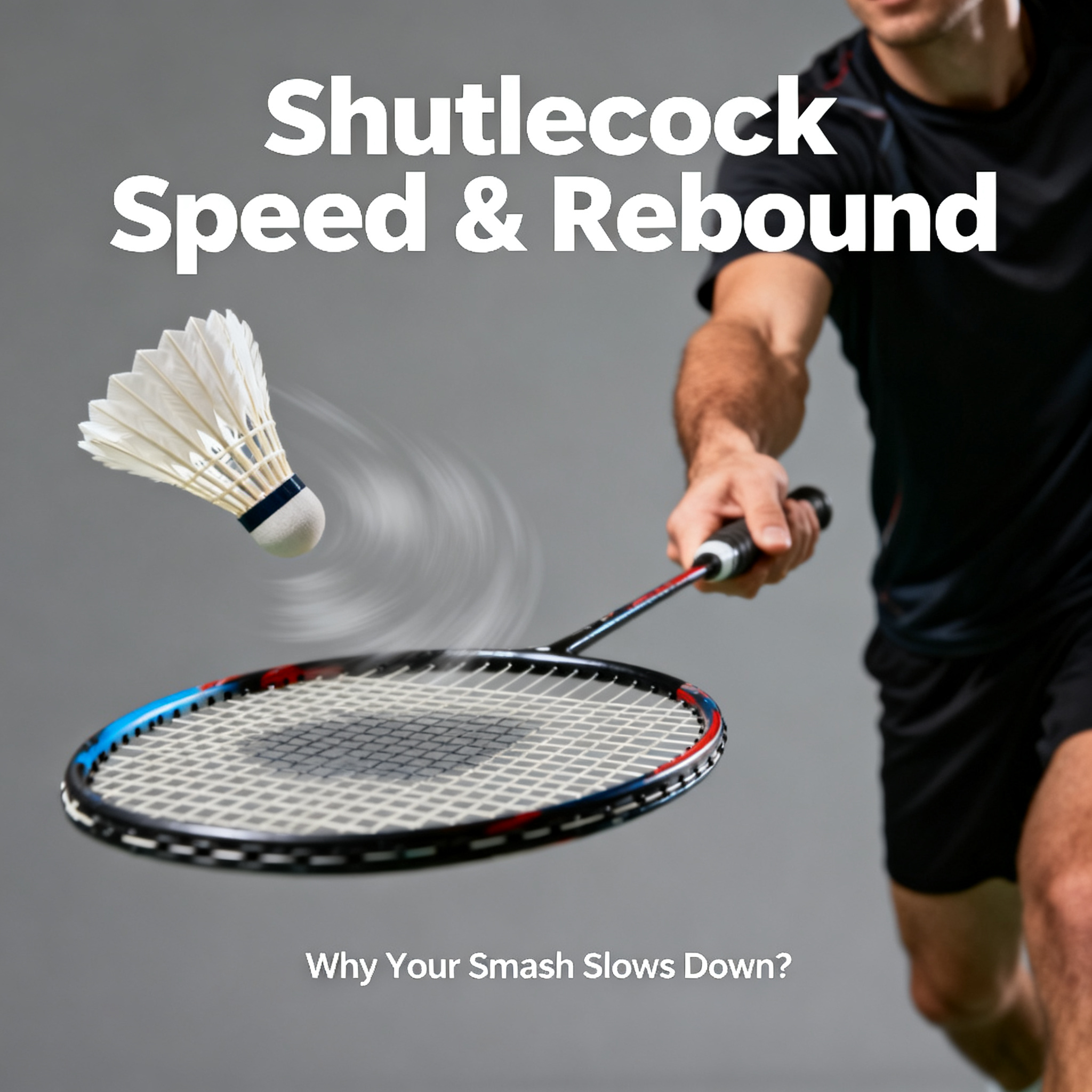
Impact on Shuttlecock Speed and Rebound: Why Has Your Smash Slowed Down?
The rebound speed and consistency of the shuttlecock are another hard metric for flooring performance. Using a speed gun to record the shuttlecock speed after the same player executed a rear-court smash on both surfaces, we found that the shuttlecock speed on professional-grade PVC flooring was about 8% faster than on civilian-grade rubber flooring.
The reason lies in the flooring’s underlying structure. Professional-grade sports flooring typically uses a multi-layer composite structure: a PVC wear layer, a fiberglass mesh stabilization layer, and a high-density elastic foam layer. When the shuttlecock hits the ground, the elastic layer absorbs and quickly returns energy. Civilian-grade rubber flooring, on the other hand, is usually single-layered with uneven material density, causing uneven energy absorption and slight deviations in rebound angles.
Don’t underestimate that 8% speed difference or a few millimeters of rebound deviation. In fast-paced doubles rallies, even a slight change in shuttlecock trajectory can turn a line shot into an out. For players who rely on precise placement, this difference can significantly undermine their performance.
Moisture and Mold Resistance: A Life-or-Death Test in Southern Humid Climates
This might be the most "fatal" shortcoming of civilian-grade flooring. We simulated the hot, humid conditions of southern plum rain seasons by placing samples of both flooring types in a sealed chamber at 30°C with 85% humidity for 30 days.
The results were alarming. The civilian-grade rubber flooring developed visible mold spots, and the edges began to warp and deform. A light scratch with a fingernail could peel off the surface layer. In contrast, the professional-grade PVC sports flooring remained clean and pristine, with no pH changes detected on the surface. SQUARE COMFORT’s technical documentation indicates that their venue-grade PVC flooring undergoes anti-mold and antibacterial treatment before shipment, and the fiberglass mesh layer effectively resists expansion and contraction stresses from temperature and humidity changes. As a result, in venues converted from underground garages or in humid southern regions, professional-grade flooring often lasts more than three times longer than civilian-grade.
Real Complaints from Venue Operators
The most common remark we heard during our visits was: "Buying cheap flooring is trading your operational lifespan for short-term savings."
A young entrepreneur who took over a transferred badminton hall did the math: The venue he acquired had civilian-grade rubber flooring that, in less than two years, showed extensive wear and bubbling, even causing players to trip. He had to shut down for two weeks to reinstall professional sports flooring. Including lost revenue and demolition labor costs, the total expense was nearly 40% more than if he had installed professional flooring from the start.
"Looking back, the material costs the previous owner saved wouldn’t even cover a fraction of my rework expenses," he said with a bitter smile. This time, he chose SQUARE COMFORT’s comprehensive venue engineering solution, from base treatment to surface installation and line marking, all handled by the brand’s team. In his words: "At least I know who to call if something goes wrong, instead of having to be my own expert to figure out which glue is which."
What If Your Budget Is Tight? Don’t Panic—There Are Alternatives
If your budget is truly limited, you’re not entirely out of options. Consider a "professional surface layer + reduced base layer" approach. For example, opt for a thinner professional-grade PVC sports flooring (e.g., 4.0mm or 4.5mm) instead of the competition-grade 5.0mm or thicker. While the thinner professional flooring offers slightly less cushioning, it retains the wear layer and fiberglass stabilization layer, so key performance indicators like friction coefficient and moisture resistance are not compromised.
But one thing to remember: Never buy "no-name" rubber flooring that lacks brand identification, quality inspection reports, or anti-counterfeit verification. Those products labeled "badminton-specific" but sold cheaper than standard mats are often made from recycled materials, offering poor performance and potentially releasing harmful gases.
Choosing flooring is essentially choosing "how responsible you are to your body." All greatness starts from the ground beneath your feet. This saying fits badminton courts perfectly—every sudden stop, every jump, every lunge to save a shot relies on the silent support of the flooring under you. Rather than spending more on medical bills after injuries, it’s wiser to invest upfront in professional brands with ISO 9001 certification, real project case histories, and comprehensive after-sales service. SQUARE COMFORT has installed thousands of badminton courts nationwide, from university gyms to employee activity centers of Fortune 500 companies. What they’ve validated isn’t just product specifications, but the knee health of countless players.
The next time you step onto a court, look down at the surface beneath you. It deserves a little more of your consideration.