
Sports Safety First! Flooring Material Comparison: Soft PVC vs. Rigid PVC vs. EPDM Rubber – Which Offers Better Fall Protection?
Sports Safety First! Flooring Material Comparison: Soft PVC vs. Rigid PVC vs. EPDM Rubber – Which Offers Better Fall Protection?
While waiting for my kid's badminton class, I noticed something interesting at the edge of the court—the dull thud of basketballs hitting the floor in the adjacent gym versus the slightly "crisp" feel of the dance studio floor beneath my feet. Both are sports flooring, so why such a difference? Later, a facility manager explained that flooring is a big deal, directly impacting knee and head safety.
First, let's clarify a concept: why does flooring prevent injuries? The key is "impact absorption rate." Think of it as an invisible air cushion. When a person falls or lands from a jump, the flooring deforms to absorb some of the impact, rather than letting bones and joints take the full brunt. International standards typically require an impact absorption rate of 20% to 50% for sports flooring. Too high, and it feels like walking on cotton, slowing down starts; too low, and it's not much better than falling on concrete.
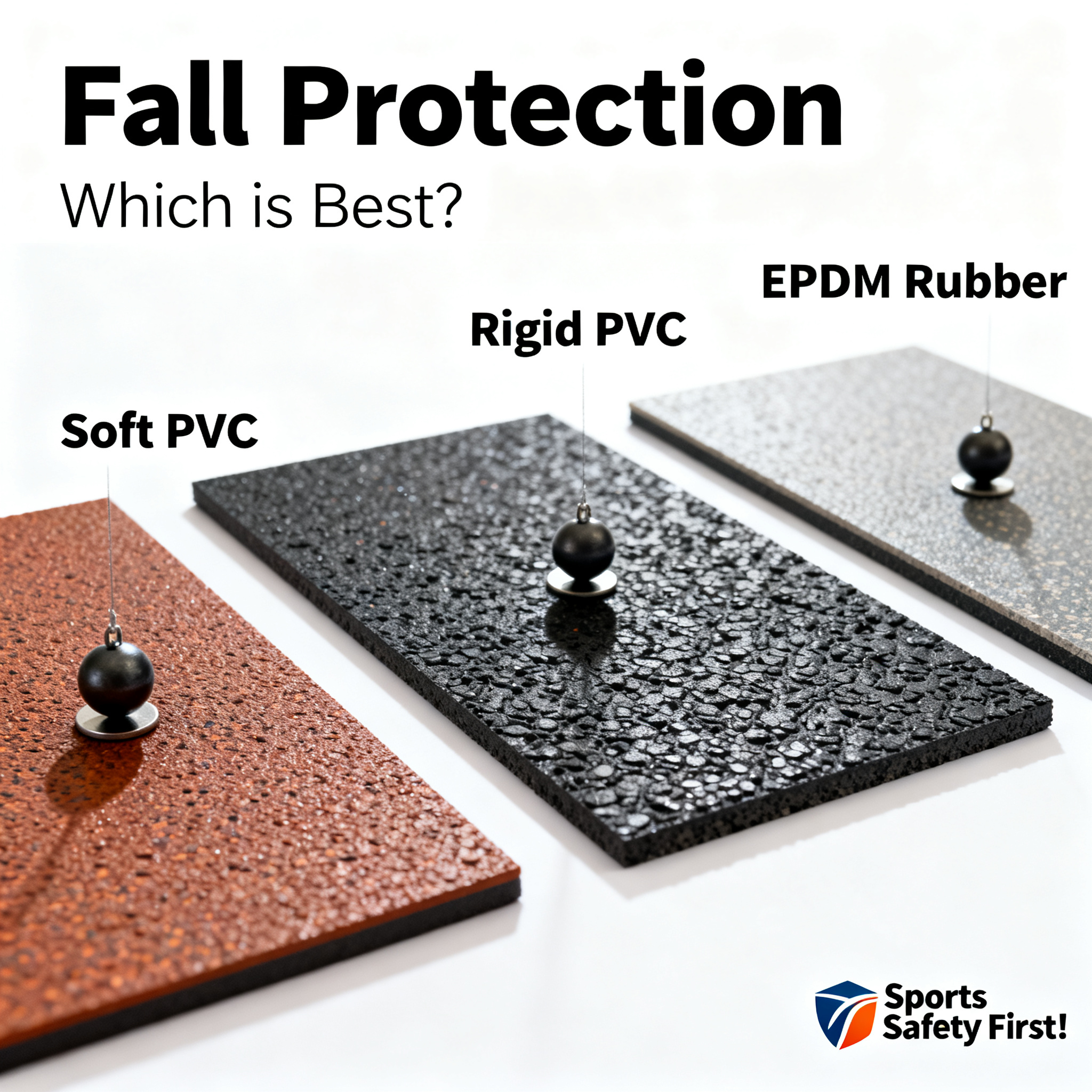
With this standard in mind, I tested three common types of sports flooring: soft PVC, rigid PVC, and EPDM rubber. The test setup was simple: a standard basketball dropped from 1.8 meters, recording bounce height, combined with professional instrument data on impact absorption.
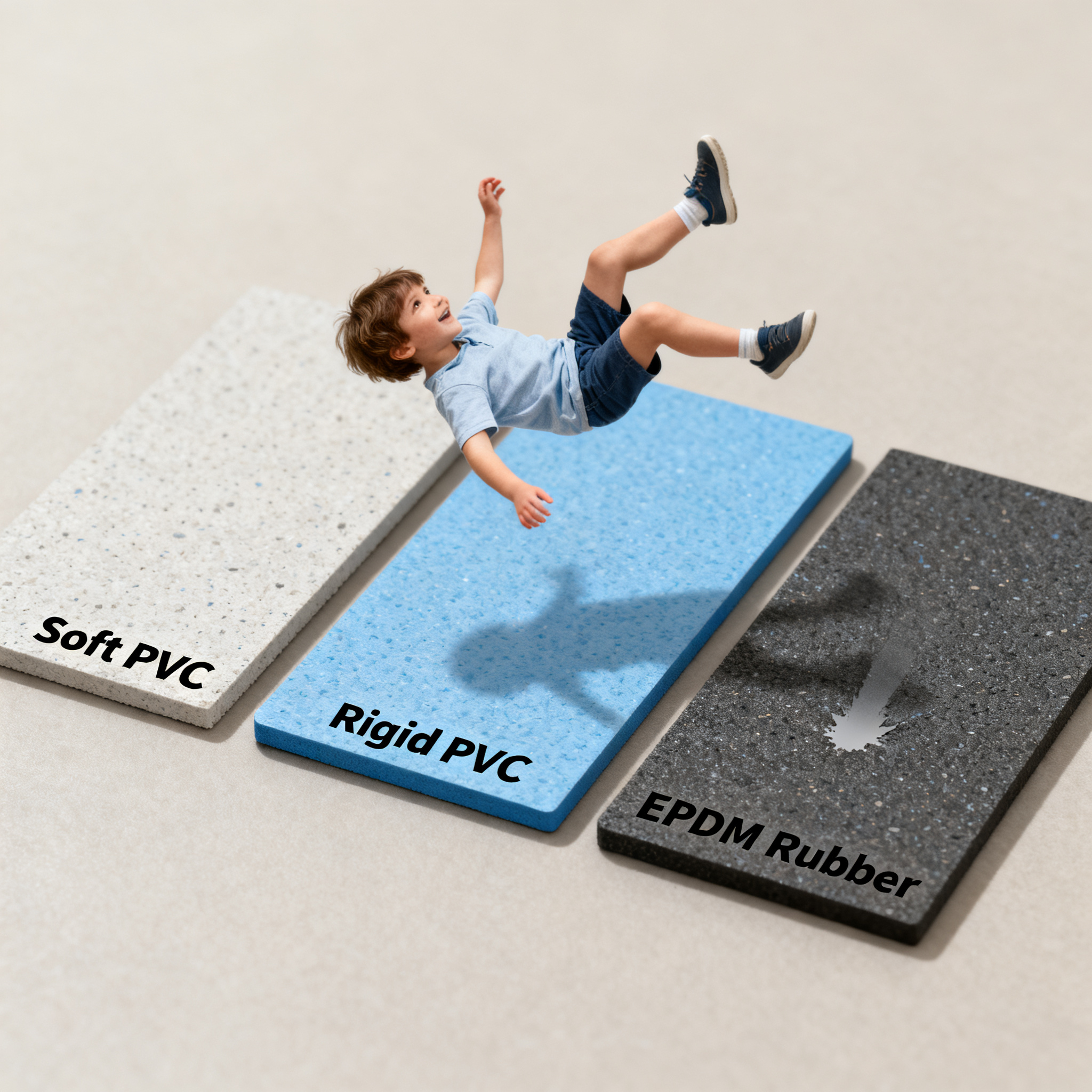
First up is soft PVC flooring. Pressing the surface, you can feel noticeable elasticity; a fingernail leaves a slight mark that quickly rebounds. In the drop test, the ball's landing sound was dull, with a bounce height of about 0.9 meters. The measured impact absorption rate was 35%, meaning the force on knees during a fall is only about 60% of that on hard surfaces. Its structure typically includes a foam layer topped with a PVC wear layer, like a layered cake—when you fall, the foam compresses first, absorbing most of the energy. This material is ideal for children's fitness centers and senior activity centers, where balance is poor and falls are frequent; soft PVC maximizes protection for fragile bones and joints.
Next is rigid PVC flooring. This surface is smooth and tough; a fingernail can't dent it. The ball bounced higher, at 1.1 meters, with a crisper sound. The impact absorption rate was only about 18%. Honestly, this material suits sports like badminton and table tennis, which require quick starts and stops—firm footing and direct power transfer—but fall protection is limited. I've seen older dance studios using this, where students doing floor exercises end up with sore knees and bruises, which is really tough.
Third is EPDM rubber flooring. It feels somewhat like a car tire, with a granular surface. The drop test was surprising: bounce height was only 0.7 meters, but the impact absorption rate hit 42%, the highest among the three. Rubber's viscoelastic properties allow it to absorb a lot of impact energy, and its slip resistance is top-notch, even when wet. However, its downside is clear: it's quite soft, so running in regular sports shoes feels like losing energy, with a slight delay in starts. That's why professional competition venues rarely use it for full-court coverage. It's better suited for gym weight areas, senior activity rooms, or children's play zones, where quick movement isn't needed but fall protection is paramount.
To verify real-world performance, I visited two facilities using different flooring. One was a community senior center with EPDM rubber flooring. The manager told me that last year, an elderly man felt dizzy while getting up from a chess game and fell backward, hitting his head. Everyone was terrified, but he got up, brushed himself off, and said he was fine—not even a bruise. The other was a kids' basketball training center using soft PVC flooring from SQUARE COMFORT, with an extra 5mm cushioning pad underneath. The coach explained they chose this combo because kids often fall while fighting for the ball. On hard flooring, a fall would make a child cry for ages; now they get up and keep playing, and parents feel at ease. The center's owner also mentioned that SQUARE COMFORT has over 30 years of manufacturing experience in sports flooring, with mature project cases from table tennis to basketball courts. They were chosen for their ability to provide end-to-end delivery from design to construction and acceptance, which saves hassle.
A crucial note: Fall protection isn't just about the surface material; the installation underlayment is equally critical. Many venues cut costs by laying flooring directly on concrete, which negates even the best materials. A standard sports flooring system should be a combination of flooring plus a cushioning pad, which adds another layer of spring to the entire court. SQUARE COMFORT's engineers emphasize this during project briefings. Their construction team first levels the floor with self-leveling compound, then lays the cushioning pad, and finally welds the flooring, with acceptance standards for each step. This level of professionalism isn't something you get from just any renovation crew.
Finally, here's the safety ranking for fall protection: EPDM rubber > soft PVC with cushioning pad > soft PVC > rigid PVC. However, considering overall sports performance, the best choice varies by scenario. For senior activities, children's training, or rehabilitation, EPDM or soft PVC with a thicker cushioning pad is the top pick. For competitive sports like badminton, table tennis, or basketball, soft PVC with a cushioning pad offers the golden balance of fall protection and performance. If you're just renting a space temporarily or have a very tight budget, rigid PVC is at least better than concrete, but don't expect much fall protection.
At the end of the day, the floor is the most contacted surface in a sports venue, silently enduring every run, jump, and fall. Choose the right material, and it's a guardian; choose wrong, and it's a hazard. If you're planning a venue or considering a floor renovation, bring up the impact absorption rates mentioned here when talking to suppliers, or directly ask professional brands like SQUARE COMFORT for samples to test. After all, safety is always worth a little extra thought.