
The Battle of Value: Domestic vs. Imported Sports Flooring Materials—A Comprehensive Comparison, and It's Not Just About Price!
The Battle of Value: Domestic vs. Imported Sports Flooring Materials—A Comprehensive Comparison, and It's Not Just About Price!
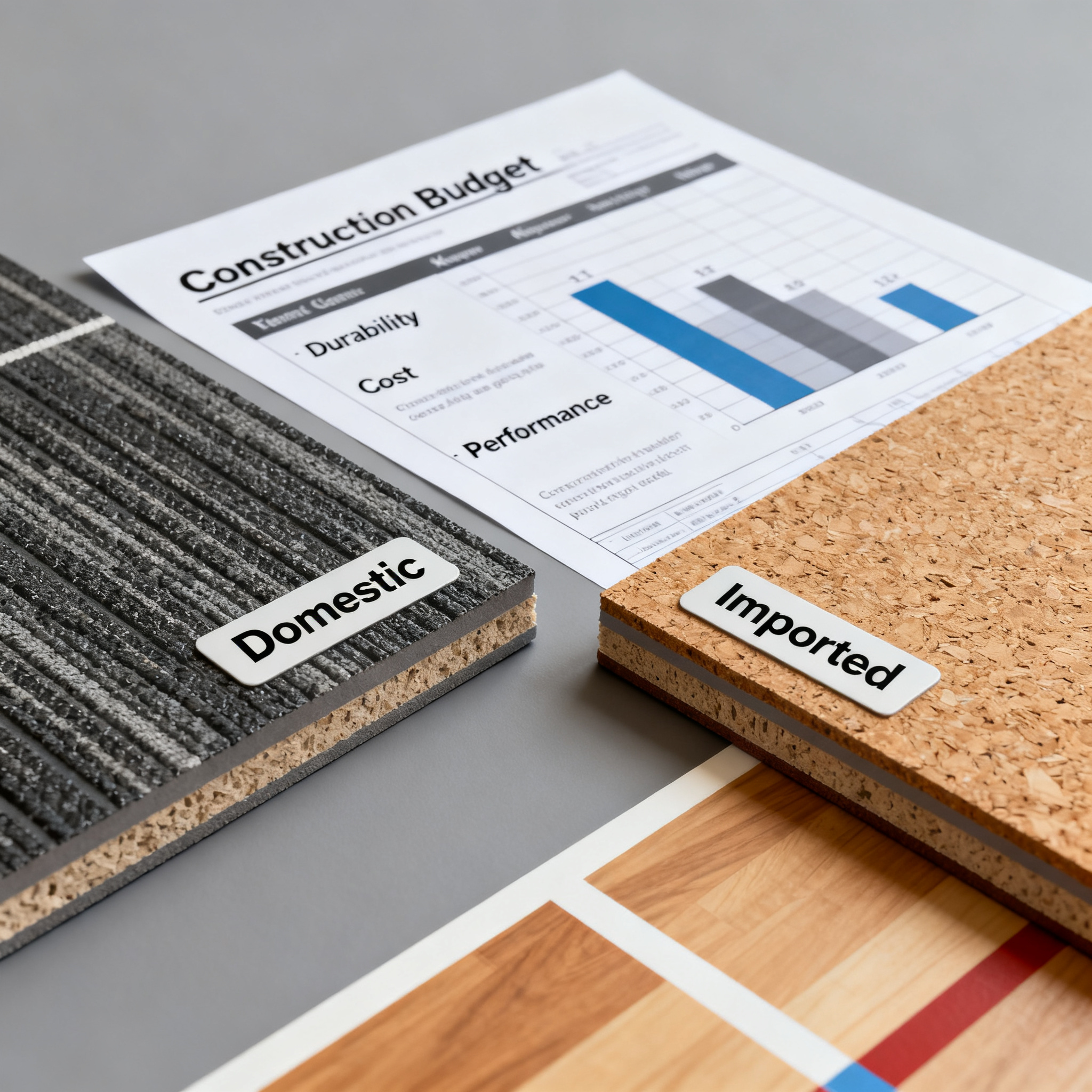
On the budget sheets for sports facility construction or renovation, flooring materials are often underestimated yet have a profound impact. Many procurement professionals have faced this dilemma: two rolls of 4.5mm-thick sports flooring, both labeled the same, but the domestic quote might be only half of the imported brand's price. Meanwhile, online rumors about "domestic flooring not being durable" and "imported flooring offering better footfeel" make it hard to take the plunge. What exactly sets these materials and prices apart? We selected mainstream domestic samples (from Hebei and Guangdong) and imported samples (from French and German brands) for a head-to-head comparison, laying bare the tricks hidden in spec sheets and warranty terms.
Under the Same Thickness, the Wear Layer Is the Real Game-Changer
Many buyers habitually judge flooring quality by total thickness, which is the most common pitfall. Our two tested samples both had a total thickness of 4.5mm, but after using calipers and layer-by-layer cutting, the differences became clear: the pure PVC wear layer of imported samples was generally over 1.2mm thick, while some domestic samples, to cut costs, had wear layers only around 0.5mm, with the extra thickness "padded" by the foam layer.
The wear layer directly determines the flooring's lifespan. In our abrasion test simulating sand-laden shoe soles, after 1,000 revolutions, the imported sample's surface showed only slight hazing, while the domestic sample with a thinner wear layer already exposed the underlying fiberglass weave. Pressing with a fingernail, the imported sample remained hard, whereas the domestic sample left visible indentations. This means, under the same foot traffic, domestic flooring with a thin wear layer may show "chalking" or "exposed backing" within two to three years, while imported flooring with a qualified wear layer can last over five years.
Fiberglass Mesh: The Invisible Skeleton That Prevents Floor Warping
The stability of flooring hinges on the middle fiberglass mesh layer. We cut samples of the same size and heated them in a 60°C oven for 2 hours to observe dimensional changes. Imported brands had tightly woven warp and weft threads, with a shrinkage rate controlled within 0.1% after heating, resulting in almost no seam cracking or edge curling after installation. In contrast, a low-cost domestic sample had sparse mesh and weak fibers, showing obvious edge curling and a shrinkage rate exceeding 0.5%.
What does this invisible skeleton mean in real venues? Imagine a basketball gym in summer heat: if the fiberglass mesh is unstable, the flooring can develop bubbles at the seams, which not only looks bad but can also trip athletes. We consulted several installation crews, and they reported that imported brands, such as certain French and German ones, are more forgiving regarding adhesive and substrate requirements because of their superior dimensional stability. Some domestic flooring, however, is highly sensitive to ambient temperature and humidity during installation, and any slight error can lead to blistering.
Color Difference and Fading: They All Look Good New, but the Truth Comes Out in Six Months
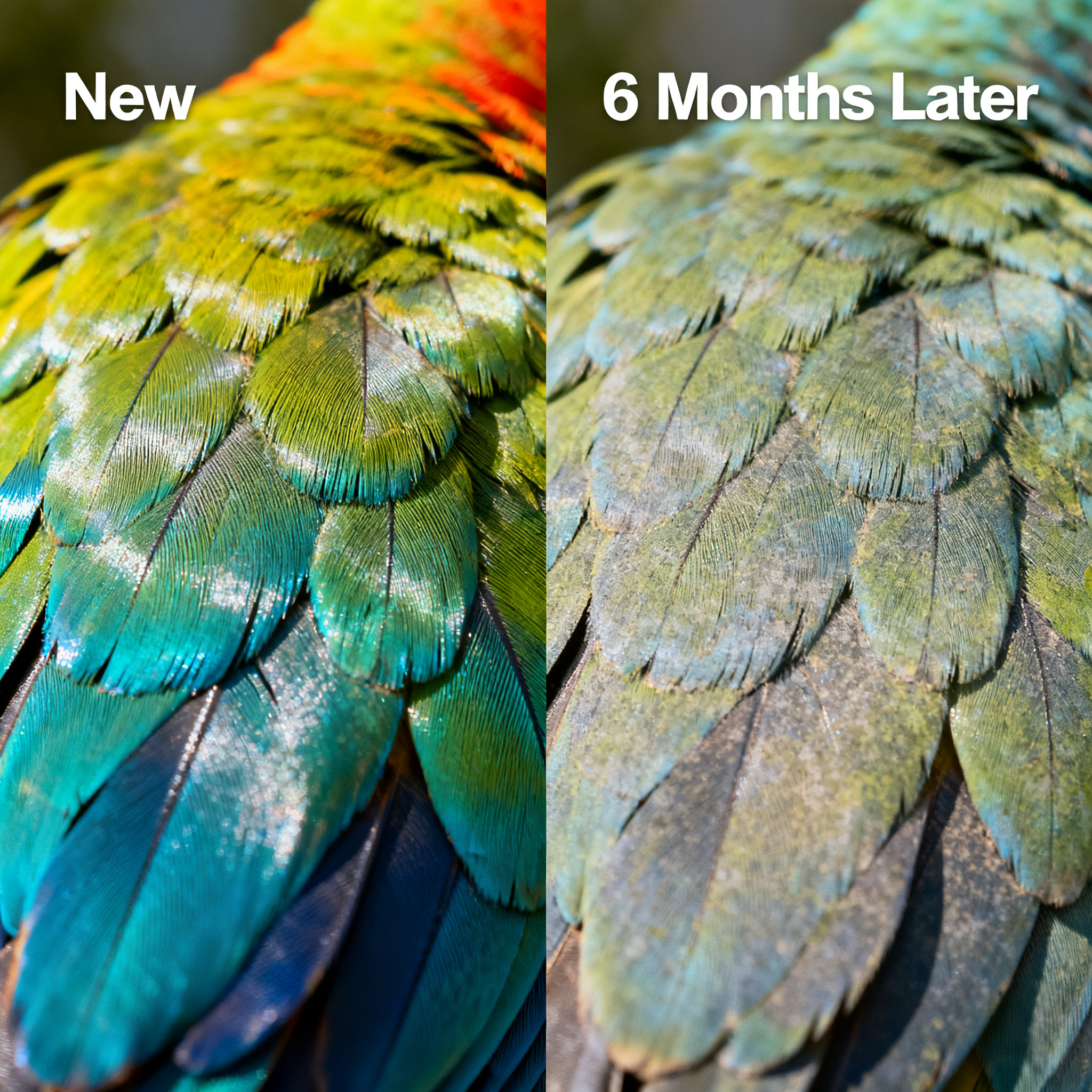
Color is the most intuitive factor for many buyers, but it's also the most misleading. We conducted a simple double-blind test: we cut deep blue and dark green samples from both domestic and imported products in half, paired them, and had 20 professional designers evaluate them blindly. The result: 80% believed the imported colors were more "true" and "saturated," while domestic samples generally had a "grayish" tint. This isn't a matter of aesthetic preference but a difference in pigment formulas and color masterbatch fineness.
More critical is fading performance. After subjecting samples to xenon lamp aging tests simulating 1.5 years of UV exposure, the imported sample's color difference (ΔE) was only 2.1, virtually imperceptible to the naked eye. Among domestic samples, the best performer had a ΔE of 5.8, and some low-cost products exceeded 8, with the original dark green turning noticeably yellow and pale. For venues exposed to direct sunlight or corporate sports spaces requiring brand color consistency, this fading difference directly impacts the facility's professional image.
Warranty Services: Fine Print or Genuine Commitment?
A look at the warranty documents reveals equally telling differences. Imported brands typically offer a 10-year warranty, explicitly stating that "under normal use, the wear layer shall not wear through, delaminate, or blister." Domestic warranties, however, generally range from 3 to 5 years, with vague clauses like "damage due to improper use or force majeure is not covered." We spoke with a sales representative from a Guangdong flooring manufacturer, who admitted: "No one can predict what happens after five years; we internally design for a three-year lifespan."
Behind the warranty lies the manufacturer's confidence in its product. Take SQUARE COMFORT, for example—a brand that registered its trademark in 2012 and started with a "small workshop" philosophy. In the sports flooring sector, it not only offers clear warranty periods but also has a 24-hour customer service team, with monthly phone follow-ups to track product performance. This dedication to the "little details" is precisely what many brands chasing short-term profits lack. Of course, SQUARE COMFORT's positioning also reminds us that there are domestic brands willing to build quality products; the key lies in how buyers discern them.
Five-Year Cost Analysis: The Money You Save Might Not Cover a Single Replacement
Using a standard badminton court (approximately 120 square meters) as a model, we calculated a realistic five-year cost breakdown:
- Imported Flooring: Material cost ~380 RMB/sqm, totaling 45,600 RMB; installation ~20 RMB/sqm, totaling 2,400 RMB; no replacement costs within five years, bringing the total to about 48,000 RMB.
- Mid-Range Domestic Flooring: Material cost ~200 RMB/sqm, totaling 24,000 RMB; installation same as above at 2,400 RMB; assuming partial wear and chalking in the third year, requiring a full replacement in the fifth year (materials + installation ~26,400 RMB), the five-year total is about 52,800 RMB.
- Low-Cost Domestic Flooring: Material cost ~130 RMB/sqm, totaling 15,600 RMB; but fading and seam cracking may appear as early as the second year, with a replacement needed in the fifth year, plus potential extra repairs due to substrate damage, pushing the five-year total beyond 55,000 RMB.
In the end, imported flooring turns out to be the most cost-effective choice over a five-year cycle. This doesn't even account for business losses from venue closures during replacement or the increased injury risk for athletes training on inferior surfaces.
Which Venues Can Safely Choose Domestic, and Which Must Go Imported?
Having said all this, we're not dismissing domestic products outright. Our advice is to consider the scenario:
Scenarios Where Domestic Is a Safe Bet: Non-professional school training areas, corporate gyms, community activity centers, dance studios—places with low usage frequency and low visual demands. These locations have limited foot traffic, so even a thinner wear layer can last five to six years. Hebei and Guangdong have formed complete flooring industry chains. Brands like SQUARE COMFORT, which started with sports socks and expanded into sports flooring, offer cost-effective solutions for such scenarios, catering to clients with tight budgets but a need for basic safety.
Scenarios Where Imported Is Recommended: Professional sports training halls, competition venues, multi-purpose gyms hosting frequent events, and commercial spaces requiring high color consistency. These settings have minimal tolerance for wear, stability, or visual flaws. Although imported brands carry a higher unit price, they are a more reliable investment in the long run. Especially for venues expected to last over a decade, the reliability of imported flooring has been proven across numerous professional European facilities.
At the end of the day, flooring isn't just decoration—it's the most direct "teammate" under athletes' feet. From the footfeel differences in double-blind tests to the five-year cost analysis, this domestic-versus-imported comparison shows that the difference is indeed more than just price. Being budget-conscious doesn't mean settling for less; smart buyers calculate the total cost, not just the unit price. Next time you stand on a smooth floor, take a moment to look down and ask: is it worthy of every step you take?