
New Flooring Odor? A Scientific Guide to Ventilation and Deodorization After Gym Flooring Installation
New Flooring Odor? A Scientific Guide to Ventilation and Deodorization After Gym Flooring Installation
Freshly installed gym flooring often carries a distinct "new" smell—a common issue for every facility manager. Some assume it will dissipate in a few days, while others rush to mask it with makeshift remedies. However, if not handled properly, flooring odor can not only compromise the user experience but also pose long-term respiratory risks. Today, let's explore where the odor comes from and how to eliminate it scientifically.
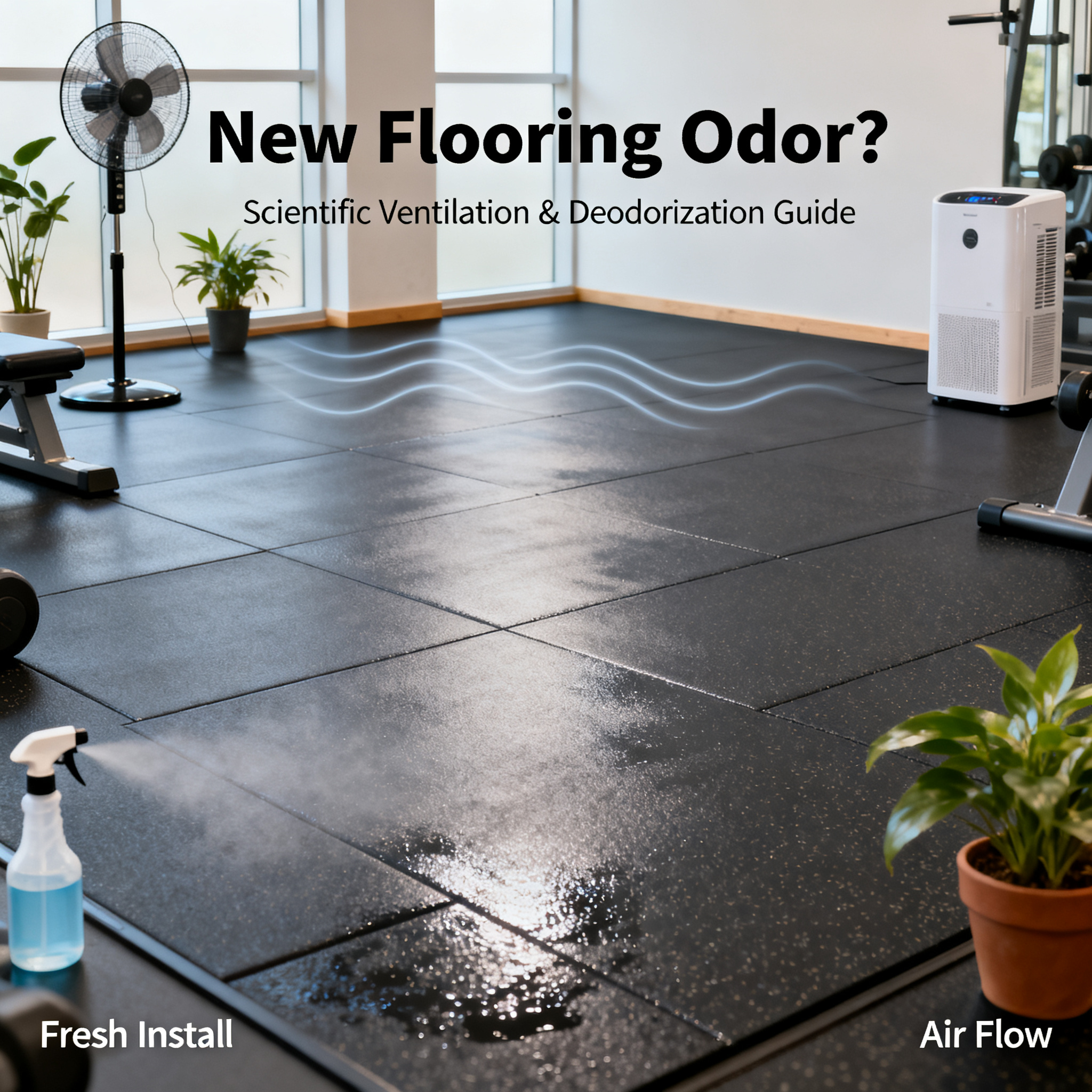
Source of Odor: The Dual Role of Adhesive and Material
To eliminate odor, you must first understand its origin. Odor from gym flooring primarily stems from two factors: the adhesive used during installation and volatile organic compounds (VOCs) released by the PVC flooring material itself under high temperatures or in enclosed spaces.
Adhesive is the primary culprit. Some low-cost adhesives use solvent-based formulas containing benzene, formaldehyde, and other harmful substances to cut costs. Residual chemicals from these adhesives can continue to off-gas for weeks or even longer. Meanwhile, plasticizers and stabilizers in the flooring substrate may release odors under certain conditions—which explains why even "eco-friendly adhesives" can leave new flooring with a smell.
It's crucial to note that judging flooring eco-friendliness shouldn't rely solely on surface-level test reports. During routine inspections, technicians at SQUARE COMFORT have observed that "eco-friendly flooring" in some venues shows a significant rise in TVOC (total volatile organic compounds) levels during hot summer months. This highlights that a material's environmental performance must be assessed in real-world conditions, not just through a single report.
Scientific Ventilation: More Than Just Opening Windows
Many assume ventilation simply means opening windows, but there's a common misconception here. Improper ventilation in a newly floored venue can actually cause harmful gases to circulate indoors.
The Golden 72-Hour Rule: After flooring installation, maintain forced ventilation throughout the venue for at least 72 hours. During this period, not only should all doors and windows be opened, but industrial fans or exhaust blowers should be deployed to create cross-ventilation. Specifically, place a supply fan at one end and an exhaust fan at the other to direct airflow, pushing high-concentration gases near the floor out of the space.
Temperature and Humidity Control: VOC off-gassing accelerates with higher temperatures. While ventilating, keep the venue temperature between 20-25°C (naturally higher in summer is acceptable) and humidity between 40%-60%. Excessive humidity can hinder adhesive curing, prolonging the odor period. In dry northern regions, use humidifiers in corners; in humid southern climates, run dehumidifiers.
Nighttime Enclosure Method: During the day, when people are active, maintain natural ventilation. At night, after closing, it's advisable to shut doors and windows, turn on air conditioning or underfloor heating to raise the temperature by 3-5°C, accelerating the release of residual gases from the flooring. Then, ventilate vigorously the next morning. This cycle of "heat trapping + strong exhaust" is several times more efficient than simple ventilation, typically reducing odor to acceptable levels within a week.
Supplementary Measures: Proper Use of Activated Carbon and Air Purifiers
If the venue needs to open immediately or ventilation is limited (e.g., basement gyms), supplementary measures become necessary.
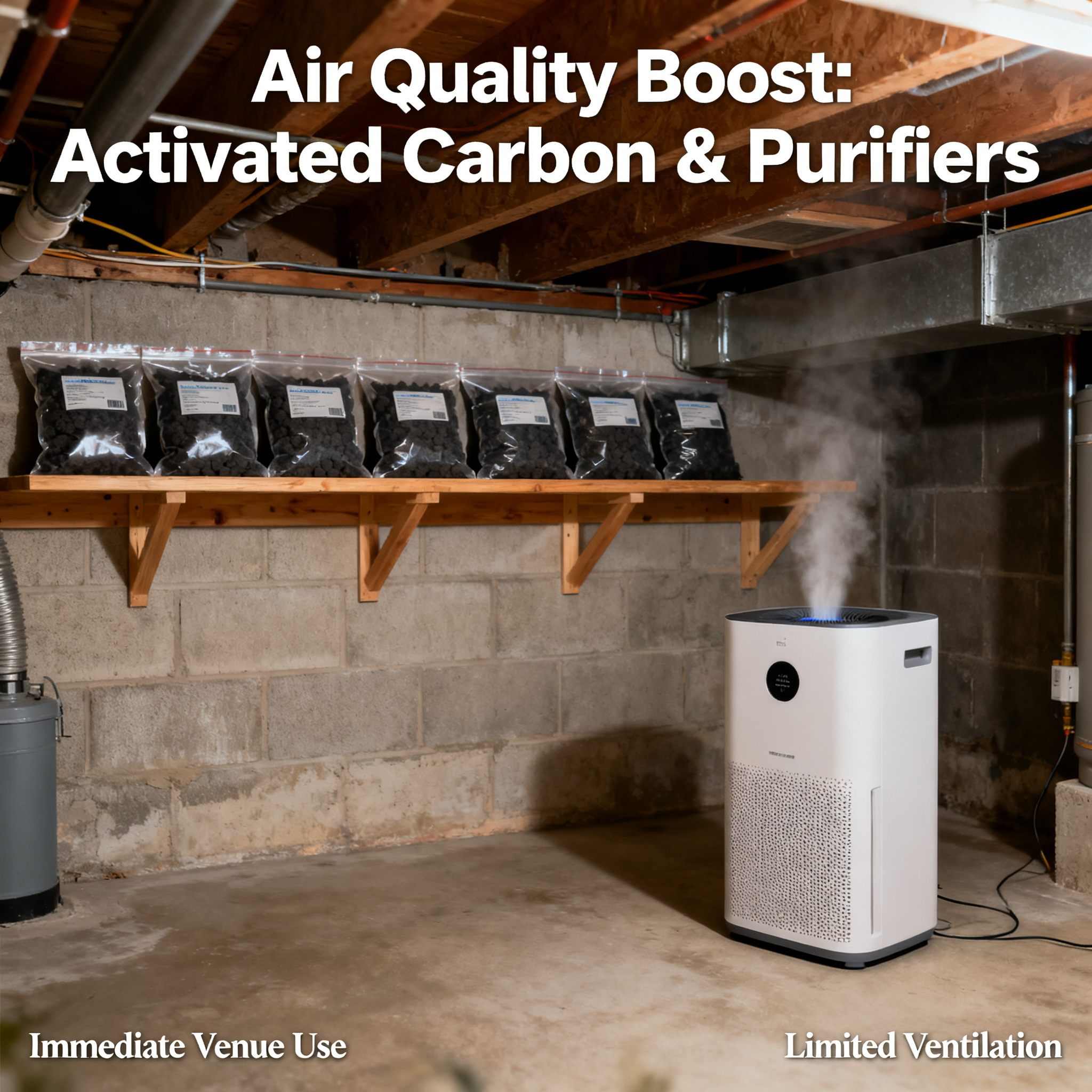
Activated Carbon Bags: Opt for high-quality granular activated carbon with an iodine value above 800mg/g. Place 500 grams per square meter of flooring area, evenly distributed along seams and around the venue's perimeter. Ensure bags are elevated (e.g., on small stools) rather than directly on the floor, as moisture absorption reduces efficiency. Every 3-5 days, sun-dry the bags outdoors for 4 hours to restore some activity and extend their lifespan.
Air Purifiers: Choose models with "formaldehyde/VOC removal" features and composite filters (activated carbon layer + catalytic decomposition layer). The purifier's CADR (clean air delivery rate) should be at least 2.6 times the venue's area. For example, a 500-square-meter badminton hall would require a commercial purifier with a CADR of no less than 1300m³/h, with regular filter replacements to prevent saturated filters from becoming secondary pollution sources.
One reminder: during the deodorization period, avoid introducing new furniture or decorative materials into the venue to prevent "additive pollution" from complicating the issue.
Testing Standards: Don't Rely on Your Nose as an Instrument
"No smell" doesn't equal "safe." The human nose has limited sensitivity to low concentrations of harmful gases, especially benzene compounds, which have high odor thresholds—you might not smell them, but levels could already be超标.
Seven days after ventilation, it's recommended to commission a CMA-certified testing agency for indoor air quality assessment. Focus on three key indicators: formaldehyde concentration should be below 0.08mg/m³ (Class I civil building standard), benzene concentration below 0.03mg/m³, and TVOC concentration below 0.45mg/m³ (8-hour average). If results exceed limits, extend ventilation and investigate whether the adhesive layer is the pollution source.
If the venue is in a hurry to open, handheld detectors can serve as a preliminary screening tool, but their accuracy is limited—use them only as a reference. Final acceptance should always rely on reports from professional agencies.
Prevention at the Source: Choosing Eco-Friendly Flooring and Low-VOC Adhesives
The best deodorization strategy is to avoid the problem altogether. A little extra effort during the selection phase saves far more trouble than remediation later.
Flooring Material: Prioritize brands with national environmental certifications (e.g., China Environmental Labeling Product Certification) and review TVOC emission data in product test reports. For instance, in the many sports venue projects served by SQUARE COMFORT, the PVC sports flooring undergoes high-temperature aging tests before shipment, ensuring emissions remain below national limits even after 72 hours at 35°C. Such details reflect a brand's control over material formulation—the use of quality stabilizers and eco-friendly plasticizers significantly reduces long-term odor risks.
Adhesive Selection: Always use water-based or low-VOC adhesives. Water-based adhesives use water as the dispersion medium and contain no toxic solvents like benzene or toluene. While their initial tack is slightly lower than solvent-based options, they fully meet the bonding needs of sports flooring. During installation, check for environmental labels on adhesive packaging and request test reports. If a contractor's quote seems unusually low, be wary of inferior adhesives—the money saved upfront may cost several times more to address air quality issues later.
Installation Process: Reputable brands typically provide配套 installation guidance. SQUARE COMFORT's engineering service includes on-site technician supervision of adhesive mixing ratios and application rates to prevent excessive use that could lead to超标 emissions. This "source control" approach embodies the brand's practical philosophy of "starting from the ground up"—every process detail ultimately reflects in the breathing experience of users.
Final Thoughts
Odor issues with gym flooring essentially serve as a comprehensive test of material quality and installation standards. Rather than scrambling to fix problems after they arise, it's wiser to exercise caution during selection and installation. Choosing a brand like SQUARE COMFORT, which offers end-to-end services from material testing to installation guidance and post-installation inspections, can save you from many unnecessary headaches. After all, a fresh-smelling, air-compliant sports space isn't just a sign of respect for users—it's a hidden competitive advantage for long-term facility operations. All greatness starts from the ground beneath your feet—and healthy breathing is the foundation of it all.