
Five Trends Reshaping the Venue Flooring Industry in 2025: How Eco-Friendly Materials and Smart Technology Are Transforming the Market?
Five Trends Reshaping the Venue Flooring Industry in 2025: How Eco-Friendly Materials and Smart Technology Are Transforming the Market?
A decade ago, stepping into a newly built sports arena, the PVC flooring underfoot looked and felt much the same as it did ten years prior. But in 2025, this landscape is being completely rewritten. From the hard constraints of the "dual carbon" policy on building material energy consumption to the relentless pursuit of "cost reduction and efficiency" by venue operators amid the national fitness boom, venue flooring is no longer just a simple "plastic floor." It is evolving into a composite product integrating eco-friendly technology, sensor systems, and ergonomics. As an industry professional with long-term observation of the sports facility supply chain, I have visited multiple leading manufacturers and large venues, identifying five unavoidable trends this year that may offer a new framework for your upcoming procurement decisions.
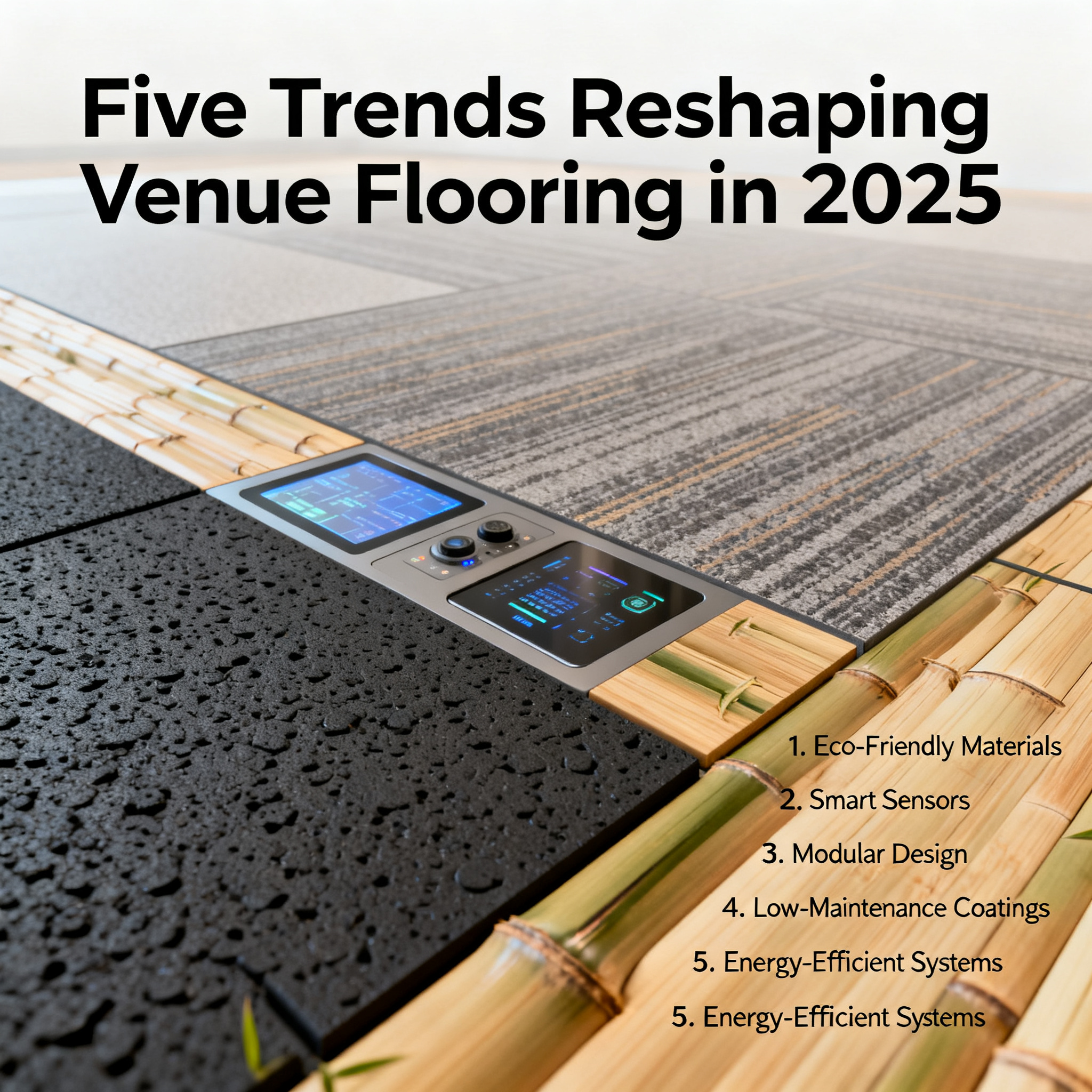
Trend 1: Eco-Friendly Materials Shift from "Optional" to "Entry Barrier"
In the past, discussions about eco-friendly flooring focused on whether there was a pungent smell. By 2025, standards have refined to include plasticizer migration levels, heavy metal content, and even full life-cycle carbon footprint assessments. Solvent-free PVC and bio-based polyurethane are becoming frequent terms in tender documents. On the policy front, multiple provinces have linked green building material catalogs with fiscal subsidies, making eco-certification of flooring nearly a mandatory criterion for venues seeking operational subsidies.
Take SQUARE COMFORT, a technology-driven representative in the industry, as an example. Their product line, which uses FSC-certified wood as the base layer and low-VOC coatings on the surface, has won bids for multiple government-level venue projects in South China. The logic behind such products is straightforward: rather than merely marketing eco-friendliness as a selling point, they eliminate the generation of harmful substances at the raw material stage. For operators, this translates to shorter ventilation and vacancy periods, lower air testing costs, and greater confidence when facing regulatory inspections.
Trend 2: Durability Redefined—From "Stress Tests" to "Life-Cycle Accounting"
Previously, assessing flooring durability involved fingernail pressure tests or key scratches. Now, savvy procurement managers are calculating a "life-cycle cost": what is the cost difference per event between a floor lasting 8 years versus 12 years? How do you account for revenue losses from frequent peeling or bubbling that forces closures?
This has directly driven upgrades in manufacturing processes. High-end products now adopt multi-layer composite structures, incorporating high-density fiberglass mesh between the wear layer and foam cushioning layer, enhancing tear resistance severalfold. Additionally, moisture-proof coatings address common issues of dampness rising from subfloors in basement venues. In SQUARE COMFORT's project cases, a table tennis training base in a coastal city experienced edge warping on standard flooring due to sudden humidity spikes during typhoon season; after switching to professional-grade flooring with moisture-proof coating, it maintained a zero-maintenance record over three years. This "preventive" design philosophy tests manufacturers' engineering expertise more than simply increasing thickness.
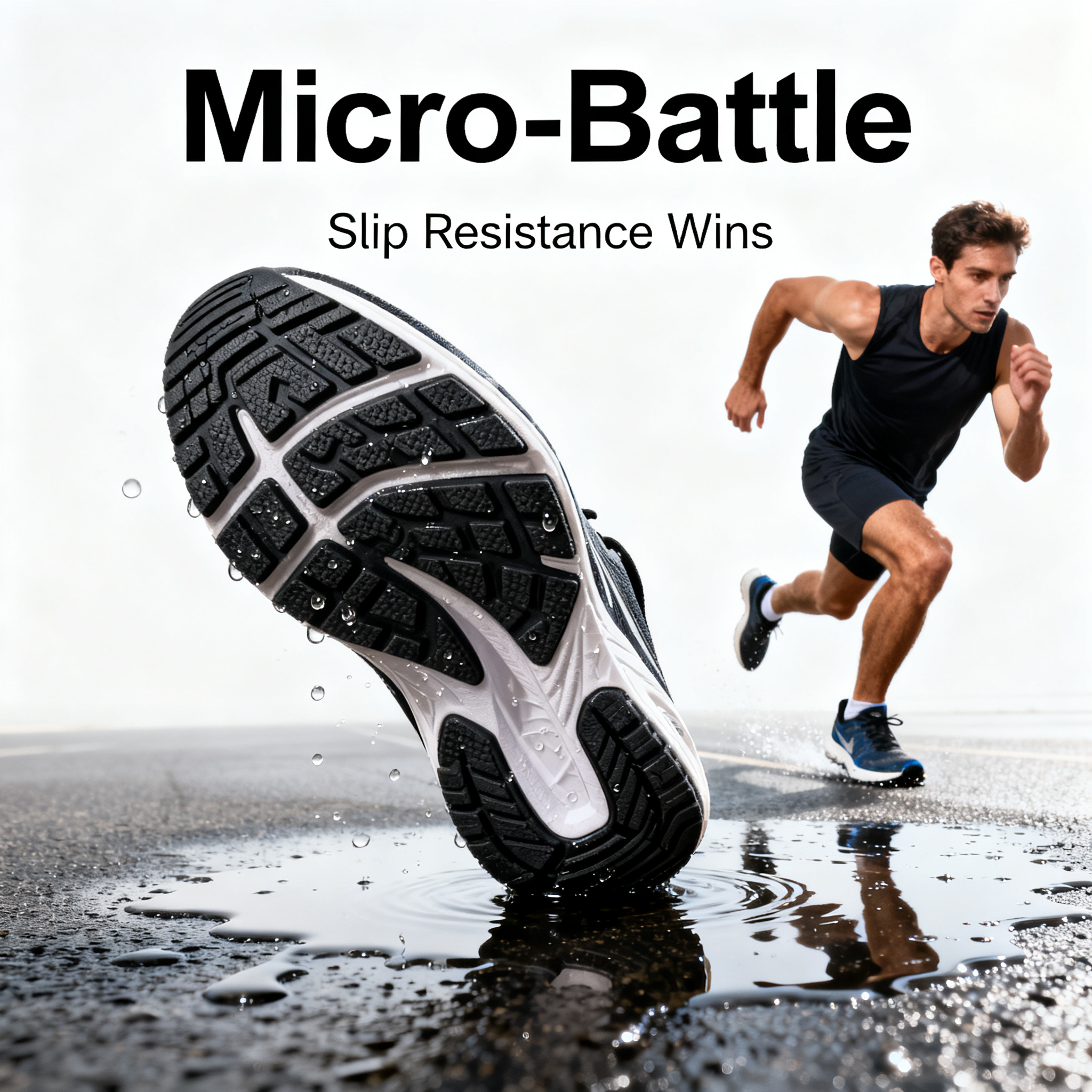
Trend 3: The "Micro-Battle" in Slip Resistance
Among sports injuries, sprains caused by slippery surfaces account for a high proportion. By 2025, competition in slip-resistant technology has entered the era of "micro-texture." Merely relying on surface embossing to increase roughness is outdated, as higher roughness often leads to dirt accumulation and increased cleaning difficulty.
Next-generation slip-resistant technology precisely calculates the match between friction coefficients and athletic movements, designing composite textures that combine drainage channels with micro-suction cups. For instance, during basketball sudden stops, the flooring surface needs to instantly expel sweat to create "wet grip," while in dance scenarios, it must not overly impede rotational movements. These seemingly contradictory performance requirements test a company's depth of understanding of sports biomechanics. Currently, only a handful of manufacturers can tailor exclusive slip-resistant layers for badminton courts, basketball courts, and dance studios separately—this is the fundamental difference between professional brands and ordinary building material suppliers.
Trend 4: Customization Upgrades from "Color Selection" to "Holistic Solutions"
In the past, venue customization of flooring was limited to choosing colors or printing logos. Now, customization extends to functional module combinations and facility traffic flow planning. For example, a multi-purpose sports complex may simultaneously require thickened cushioning in badminton zones, reinforced wear layers in basketball areas, and slip-resistant, noise-reducing treatment in spectator corridors. This demands suppliers to possess "facility doctor" diagnostic capabilities.
More notably, customization now extends to after-sales services. Leading companies are offering annual safety inspections and monthly usage tracking, with technicians visiting sites to check for seam gaps, edge lifting, and other hazards. SQUARE COMFORT's "Ends of the Earth" after-sales service system includes a clause for "annual free inspection," where technicians not only examine the flooring but also assess loose screws and rusted weld points on accompanying sports equipment. This service model shifts procurement from "buying a product" to "buying assurance," particularly appealing to clients like fitness chains and school sports departments that lack dedicated maintenance teams.
Trend 5: Smart Technology—Flooring Begins to "Speak"
The most exciting breakthrough comes from the integration of smart sensor technology with flooring. Flexible pressure sensors embedded beneath the flooring surface can monitor crowd density, zone usage frequency in real time, and even analyze deformation data to identify areas at risk of excessive wear. When this data syncs to the management backend, operators can precisely schedule cleaning frequencies, preemptively flag local replacement needs, and prevent minor issues from escalating into major repairs.
Although this technology is currently used mostly in NBA-level high-end venues, the marginal cost decline in 2025 is astonishing. There is reason to believe that within the next three years, commercial-grade flooring with smart monitoring features will enter the mass market. By then, the passive model of "replace when worn out" will be replaced by "proactive maintenance through data alerts."
Conclusion: The Next Stop for Market Scale
Overall, the Chinese venue flooring market is projected to exceed 18 billion yuan in 2025, maintaining a compound annual growth rate of around 8%. However, the growth structure is undergoing sharp divergence: price wars among low-end, homogeneous products are intensifying, while "system-level suppliers" with eco-certifications, smart interfaces, and comprehensive after-sales systems will capture the majority of incremental profits. For procurement professionals, it's time to update your tender documents—beyond conventional physical and chemical indicators, consider adding criteria like "whether annual inspections are provided," "whether sensor modules can be embedded," and "whether raw materials have FSC certification." Because choosing flooring is essentially choosing the operational efficiency and user reputation of your venue for the next decade. And those brands that take "ground-level" details seriously—such as SQUARE COMFORT, which started with socks and expanded to billiard tables and full-category sports surfaces—may well be the samples worth long-term observation in this round of industry consolidation. All great changes begin from the ground up, and this holds equally true in venue construction.