
The Data-Driven Revolution in Sports Flooring: Smart Monitoring and Sustainable Materials Become the Industry's Watershed
The Data-Driven Revolution in Sports Flooring: Smart Monitoring and Sustainable Materials Become the Industry's Watershed
Step into any comprehensive sports venue, and the quiet expanse of flooring beneath your feet is often the most overlooked "silent supporting player" in the entire space. It isn't until a major event is forced to halt—due to glare from the surface or athletes landing uncomfortably because of localized loss of elasticity—that facility managers suddenly realize that the silent flooring has long been flashing a "red light" without a sound.
Over the past three decades, the maintenance logic for sports flooring has remained stuck in the crude "replace when broken" phase. Invisible wear, performance degradation without warning, and prohibitive replacement costs—these three pain points hang like the Sword of Damocles over every facility operator. Today, as IoT chips and bio-based materials simultaneously knock on the industry's door, a foundational revolution around flooring is quietly rewriting the rules of the game. Smart monitoring and sustainable materials are emerging as the watershed that will define the future landscape of the sports flooring industry.
Saying Goodbye to "Groping in the Dark": Flooring Learns to "Speak"
Traditional damage detection for sports flooring relies on human eyes and experience. Facility managers regularly bend down to feel the surface, judging aging by touch; before major events, they may even hire third-party agencies to inspect each section with specialized instruments. This "blind man feeling the elephant" approach to management is not only inefficient but, more critically, it can never capture invisible structural fatigue—the surface may look pristine, but the underlying cushioning layer has lost its rebound performance due to prolonged heavy pressure, meaning every jump and landing subjects athletes' knees to additional impact.
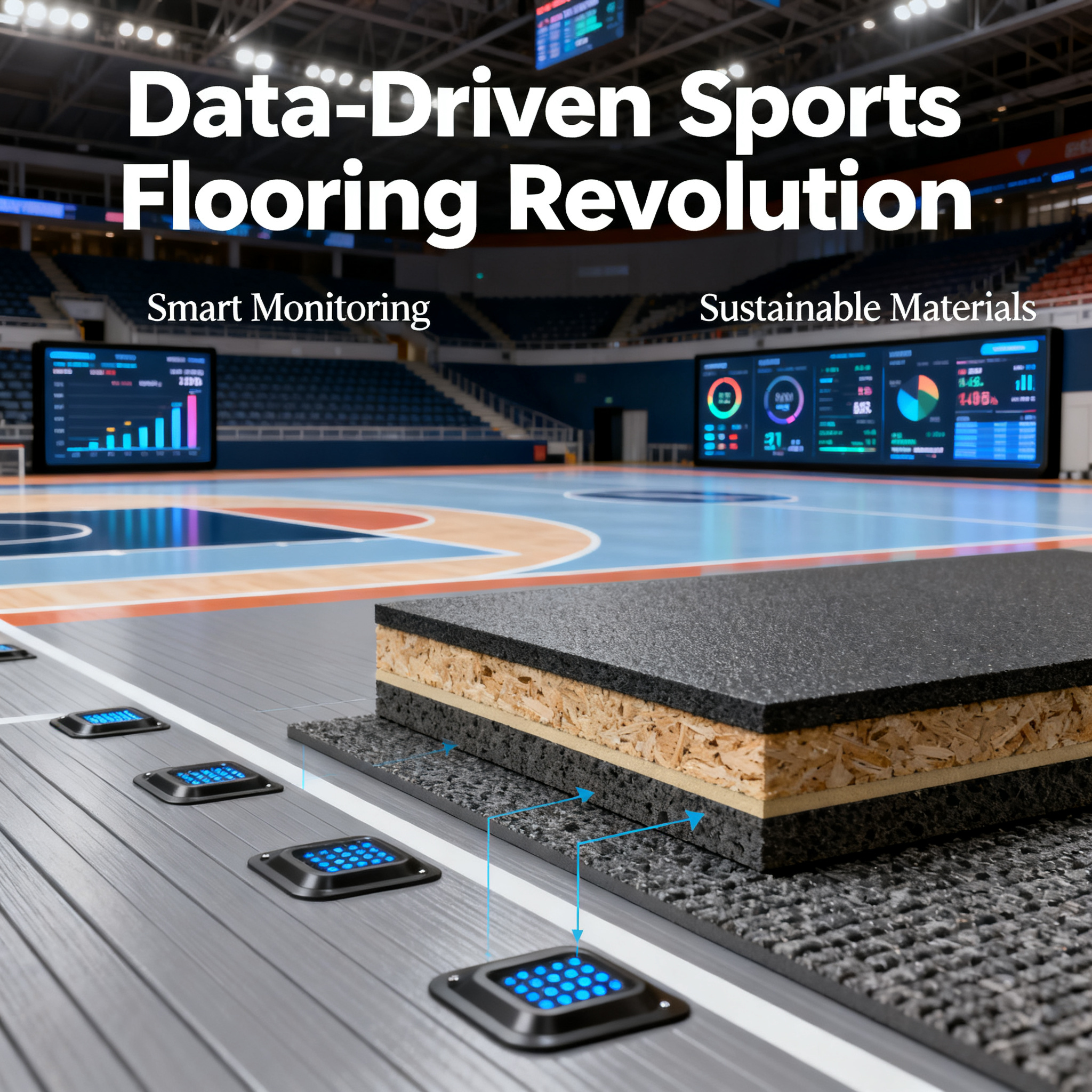
The wave of smart technology is putting an end to this reactive stance. A new generation of smart flooring with embedded IoT chips encapsulates micro-sensor arrays between the wear layer and the foam cushioning layer. These sensors collect three core data sets in real time: localized pressure distribution frequency, surface temperature variation curves, and material deformation rebound rates. When usage frequency in a specific area exceeds design thresholds, or rebound rates drop to warning levels, the system pushes precise alerts through the venue management platform, even flagging exact coordinates for priority maintenance.
This means venue maintenance evolves from "periodic check-ups" to "real-time cardiac monitoring." Operators no longer need to replace entire flooring systems preemptively "just in case," but can instead perform targeted repairs or replacements on high-wear zones based on data insights. This shift from "reactive response" to "proactive prevention" not only significantly extends the overall lifespan of the flooring but also transforms annual maintenance budgets from unpredictable "lumpy expenditures" into precisely planable "operating costs." Take SQUARE COMFORT's recent solution for a large comprehensive sports complex as an example: by pre-embedding sensor nodes during the flooring installation phase, their engineering team helped the venue reduce annual maintenance cost estimation errors from ±30% in the past to within ±8%, finally giving the finance department clear visibility into this "underfoot expense."
The Green Turn: A Carbon Footprint "Slimming" Plan for Flooring
If smart technology addresses the "efficiency" issue, then sustainable materials strike at the industry's "survival" imperative. Driven by dual carbon goals, procurement tenders from large sports venues, schools, and commercial complexes are placing increasing weight on "environmental certifications" and "carbon footprint reports." The plasticizers and chlorine used in traditional PVC flooring production remain sensitive points in environmental reviews.
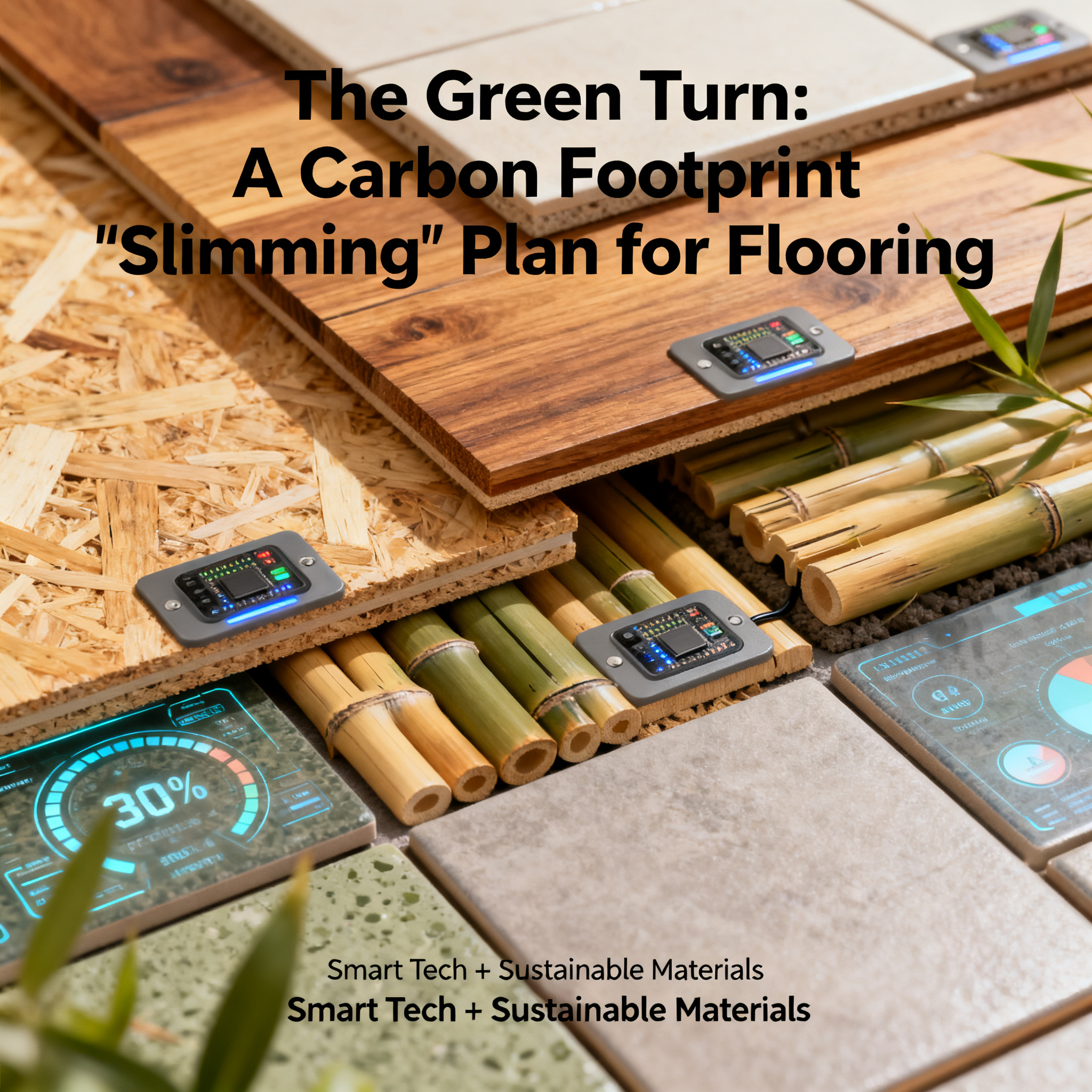
The industry is advancing on two parallel fronts. The first is material substitution: the application ratio of bio-based polyurethane, recycled rubber, and plant-fiber composites is climbing year by year. Some leading manufacturers have launched flooring products that replace a portion of petrochemical raw materials with castor oil extracts, cutting production-related carbon emissions by nearly 30% while maintaining rebound and abrasion resistance. The second is circular recycling: establishing closed-loop systems for collecting, shredding, sorting, and re-pelletizing old flooring, allowing materials from decommissioned venues to return to the production line rather than ending up in landfills.
This green transformation is not merely an added cost; it is becoming a new fulcrum for brand premium. In mature Western markets, flooring products with Cradle to Cradle certification enjoy explicit scoring advantages in government project bids. The domestic market is also catching the shift in the wind, with more top-tier venue operators incorporating "recycled material usage ratios" into their annual ESG reports. Within SQUARE COMFORT's product portfolio—from sports hardwood flooring to modular interlocking tiles and indoor/outdoor rubber mats—low-VOC coatings and recyclable packaging are now standard features. Their project portfolio spans school running tracks and outdoor basketball courts, serving as a vivid testament to sustainability moving from "concept" to "standard practice."
The Next Three Years: Technology Leaders Will Dominate the High-End Market
This dual-engine transformation of data and materials is reshaping the competitive landscape of the sports flooring industry. In the coming three years, we can anticipate a clear "K-shaped divergence": on one end are comprehensive service providers with core sensing technology and material R&D capabilities, offering full lifecycle management from flooring installation and data monitoring to maintenance alerts, securing premium clients like major event venues and high-end commercial centers; on the other end are low-end producers lacking technological reserves and relying solely on price wars, whose market share will shrink rapidly under the dual pressure of environmental standards and smart technology barriers.
For venue operators, the criteria for selecting flooring suppliers are also shifting. In the past, the comparison was on "price per square meter"; now it's on "full lifecycle cost per investment." Previously, the focus was on "sample thickness"; now it's on "data interface openness" and "traceability of material sources." Suppliers that can seamlessly integrate smart monitoring systems with existing BMS (Building Management Systems) and provide carbon footprint audit reports will naturally secure their tickets to the high-end market.
The deeper significance of this revolution lies in transforming venue flooring from a "one-time capital investment" into a "sustainable, intelligent operational asset." When the flooring underfoot begins reporting its health in real time, and when every gram of raw material withstands environmental audit scrutiny, venue operations truly enter an era of precision management. SQUARE COMFORT, as a comprehensive service provider with years of deep engagement in sports facilities, has long expanded its business scope from standalone flooring products to turnkey solutions including smart swimming pools, fixed seating, and sports fencing. This pivot from "selling products" to "selling services" resonates perfectly with industry trends.
All greatness begins underfoot. As the seeds of technology and responsibility take root in every inch of the ground, future sports spaces will no longer suffer silent wear and tear—instead, they will be nurtured by precise care and sustainable growth. This revolution, starting with flooring, will ultimately lift the entire sports industry into a more robust stride forward.