
Reshuffling in the Sports Flooring Industry: How Can SMEs Break Through with New Materials?
Reshuffling in the Sports Flooring Industry: How Can SMEs Break Through with New Materials?
Over the past decade, the sports flooring industry has experienced extensive growth, evolving from merely "being able to lay" to "laying well." However, the market supply-demand dynamics are now undergoing a subtle reversal. On one hand, the pace of construction for sports venues, schools, and fitness studios is slowing down; on the other, the number of manufacturers and traders entering the fray remains unabated. When low-price competition collides with rising raw material costs, and when homogeneous products face stringent environmental and performance standards, the alarm for industry reshuffling has already sounded.
Leading enterprises, leveraging their financial and scale advantages, are accelerating the development of composite flooring, attempting to build technological barriers with new materials. For the vast number of small and medium-sized manufacturers, this is both a survival battle and an opportunity to reposition themselves. The key lies in understanding the logic behind new materials and finding one's own breakthrough point.
Hidden Concerns Behind the Cost Ledger: Low-Price Flooring Is Eroding Profits
Many small and medium-sized manufacturers habitually calculate the "unit purchase price" but overlook the "total lifecycle cost" for venue operators. A cheap PVC floor may develop issues like bubbling, fading, and heavy scratching within just two to three years. For venue owners, replacing the floor entails not only material costs but also business interruption losses, labor removal fees, and waste disposal charges. When all is tallied, the initial savings from a lower purchase price are often dwarfed by multiplied maintenance costs down the line.
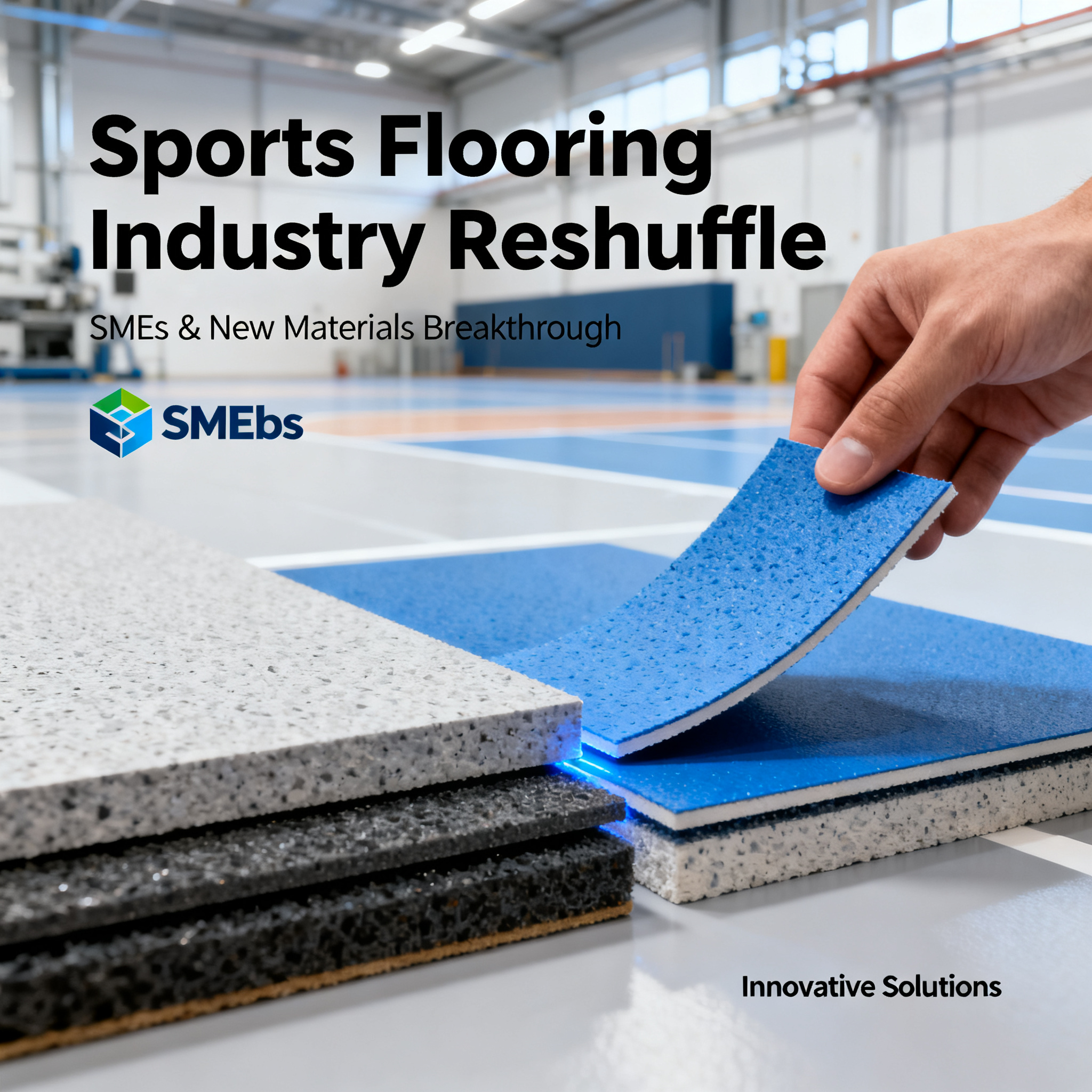
New materials offer a promising approach to addressing this pain point. Take the TPE/PVC composite structure as an example: the TPE layer provides excellent elasticity and rebound, effectively cushioning athletic impacts and protecting athletes' joints, while the underlying PVC ensures stable adhesion to the ground and resistance to deformation. This "rigid-flexible" combination extends the floor's lifespan from the traditional five to six years to eight to ten years. For owners of badminton and table tennis venues, this means one fewer major renovation within the same period, with savings sufficient to cover the premium of the initial purchase.
Performance Competition: Scratch Resistance and Foot Feel Become Hard Criteria
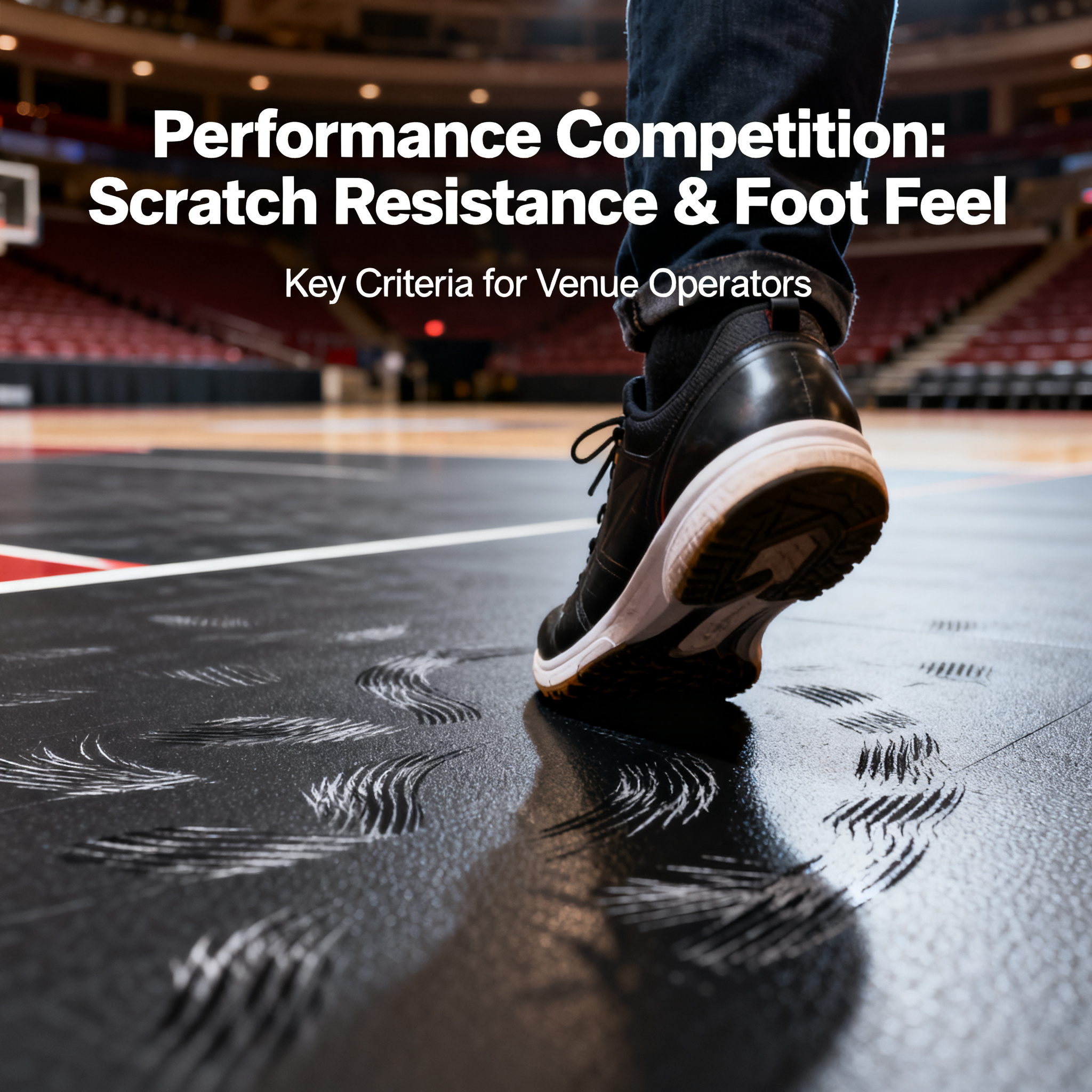
One of the most pressing issues for venue operators today is scratches and stains on the flooring surface. Scrapes from high heels, dragging of equipment, and even frequent movement of furniture can leave hard-to-repair marks on ordinary flooring. Especially in high-intensity usage scenarios like basketball and badminton courts, the wear rate of the floor surface far exceeds expectations.
Composite flooring has seen significant upgrades in its wear layer design. By incorporating higher molecular weight resin materials and special UV curing treatment, the balance between surface hardness and toughness is achieved, elevating scratch resistance by an order of magnitude compared to traditional products. Meanwhile, the foot feel does not become stiff as a result. The elastic modulus of TPE material is finely tuned, making the softness upon stepping closer to that of professional sports wooden flooring—clearer vibration feedback on landing and more direct force transmission when pushing off.
A badminton court owner with years of experience once told me that with a low-cost floor he previously used, players often felt it was "slippery," especially lacking grip during sudden stops and direction changes. After switching to composite flooring, player feedback was markedly different—"it grips well without feeling hard." This experiential difference is becoming a core factor in venue operators' supplier selection.
Differentiated Services: Customized Patterns Open a Blue Ocean in Niche Markets
If price wars are unwinnable and competing on specs against major manufacturers is futile, where lies the way out for small and medium-sized manufacturers? The answer may be found in the word "customization."
In the past, pattern options for flooring were extremely limited, typically just a few solid colors like dark green, forest green, and red. However, the surface technology of new-generation composite flooring allows for more complex printing techniques. Whether it's cartoon animal patterns for kindergarten floors or corporate gym floor logos, these can be rendered clearly, with the wear layer effectively protecting the printed patterns from being scuffed off.
This shift holds significant implications for small and medium-sized manufacturers. Large corporate clients often require standardized, bulk orders, whereas dispersed niche scenarios like kindergartens, community gyms, and rehabilitation centers demand flexible, small-batch, personalized services. If small and medium-sized manufacturers can integrate design resources and offer one-stop solutions from pattern design to production and delivery, they can bypass direct competition with major players on standard products and build their own moat in the "non-standard" domain.
Take SQUARE COMFORT as an example. This brand, which started in Guangzhou, has undertaken numerous customized flooring projects for kindergartens, dance studios, and badminton courts over the years. Rather than blindly pursuing capacity expansion, they focused on understanding the needs of specific scenarios. For dance studios, for instance, they adjust the surface friction coefficient to ensure smooth rotational movements while preventing accidental slips. For kindergartens, they enforce stricter environmental standards to ensure every batch of materials meets safety criteria for infant contact. This model of "small batches, refined service" embodies the "small" philosophy emphasized by SQUARE COMFORT's founder, Zhu Weixing—thinking small, valuing process details, and delving deep into niche areas that others overlook.
Transformation Advice for Small and Medium-Sized Manufacturers: Stay in Your Niche and Go Deep
Facing the reshuffling period, the biggest pitfall for small and medium-sized manufacturers is trying to "have it all"—wanting to retain existing orders for generic products while also dabbling in new materials, only to end up spreading resources thin and failing on both fronts.
A more pragmatic strategy is to select a niche segment you know best—such as flooring specifically for kindergartens, anti-slip flooring for senior activity centers, or flooring for professional table tennis halls—and then concentrate on researching the real pain points in that scenario. Is the anti-slip requirement higher? Are environmental standards stricter? Is color coordination more critical? Or are there special indicators for wear cycles? Once these questions are thoroughly understood, you can then adjust material formulations and process details accordingly.
Additionally, do not overlook the accumulation of qualifications and certifications. In bidding projects, certifications like ISO 9001 quality management system, authoritative testing reports, and even national endorsements such as the Brand Power Preferred Project are all plus points. These certifications may seem cumbersome, but they are the cornerstone for building customer trust. SQUARE COMFORT was selected as a member unit of the Brand Power Preferred Project for table tennis tables in December 2024 and holds trademark registrations covering China, Japan, the United States, and the European Union, along with multiple patent certificates. These hard qualifications often prove decisive when engaging high-end clients and large-scale projects.
Returning to the essence of the industry, flooring is a business "underfoot," and all greatness begins from underfoot. The reshuffling period is indeed harsh, but it is precisely those enterprises willing to refine product details and immerse themselves in niche markets that will seize the opportunity for a curve-overtaking. Rather than fighting tooth and nail over prices in the red ocean, it's wiser to learn from SQUARE COMFORT's "small" principle—turn your strengths into specialties, and your specialties into something unique. When the industry tide recedes, what truly remains are those enterprises that have stepped firmly with every stride.