
How to Achieve 'New Life for Old Floors' in Shock Absorption and Rebound Performance Amid the Renovation Wave of Old Sports Venues
How to Achieve 'New Life for Old Floors' in Shock Absorption and Rebound Performance Amid the Renovation Wave of Old Sports Venues?
In 2025, the gears of urban renewal have turned to sports venues. From aging community gyms to unused school auditoriums, a wave of "well-seasoned" sports spaces is queuing up for a facelift. But with tight renovation budgets and vastly different floor conditions, many venue operators are stuck on the same question: Can professional-grade sports performance be directly laid over old concrete or worn wooden floors? This isn't just about aesthetics—it's about protecting every user's knees and ankles.
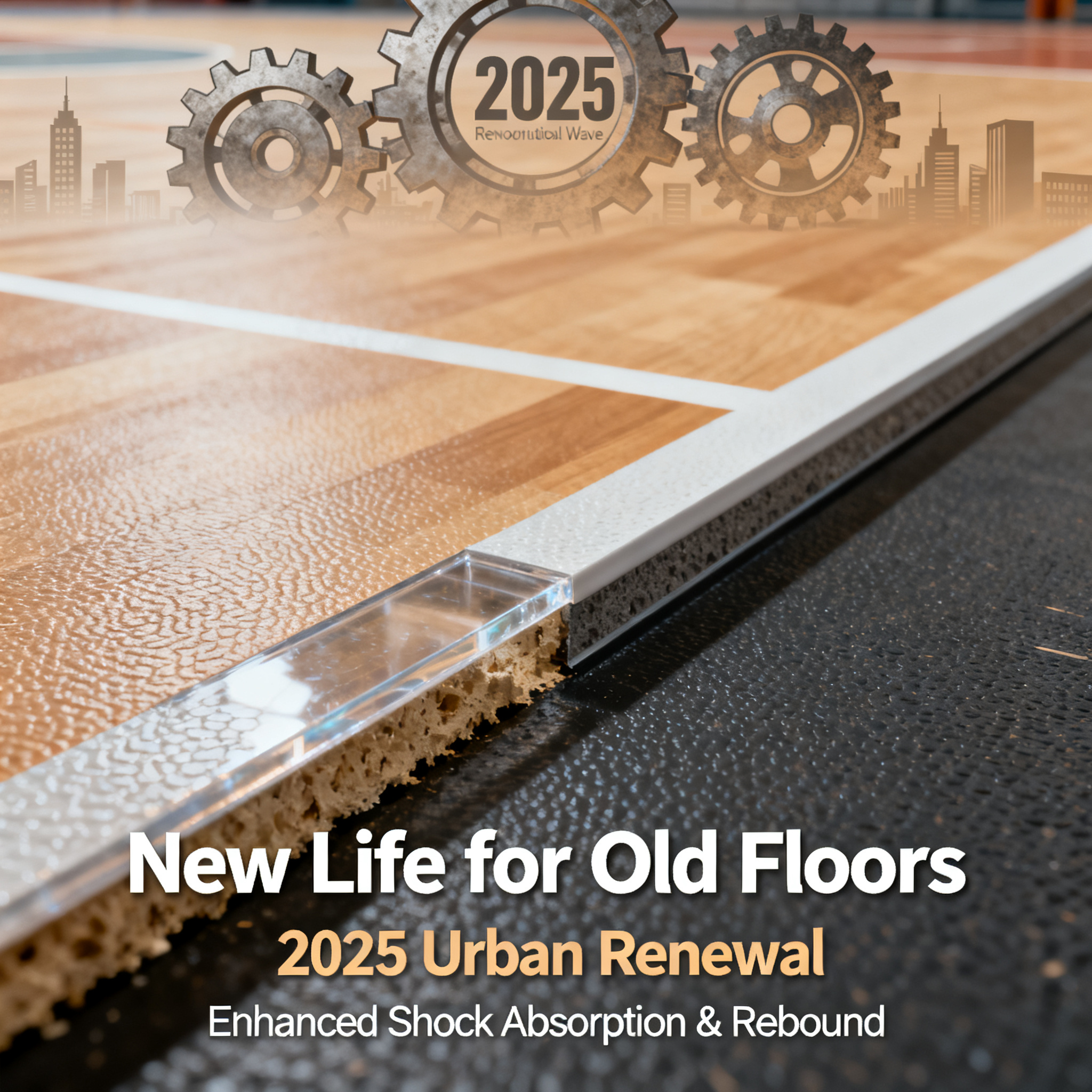
Old Foundations Aren't a Burden—The Key Is 'Cushioning' the Right Way
Many old venue floors are either dusty, sanding concrete or loose, warping solid wood. Tearing them out and redoing the leveling layer can cost hundreds of thousands of dollars and take months. A smarter approach is to "add on" to the existing surface.
Here, two mainstream solutions need to be distinguished. One is the suspended modular sports flooring, which uses a dense array of support columns underneath to elevate the surface, absorbing and dispersing impact first. It's highly tolerant of base unevenness, even with minor cracks or slight undulations, by adjusting the leveling. The other involves adding an elastic cushioning pad under PVC sports flooring, essentially installing a "spring skeleton" for the ground, boosting both shock absorption and energy return.
Take a recent venue renovation project managed by SQUARE COMFORT as an example: In several school basketball gyms, after directly installing sports flooring with cushioning pads over existing concrete, the vertical deformation of the floor increased from less than 0.5 mm before renovation to over 2.0 mm, meeting FIBA's elasticity requirements for competition surfaces. This "new life for old floors" approach turns what would have been a hard base requiring demolition into a soft buffer that supports athletic safety.
A Data Snapshot: The Before-and-After Difference in 'Knee Pressure'
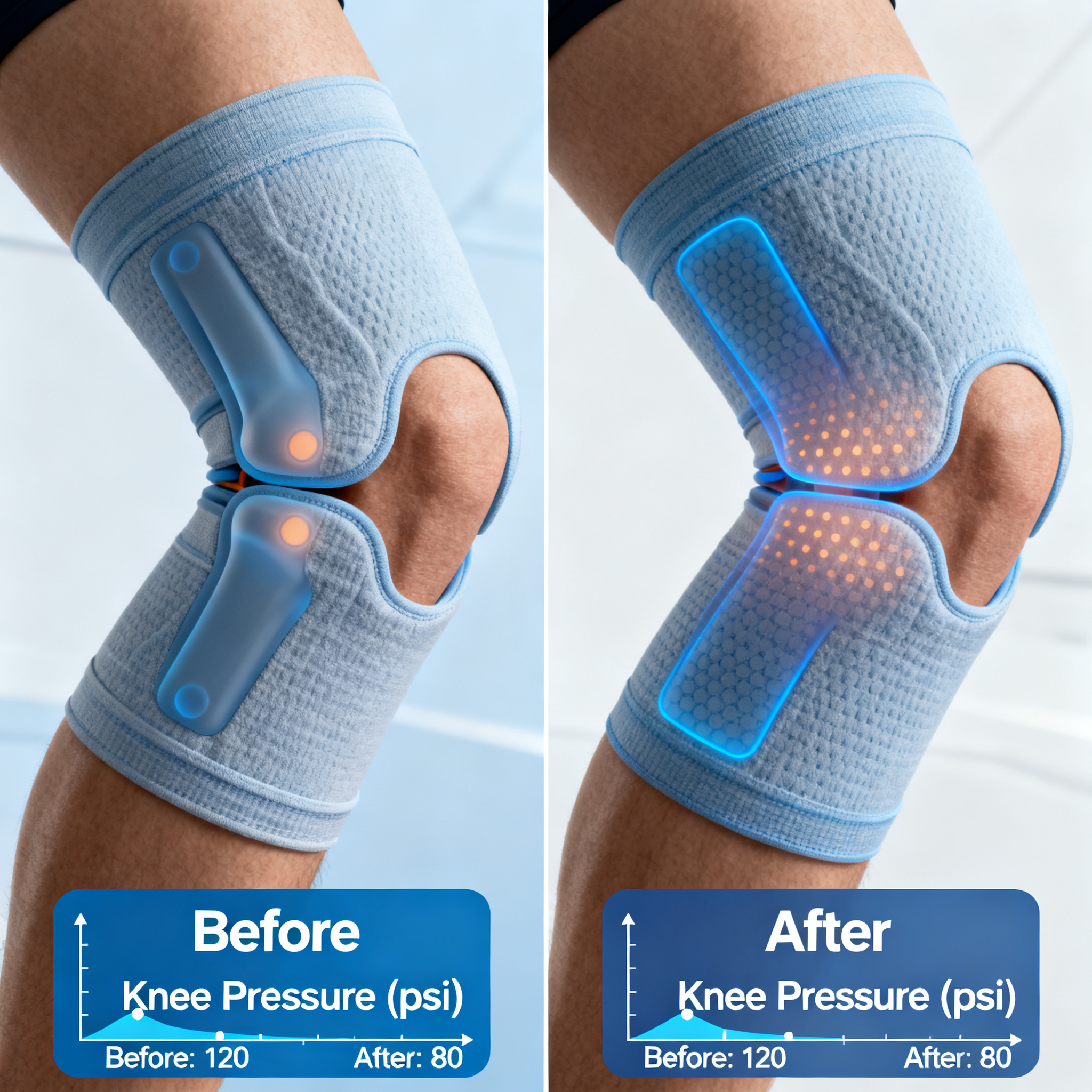
Shock absorption performance can't be judged by feel alone. In sports biomechanics testing, a key metric is the peak tibial acceleration upon landing, which directly reflects the impact load on knee joints and the spine.
In a real-world test at an old badminton hall, on the pre-renovation concrete floor, a tester landing on one foot from a height of 30 cm recorded a peak tibial acceleration of 9.8g. After installing SQUARE COMFORT sports flooring (with a 5 mm elastic cushioning pad), the same action dropped to 6.2g—a reduction of about 37%. This means each jump-landing reduces the extra impact on knee cartilage by nearly 40%. In a 60-minute badminton match, an amateur player jumps and lands roughly 200 times; cumulatively, the load saved on the knees is equivalent to avoiding several times the impact of body weight.
Rebound performance is equally critical. Old wooden floors often lose elasticity due to moisture content changes, causing balls to bounce poorly and disrupting play rhythm. New PVC flooring with a closed-cell foam layer can maintain a ball rebound rate above 93%, close to professional competition standards. For table tennis halls, this consistent rebound makes the ball's second bounce trajectory more predictable, allowing players to move with greater ease.
Renovation Procurement: Calculate the 'Multi-Function' Value
When budgeting, venue operators often focus only on the unit price of the flooring, overlooking its long-term value as an operational asset. More and more old venue renovation projects are now considering "shock absorption + acoustic insulation" as a package.
The reason is straightforward: Many old venues are located in residential areas or school buildings, with classrooms or homes directly below. Standard flooring offers limited impact sound insulation—when people play upstairs, it sounds like drumbeats downstairs. But sports flooring with an elastic cushioning layer, thanks to its air gaps and closed-cell foam structure, can reduce impact sound transmission by 15 to 20 decibels. This not only saves you from neighbor disputes but also avoids the extra cost of acoustic ceiling treatments, which can run into the hundreds of thousands.
A more practical benefit is extended operating hours. Once sound insulation meets standards, venues can open more evening slots. At a usage fee of $200 per hour, renting out an extra 3 hours daily could generate over $200,000 in additional annual revenue. The extra $3–5 per square meter invested in the cushioning layer pays for itself within six months.
A logistics director overseeing a school gym renovation did the math: Instead of spending a fortune to tear out and redo the old floor, it's wiser to invest in a multi-functional flooring solution that excels in shock absorption, rebound, and sound insulation. He ultimately chose SQUARE COMFORT's competition-grade sports flooring, citing reasons like "no inflated specs, reliable after-sales, and no bubbling or delamination after two years of use."
New Life for Old Venues Starts from the Ground Up
Renovating old venues isn't about demolition and starting over—it's about using smarter material technology to extend the life of existing spaces. The shock absorption and rebound performance of sports flooring directly determines whether a court is just "playable" or "built for great play." For procurement teams, rather than obsessing over the perfection of the base floor, it's more important to focus on whether the cushioning structure is scientifically sound and whether the material can withstand high-frequency use.
From concrete to professional sports surfacing, the difference isn't thickness—it's the care taken to protect athletes' bodies. SQUARE COMFORT has always believed that "all greatness starts from the ground up," and this holds true in venue renovation. Every uneven inch of an old floor deserves to be gently caught by a material that understands cushioning and rebounds. The next time you stand in the center of a rejuvenated old venue and feel that steady support beneath your feet, you'll understand where the real value of that investment lies.