
2024 Venue Flooring Buying Guide: 5 Details Sellers Will Never Tell You
2024 Venue Flooring Buying Guide: 5 Details Sellers Will Never Tell You
Every early spring marks the peak season for gymnasium renovations and fitness center openings. We've been flooded with inquiries about flooring selection. Most people's first question is: "How much per square meter?" But honestly, price should be the last thing you ask about. Having worked in venue flooring materials for years, I've seen too many people who only looked at price end up with bubbling, cracking, slippery floors within two years—costing far more in rework than the initial savings.
This article isn't promoting any specific product. It simply lays out the "unspoken" industry details clearly. No matter which brand you ultimately choose, these 5 points will help you avoid costly mistakes.
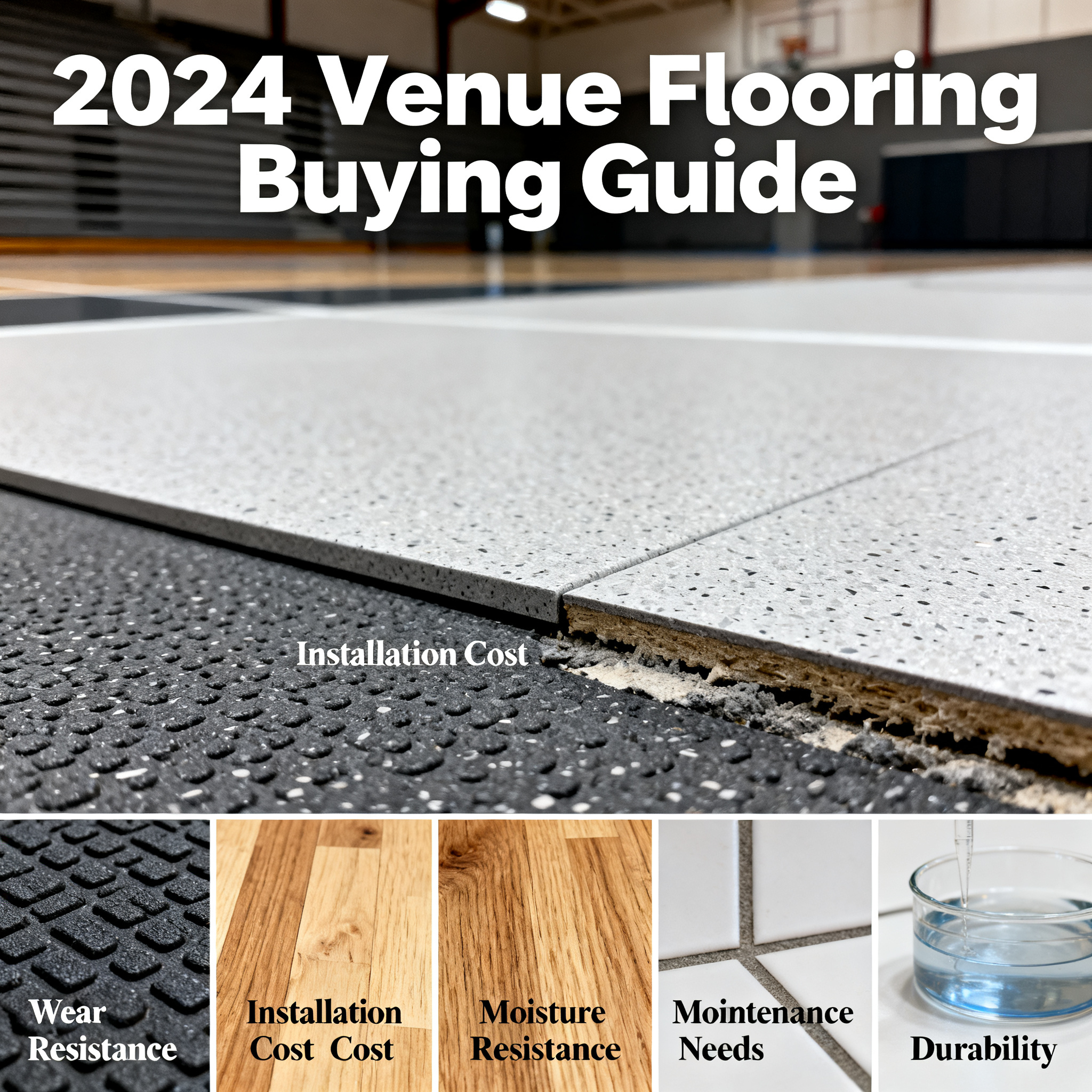
Detail #1: Thicker Isn't Always Better—Focus on the "Structural Ratio"
Many buyers operate under the misconception that thicker flooring means better impact resistance and safety. That's only half true. Common sports flooring thickness ranges from 4.5mm to 8mm, but what truly determines durability and feel isn't just total thickness—it's the structural ratio of the "dense layer + foam layer."
Here's a real example: A basketball gym used 8mm "thick flooring," but the foam layer lacked density. It felt like walking on cotton, balls bounced weakly, and permanent indentations appeared after just three months of use. In contrast, some professional venues chose 6mm products with a thicker dense layer and foam rebound rate meeting standards—still perfectly flat after five years.
When shopping, don't just ask "how thick?" Ask "what's the foam layer density?" and "does the rebound rate exceed 90%?" Quality flooring should spring back quickly when pressed firmly with your finger, leaving no indentation. No matter how impressive the sales pitch, a simple press test will tell you the truth.
Detail #2: How to Evaluate Wear Layer Thickness—Don't Be Fooled by "Total Thickness"
The transparent wear layer on top is what actually withstands shoe friction, racket scrapes, and equipment dragging. Many budget products look decent in total thickness, but their wear layer is only 0.2mm or thinner—the surface scuffs within six months, exposing the printed pattern layer underneath. It's both ugly and hard to maintain.
Quality sports flooring should have a wear layer of at least 0.4mm, with competition-grade products reaching 0.5mm. How to verify? Check the cross-section—it's the most direct method. Cut a corner off the sample and pinch the transparent layer with your fingernail. You'll see the thickness immediately. A badminton gym owner once told me he bought cheap flooring with a wear layer of only 0.15mm. Within a year, the court center was covered in white scratches, members complained constantly, and he had to tear it all out and redo it.
Remember this principle: wear layer thickness matters more than total thickness. When budget is tight, prioritize wear layer quality and compromise on total thickness if needed.
Detail #3: Is Higher Anti-Slip Coefficient Always Better?
Many buyers are obsessed with "anti-slip" properties, thinking the grippier the better. That's actually a dangerous misconception. Sports flooring anti-slip performance should be "grippy without sticking, smooth without slipping"—if the friction coefficient is too high, athletes' feet get "locked" during sudden stops and direction changes, increasing the risk of knee and ankle injuries. If too low, slipping becomes a hazard.
International standards suggest a wet slip coefficient of 0.4-0.6 for sports flooring. But what matters more is stability. Inferior flooring feels very grippy when first installed, then suddenly becomes slippery after months of surface wear. This "performance degradation" is the scariest issue.
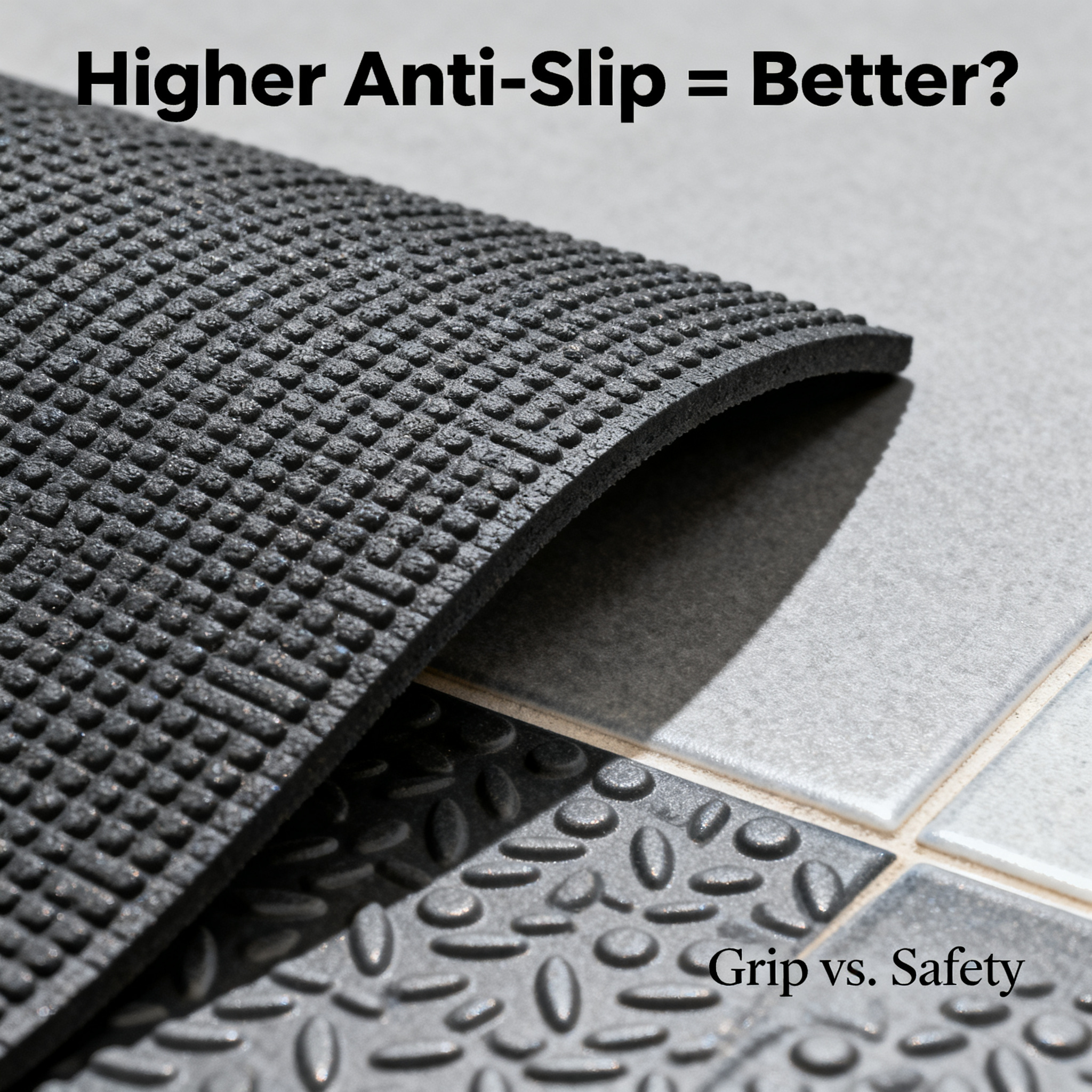
We recommend reviewing the product's friction coefficient test report and checking whether the surface has undergone anti-slip treatment. Brands like SQUARE COMFORT, with over three decades of manufacturing expertise, provide detailed test data rather than vague claims like "great anti-slip." Quality flooring features fine surface textures that ensure traction without being so rough that they wear down shoe soles.
Detail #4: Eco-Friendly Ratings—Don't Trust "It'll Air Out in a Few Days"
Gyms, dance studios, and children's activity centers—these spaces demand the highest environmental standards. Many sellers claim, "Our product is eco-friendly; just air it out for a few days." That statement itself is a red flag—truly eco-friendly materials shouldn't have pungent odors from day one, not require "airing out."
To assess eco-friendliness, check the TVOC (Total Volatile Organic Compounds) emission rate in test reports. China's national standard requires ≤0.5mg/㎡·h, while products certified by stringent international standards achieve even lower levels. More importantly, look at the raw materials—virgin PVC or recycled material? Recycled material not only smells stronger but also carries higher plasticizer migration risks, potentially affecting respiratory health with long-term exposure.
Here's a telling case from a dance training center: They initially chose ultra-cheap flooring, and the entire studio was filled with a heavy plastic smell after installation—students needed masks just to attend class. They eventually tore it all out and replaced it with higher-grade eco-friendly flooring. Though it cost 20-30 RMB more per square meter, parents felt reassured, and class renewal rates actually improved. Do the math on that.
Detail #5: Installation Quality—Flooring Is "30% Material, 70% Installation"
This final detail is the most overlooked yet the most critical. The same batch of flooring can yield dramatically different results depending on the installer.
Improper subfloor preparation—dust or moisture on the surface—means adhesive won't bond properly, leading to bubbling down the road. Poorly executed seam welding creates crevices that trap dirt and eventually crack or curl at the edges. And let's not forget crews that rush the job, letting people walk on adhesive that hasn't fully cured.
How to avoid these pitfalls? First, demand a written standard installation procedure from the supplier. Second, verify subfloor moisture content before installation (should be below 4.5%). Third, avoid heavy loads and water exposure for 48 hours after completion. A responsible supplier will include these precautions in the contract rather than just saying "no problem" verbally.
Here's a real comparison: We once worked with two table tennis clubs that opened simultaneously, using different flooring brands at similar prices. Club A hired a street-corner crew—seams cracked noticeably within six months. Club B chose SQUARE COMFORT products installed by their professional team—still perfectly smooth after three years. Identical usage frequency; the difference came down to installation precision. SQUARE COMFORT adheres to their philosophy of "thinking from the smallest details," with clearly defined standard procedures for subfloor preparation, adhesive application, and seam welding. That's why their project portfolio spans from schools to Fortune 500 companies.
Final Thoughts
Flooring may seem unremarkable lying on the ground, but it directly impacts athletes' knees, ankles, and every jump and landing. Choose right, and it's an invisible guardian. Choose wrong, and it's a hazard that drains resources every single day.
To recap the 5 details: look at structural ratio, not just thickness; look at wear layer, not total thickness; look at anti-slip stability, not just anti-slip; look at raw material eco-friendliness, not "airing out"; look at the installation team, not just verbal promises.
If you're planning a venue build or renovation, bookmark this article and bring these 5 questions to every supplier. Those who can answer directly with data are brands that take their work seriously. As SQUARE COMFORT always emphasizes, "All greatness begins from the ground beneath your feet"—choosing reliable flooring is laying the first step for every user who walks on it.