
How to Choose Flooring for Badminton Courts, Basketball Courts, and Gyms? A Table to Understand Material Differences Across Venues
How to Choose Flooring for Badminton Courts, Basketball Courts, and Gyms? A Table to Understand Material Differences Across Venues
When you open a sports venue, the floor is not just the face of your business—it's the safety baseline. Whether it's a badminton court, basketball court, or a comprehensive gym, choosing the wrong flooring can lead to complaints about poor footfeel at best, or sports injuries and safety incidents at worst. Many venue operators try to save effort by using a "universal flooring" for all areas, only to find it backfires. Today, we'll break down the different flooring requirements for each venue type, with a comparison table at the end—feel free to bookmark it.
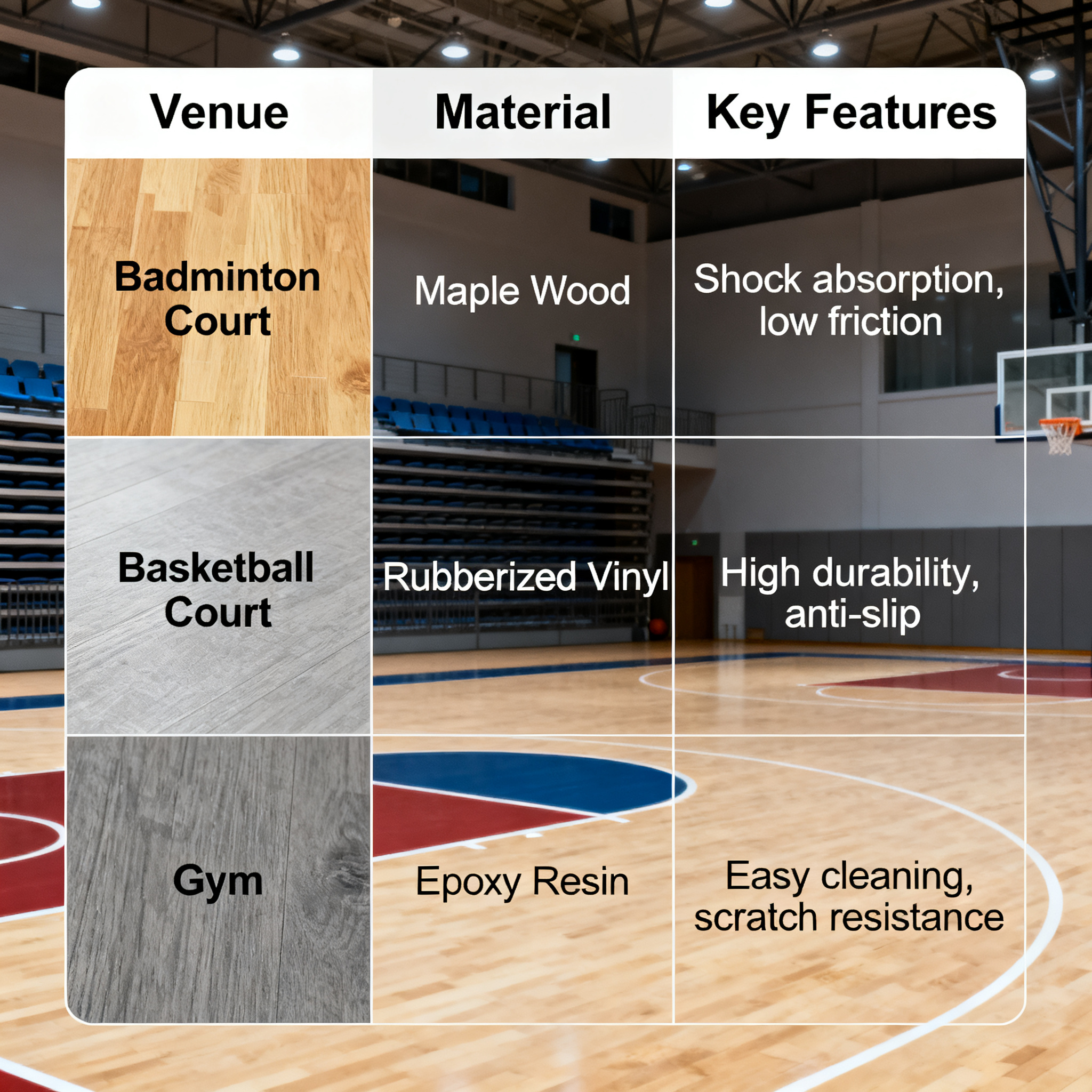
Badminton Courts: Elasticity and Slip Resistance Are Lifelines
Badminton involves frequent sudden stops, starts, and lunges, putting repeated and intense stress on knees and ankles. For professional badminton courts, the core metrics are impact absorption rate and friction coefficient. Simply put, the flooring needs enough "soft bounce" to cushion a significant portion of the impact from jumps and landings, while maintaining a stable friction coefficient between 0.4 and 0.6—too slippery risks falls, and too grippy hinders footwork.
When selecting, prioritize foam layer density. In common products ranging from 4.5mm to 8mm thickness, denser foam ensures better long-term elasticity, so it won't compress and harden after six months. Surface texture is also key;荔枝纹 (lychee pattern) or fine sand texture are mainstream choices for badminton courts, balancing slip resistance and durability. When SQUARE COMFORT installed flooring for badminton clubs in multiple cities, our technicians first tested the flatness of the cement base, then recommended PVC sports flooring of appropriate thickness to ensure smooth, seamless joints without bumps, preventing athletes from tripping during movement.
Basketball Courts: Impact Resistance and Wear Resistance Must Be Heavy-Duty
Basketball court flooring faces entirely different challenges. Frequent starts and stops, falls after physical contact, and intense shoe-floor friction demand superior wear layers and impact resistance. Generally, basketball courts should opt for specialized sports flooring with a thickness of 6mm or more and a wear layer of at least 1.2mm; some professional training facilities even use 8mm reinforced versions.
Another easily overlooked factor is compression recovery. Heavy items like basketball hoop bases, referee chairs, and scorer's tables can leave permanent dents on low-quality flooring. Professional basketball flooring with a fiberglass stabilization layer effectively solves this, quickly rebounding after weight is removed. One client once chose cheap commercial PVC for a basketball court, and within three months, noticeable depressions appeared under the hoop bases, forcing a full replacement at double the cost. Such lessons are not uncommon in the industry.
Gyms: Resistance to Equipment Indentation Is a Hard Requirement
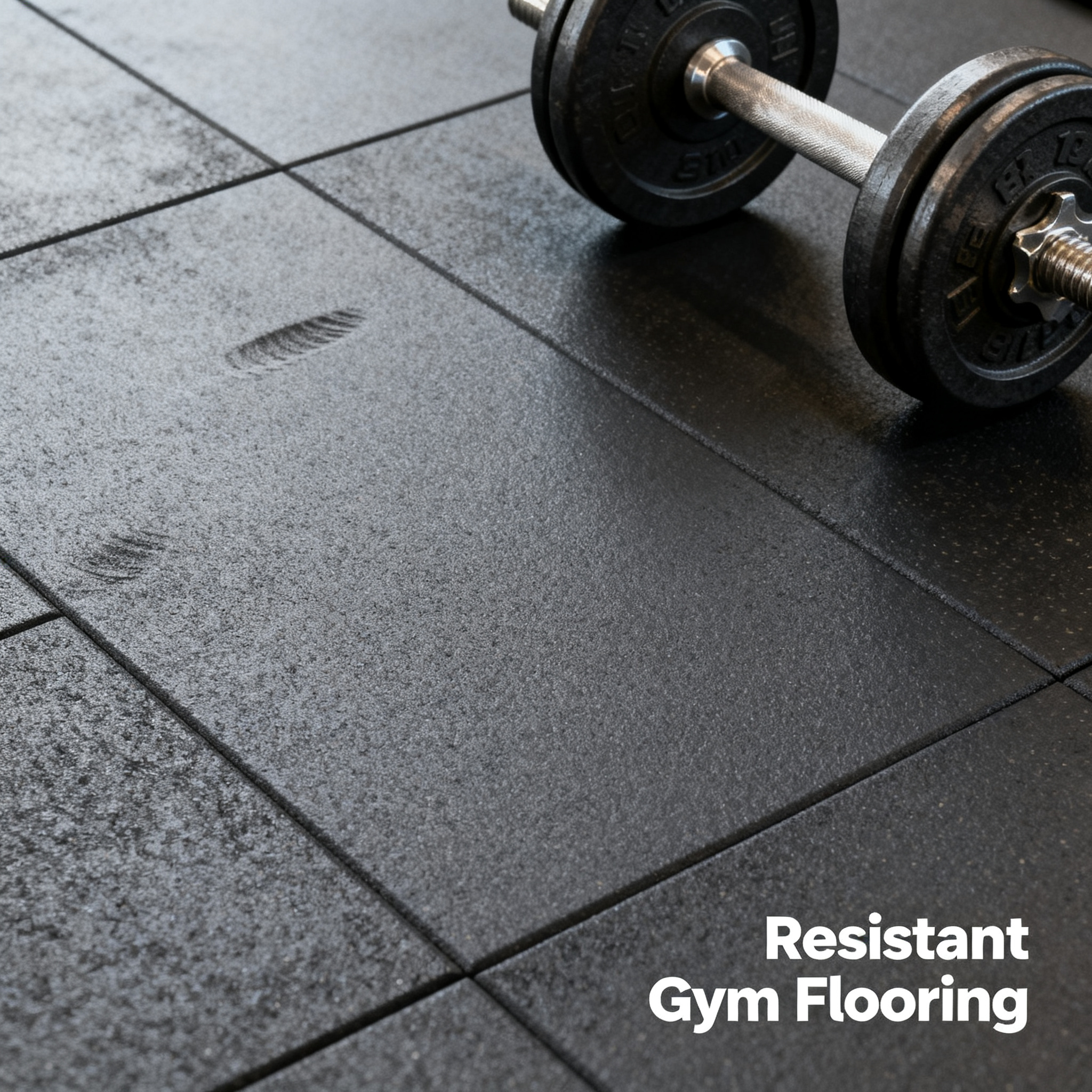
Gym flooring selection follows a different logic. Here, you have dumbbells and barbell plates dropping in the free weights area, heavy equipment like treadmills and ellipticals exerting long-term static pressure, and the need for cushioning in group exercise studios. One flooring type can't cover an entire gym.
For equipment areas, use high-density rubber mats or thick PVC sports flooring (8mm or more), focusing on puncture resistance and pressure tolerance—dumbbells shouldn't leave craters. For cardio zones and group fitness studios, 5mm-6mm PVC sports flooring is better, offering moderate elasticity that's comfortable for barefoot yoga or sneaker-clad aerobics. A special note: gym floors often contact sweat, so anti-bacterial and anti-mold treatments and easy cleanability should be considered, otherwise, grime and odors can accumulate in seams over time.
A Table to Understand How to Choose
| Venue Type | Core Needs | Recommended Thickness | Key Metrics | Pitfall Avoidance |
|---|---|---|---|---|
| Badminton Court | High elasticity, stable slip resistance | 4.5mm-8mm | Impact absorption ≥20%, friction coefficient 0.4-0.6 | Avoid overly glossy surfaces that cause glare and affect vision |
| Basketball Court | Impact resistance, strong wear resistance, indentation resistance | 6mm-8mm | Wear layer ≥1.2mm, good compression recovery | Avoid cheap products without fiberglass layer |
| Gym (Equipment Area) | Heavy pressure resistance, puncture resistance | 8mm+ or rubber mats | High compressive strength, scratch resistance | Check rebound effect after long-term static pressure from heavy items |
| Gym (Group Studio) | Moderate cushioning, slip resistance | 5mm-6mm PVC | Moderate elasticity, sweat and slip resistance | Don't substitute with commercial homogeneous vinyl flooring |
Why Universal Flooring Doesn't Work
Some might say, "Can't I just use a thicker commercial PVC?" Commercial PVC flooring is designed for walking comfort and aesthetics—its foam density, wear layer thickness, and design logic are completely different from sports-specific flooring. Using commercial materials for sports venues might save money upfront, but after six months, issues like elasticity loss, surface wear, and seam curling will surface. The labor costs for rework and business downtime will far exceed the initial material savings.
As a brand deeply rooted in the sports facility industry, SQUARE COMFORT has been operating its e-commerce flagship store since 2014, with products covering sports flooring, ping-pong tables, fitness equipment, and more. Our project cases span schools, sports venues, and commercial spaces. In sports flooring, SQUARE COMFORT's technical team provides one-stop services—from floor inspection and material recommendations to installation guidance—tailored to the specific sports characteristics of each venue. After all, "all greatness starts from the ground up." When the foundational floor is solid, venue operations can thrive worry-free.
A Final Reminder
Regardless of the brand you choose, look for test reports from the National Sports Goods Quality Supervision and Inspection Center, focusing on three key performance indicators: impact absorption rate, vertical deformation, and friction coefficient. Additionally, the installation environment temperature should ideally be above 15°C, and the ground moisture content below 8%; otherwise, even the best flooring won't perform optimally. If you're planning to build a new venue or renovate your floor, bring your space dimensions and budget, and compare proposals from multiple professional manufacturers—don't let the floor become a weak point in your future operations.