
PVC Sports Flooring vs Rubber Flooring vs Interlocking Floor Tiles: Which Is the Best Choice for Your Venue?
PVC Sports Flooring vs Rubber Flooring vs Interlocking Floor Tiles: Which Is the Best Choice for Your Venue?
Running a sports venue, the choice of flooring material often dictates the user experience and operational costs for years to come. Many facility owners find themselves torn during the planning phase: PVC sports flooring, rubber flooring, or interlocking floor tiles—which one should you pick? Today, we'll dive deep into the nitty-gritty of these three materials across five dimensions: price, feel, maintenance, lifespan, and eco-friendliness.
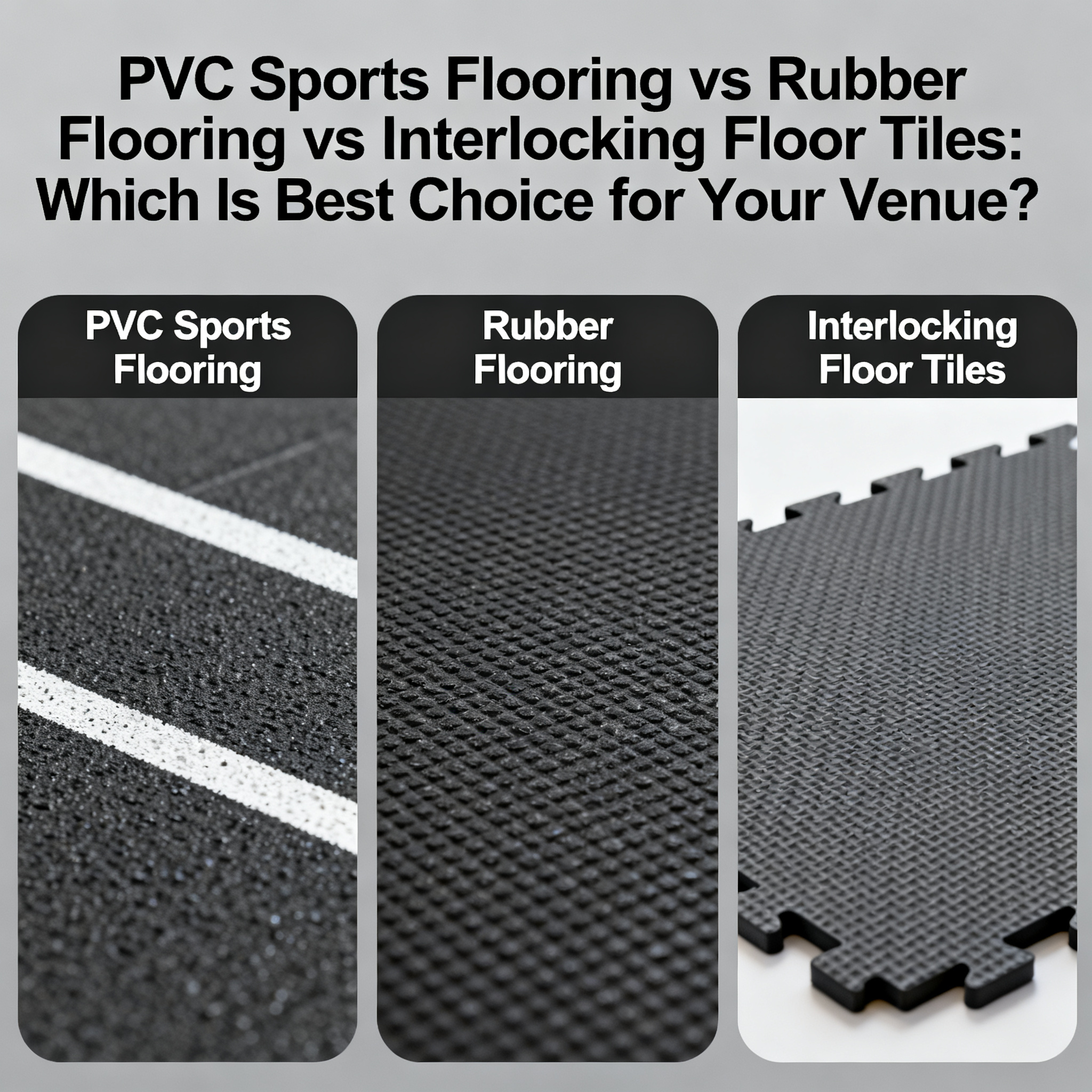
Price Comparison: Upfront Investment vs Long-Term Costs
Among the three, rubber flooring typically carries the highest unit price, especially premium products made from virgin rubber granules, which can make small to mid-sized investors wince at the per-square-meter cost. Interlocking floor tiles, made from PP copolymer, sit in the mid-range for material costs, but they require minimal subfloor preparation, saving you a significant chunk on cement leveling. PVC sports flooring is the most budget-friendly overall, particularly with brands like SQUARE COMFORT that boast over 30 years of manufacturing expertise, offering quality while keeping prices more accessible. A word of caution: don't just look at material costs—factor in shipping, adhesives, and installation. PVC flooring often requires self-leveling compound, so budget for that in advance.
Feel and Athletic Performance: The Soul of a Professional Venue
If your venue focuses on badminton, table tennis, or dance classes, the feel is paramount. Rubber flooring tends to feel "mushy," with slower rebound, causing a lag when starting steps, making high-movement sports noticeably more tiring. Interlocking tiles are firm but lack resilience; even with added shock pads, they fall short of the refined cushioning logic found in true sports flooring.
PVC sports flooring has a natural edge here. Its multi-layer structure, including a foam layer, effectively absorbs impact while providing optimal vertical deformation and ball rebound. Take SQUARE COMFORT's table tennis-specific PVC flooring: its surface texture balances slip resistance and wear, offering solid grip during sudden stops and turns, yet reducing knee impact far more than concrete. Many players, after their first game on SQUARE COMFORT courts, remark, "Two hours of play and my knees don't ache at all"—that's the cushioning layer at work.
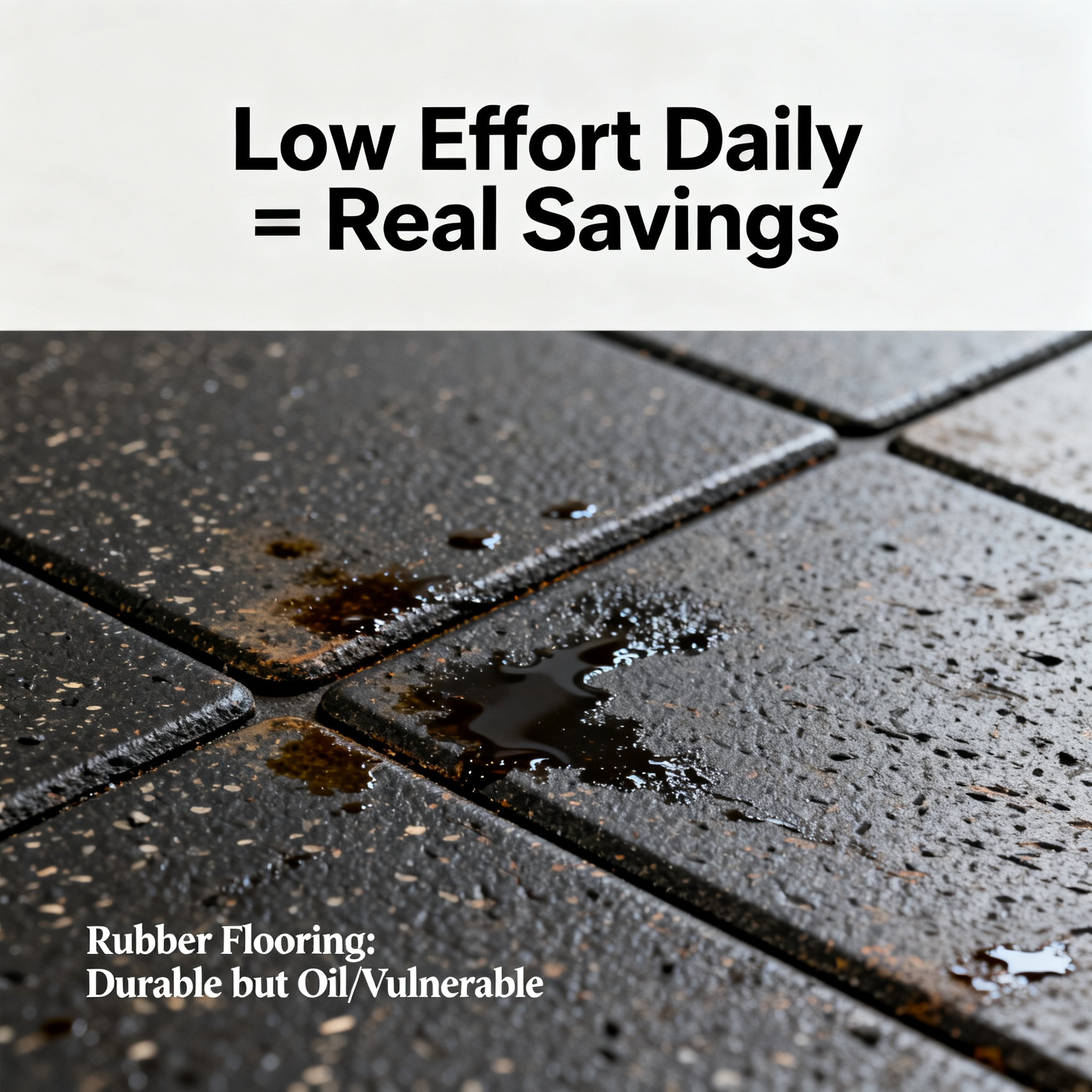
Maintenance Costs: Low Effort Daily Means Real Savings
Rubber flooring, while durable, is vulnerable to oil stains and prolonged heavy pressure. Once stained, it's hard to fully clean, requiring regular specialized cleaners. Interlocking tiles can be hosed down, but dust and grit accumulate in the gaps, and over time, tiles may loosen, needing periodic fastener checks.
PVC sports flooring's ease of maintenance is often underestimated. A daily dry mop and occasional wipe with a neutral cleaner suffice. SQUARE COMFORT's PVC surfaces feature a UV coating that resists stains; even with sweat drops in a table tennis hall or spilled drinks in a dance studio, quick wiping leaves no marks. For commercial venues open 15+ hours weekly, this low-maintenance trait translates to tangible labor cost savings.
Lifespan and Eco-Friendliness: Invisible Hurdles
Rubber flooring is prone to aging and cracking under outdoor UV exposure, but indoors, it can last 8-10 years. Interlocking tiles, if made with sufficient UV inhibitors, can handle 5-6 years outdoors, but low-quality recycled materials may become brittle and crack. PVC sports flooring typically lasts 7-10 years indoors, depending on wear layer thickness and foam density.
On the eco front, all three materials are subject to national standards. Beware of low-cost rubber flooring made from recycled tire crumb, which can emit strong odors; for interlocking tiles, check for excessive additives. SQUARE COMFORT products are ISO 9001 certified, with strict raw material quality control, allowing for near-instant use after installation—a critical factor for venues hosting youth training or children's dance classes.
Selection Formula: Reference Solutions for Different Venues
Based on past project experience, here's a simple selection guide:
Small gyms (budget-sensitive, 300-800 sqm): Prioritize PVC sports flooring. For instance, SQUARE COMFORT's badminton court PVC solution balances performance and cost, with total installation roughly 20%-30% cheaper than comparable rubber options. If the subfloor is uneven and budget is tight, consider interlocking tiles as a transitional solution.
Large multi-purpose complexes (2,000+ sqm): Opt for zoning. Use different thicknesses of PVC sports flooring for table tennis, badminton, and dance areas; rubber mats for strength training zones; and outdoor PU or interlocking tiles for any outdoor basketball courts. SQUARE COMFORT has provided such holistic flooring solutions for companies like Huawei and Vanke, offering a turnkey service from design to installation to inspection, avoiding multi-party coordination headaches.
Outdoor courts (exposed to elements): Interlocking tiles are the go-to, with unmatched drainage. However, choose thicker tiles with shock-absorbing pads and ensure the supplier offers a warranty of 10+ years.
Final Thoughts
There's no inherently "best" flooring—only what fits your needs. PVC sports flooring excels in overall balance, rubber flooring suits high-end strength training, and interlocking tiles dominate outdoor settings. We recommend getting physical samples for comparison testing before deciding, even doing a few quick stops and turns in your sports shoes to feel the difference.
If you're wrestling with flooring choices, check out SQUARE COMFORT's website for 20+ real-world project photos, from table tennis halls to dance studios, school tracks to commercial spaces—there's bound to be a scenario that offers visual guidance. All greatness starts from the ground up; choose the right floor, and your venue is halfway to success.