
Is Your Sports Flooring Formaldehyde Overloaded? 3 Quick Ways to Spot Truly Eco-Friendly Flooring
Is Your Sports Flooring Formaldehyde Overloaded? 3 Quick Ways to Spot Truly Eco-Friendly Flooring
Have you ever walked into a newly renovated badminton hall or dance studio, only to be greeted by a pungent smell before you even start moving? That odor hits your nose and leaves you dizzy. Many people dismiss it as "the normal smell of a new space" that will fade after airing out for a few days. But what you might not realize is that behind that smell, formaldehyde and harmful plasticizers from the flooring could be quietly doing their damage.
Sports venues are places with high foot traffic, intense physical activity, and deeper breathing. The eco-friendliness of the flooring directly impacts everyone's health. Especially in schools, gyms, and children's activity centers, laying subpar flooring can have dire consequences. Today, we're cutting to the chase and giving you three straightforward tips to quickly determine whether the flooring in front of you is truly eco-friendly.
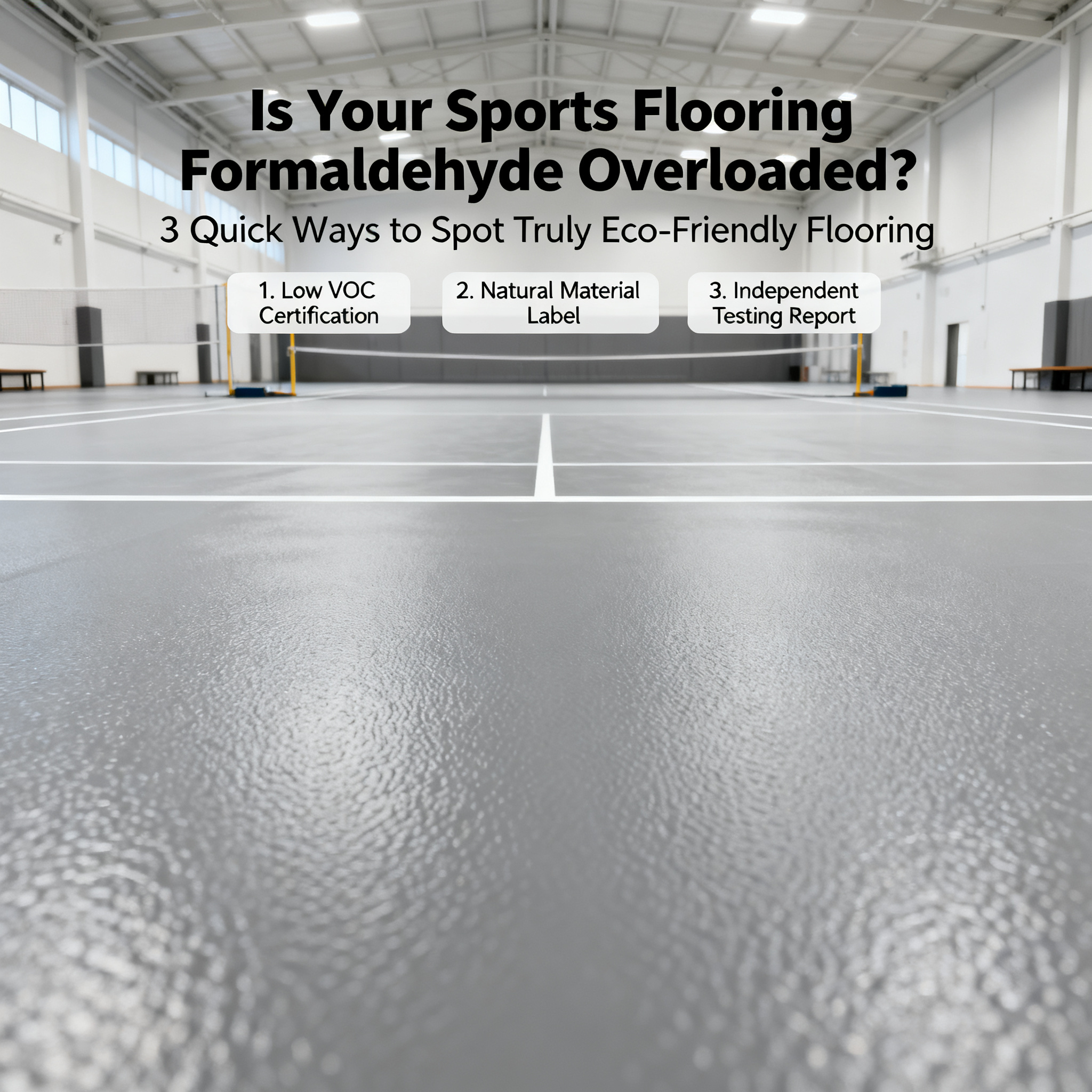
Tip 1: Smell It—Don't Be Fooled by a "Faint Scent"
The most direct yet often overlooked method is your nose.
Many low-quality PVC or rubber flooring products cut costs by heavily using recycled materials and inferior plasticizers. These materials continuously release irritating volatile organic compounds (VOCs), including formaldehyde and benzene compounds, even at room temperature. If you get close to the surface and detect a distinct smell resembling burnt plastic or chemical agents, it's a safe bet that the raw materials are impure and the eco-friendliness is questionable.
Here's a crucial warning: Some vendors will tell you, "It smells a bit right after installation, but it'll go away in a few days." Take that with a grain of salt. Truly eco-friendly flooring undergoes high-temperature curing and thorough airing during production, so it shouldn't have any noticeable odor when it reaches you. If the smell is so strong that it requires "airing out," it's likely that its TVOC (Total Volatile Organic Compounds) emissions exceed safe limits. In contrast, high-quality eco-friendly flooring (like Starplus sports flooring, which passes rigorous testing) is nearly odorless—even up close, it only has a faint, natural scent similar to new rubber products, without any irritation or harshness.
Tip 2: Check the Test Report—Look for National Standard GB 36246
Smelling only gives you a preliminary read. To confirm, you need to see the "ID card"—the test report.
Many buyers find "test reports" cumbersome or just glance at a blurry image the vendor casually sends over. Here's the key point to remember: Check the standard number.
Currently, the most stringent and authoritative standard for synthetic material surfaces in sports venues (including PVC and rubber flooring) in China is GB 36246-2018 "Sports Areas with Synthetic Surfaces for Primary and Middle Schools". This standard strictly limits formaldehyde emissions (≤0.4mg/㎡·h) and sets caps on dozens of harmful substances, including TVOC and 18 types of polycyclic aromatic hydrocarbons (PAHs). Its rigor ranks among the toughest globally.
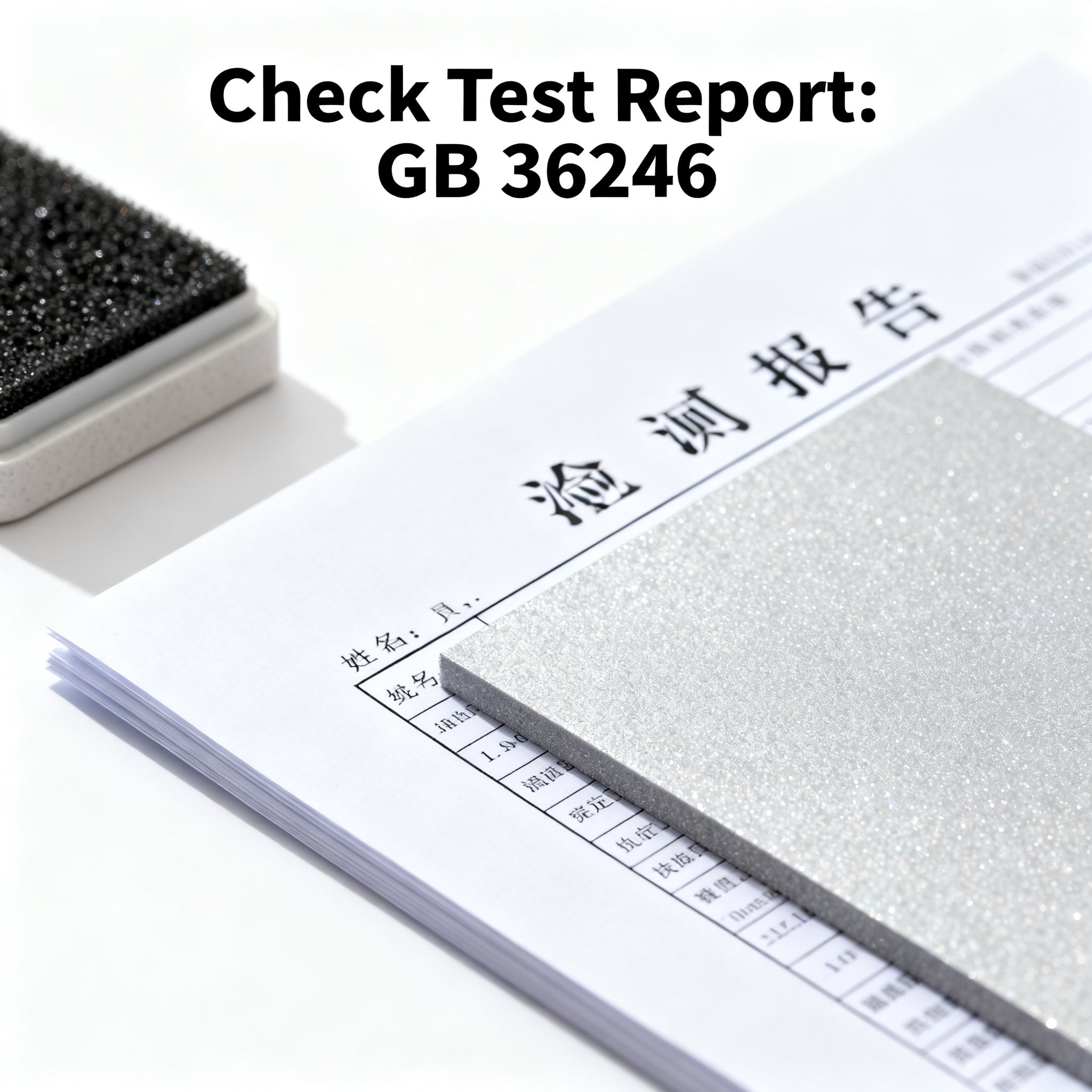
However, some companies try to game the system by submitting samples under outdated standards like GB 18583 or GB/T 14833, which are far less comprehensive in controlling indoor formaldehyde and TVOC compared to GB 36246. So, when you ask a vendor for a test report, the first thing to check is whether the standard listed is GB 36246. If the vendor hesitates, can't provide a report under this standard, or the report only lists a few test items, then the eco-friendliness of that flooring deserves serious doubt. Brands like Starplus, which own their factories and have over 30 years of manufacturing expertise, typically proactively provide full-item test reports compliant with GB 36246 and support QR code verification for authenticity—a level of confidence that counterfeiters can't replicate.
Tip 3: Verify Certifications—Leave No Room for the "Invisible Killer"
If the smell and the report both seem acceptable, the final step is to look at "hard credentials."
Beyond China's Ten Ring Certification (China Environmental Labeling), the more hardcore international certification for eco-friendly flooring is FloorScore. Awarded by SCS Global Services in the U.S., it's one of the world's most recognized and stringent certifications for indoor air quality. It requires products to achieve extremely low emission levels for hundreds of substances, including VOCs, formaldehyde, acetaldehyde, and phthalates (plasticizers). In simple terms, flooring with FloorScore certification meets the eco-standards suitable for high-end kindergartens and hospitals in Europe and the U.S.
Another easily overlooked detail is plasticizers. Many so-called "eco-friendly" PVC flooring products meet formaldehyde limits but secretly use plasticizers like DOP (di-octyl phthalate), which are restricted under the EU's REACH regulation. These substances, while not called formaldehyde, are endocrine disruptors that pose potential risks to the reproductive system development of children and adolescents. So, when a vendor emphasizes "zero formaldehyde," follow up by asking: "Are the plasticizers eco-friendly types like DINP or DOTP? Do you have an SGS phthalate test report?"
Final Thoughts: Eco-Friendliness Isn't a Cost—It's a Bottom Line
Choosing truly eco-friendly flooring is, at its core, about taking responsibility for the health of everyone in the venue. Formaldehyde can off-gas for 3 to 15 years, and once the flooring is down, replacing it is a major undertaking. Rather than spending a fortune on formaldehyde removal later, it's wiser to keep your eyes open during the selection process.
Next time you're sourcing flooring, bring these three tips along: First, smell to judge the raw materials; second, check the report to verify the standard; third, verify certifications to identify plasticizers. If the flooring easily passes all three checks, it's likely a reliable choice. Take Starplus (SQUARE COMFORT) as an example: its sports venue flooring not only passes ISO 9001 quality management system certification but also undergoes 12-step precision testing before shipment. From raw material screening to final packaging, every roll strictly adheres to the eco-requirements of GB 36246. After all, "all greatness starts from underfoot"—and the safety beneath your feet is the most solid foundation for any venue's success.